documentaries

History Hit

Page 10 / 10

Revealing King George III's Astonishing Military Map Collection At Windsor Castle documentary thumbnailEN19 min
Revealing King George III's Astonishing Military Map Collection At Windsor Castle

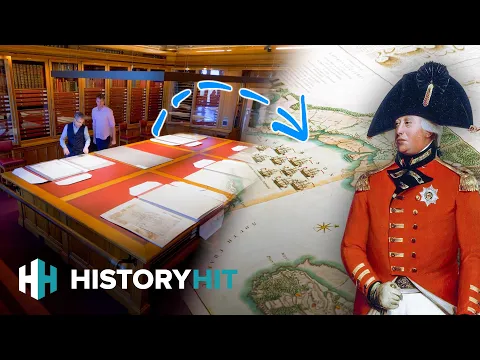
Revealing King George III's Astonishing Military Map Collection At Windsor Castle' Though perhaps better-remembered today for his late-reign madness and the slight issue of losing the Thirteen Colonies, King George III was also one of the world's greatest collectors of military maps. Preserved in excellent condition within Windsor Castle, these highly-detailed maps cover a range of conflicts stretching several centuries. From the decisive naval battle at Lepanto to Bonnie Prince Charlie's last stand at Culloden, join Dan Snow as he is shown through some of the most remarkable records of these conflicts in existence.

History Hit

Revealing King George III's Astonishing Military Map Collection At Windsor Castle

19 minPolitics & War
Why Did Britain Abolish Slavery in 1833? (Pt 2) documentary thumbnailEN52 min
Why Did Britain Abolish Slavery in 1833? (Pt 2)

Why Did Britain Abolish Slavery in 1833? (Pt 2)' Documentary series exploring the abolition of Slavery in the British Dominions in 1833. In Episode 2 of this documentary series, Luke Tomes explores the gradual deterioration of the West India Interest, its power base weakened by political reform in the United Kingdom, a decline in the value of sugar and an inspired slave rebellion in Jamaica (1831/2) which unearthed the true nature of West Indian Colonists and demonstrated the instability of the institution. He also touches upon the agonising moral dilemma abolitionists faced on the subject of compensation; the financial remuneration planters received from the government as a form of repayment for their “lost property”. Presented by Luke Tomes. Featuring Dr Christer Petley.

History Hit

Why Did Britain Abolish Slavery in 1833? (Pt 2)

52 minSociety
What Was Sex Really Like in the Middle Ages? documentary thumbnailEN34 min
What Was Sex Really Like in the Middle Ages?

What Was Sex Really Like in the Middle Ages? Warning: contains strong language and sexual content. Get ready to indulge in some Medieval Pleasures. In this three-part series, historian Dr Eleanor Janega (@Going Medieval) takes us on a journey into the sumptuous world of Sex, Booze and Sport throughout the Medieval period. In this episode, Eleanor and Dr Kate Lister (@whoresofyore) take to the streets of York to uncover the sex lives of folks living here over 500 years ago. Armed with medieval chat-up lines they attempt to woo a suitor while revealing the hidden ribald meanings behind some common words and phrases, giving an insight into the diverse, bold and unabashed sexual appetites of medieval people and the role the church had in controlling the sex lives of worshippers. And at the Tower of London Eleanor explores courtly love and how the royal bedchamber was a very crowded place, particularly when a regal marriage was consummated. She also investigates the complicated rules governing the sex trade in the capital, where almost anything goes as long as it happens in

History Hit

What Was Sex Really Like in the Middle Ages?

34 minSociety
Who Were The Real Northmen Of Scandinavia? | With W B Bartlett documentary thumbnailEN31 min
Who Were The Real Northmen Of Scandinavia? | With W B Bartlett

Who Were The Real Northmen Of Scandinavia? | With W B Bartlett' The Vikings have never lost their appeal to scholars, enthusiasts and even Hollywood. Now Wayne Bartlett has written a great new survey of the Viking World from Newfoundland to Central Asia. Dan Snow got him on the podcast to ask him the central questions of the Viking Age. What does Viking even mean? Why did they explode onto the world stage when they do? Are the myths true? What is their legacy? Vikings: A History of the Northmen by W. B. Bartlett is available now.

History Hit

Who Were The Real Northmen Of Scandinavia? | With W B Bartlett

31 minSociety
Temple Church: Home Of The Knights Templar documentary thumbnailEN17 min
Temple Church: Home Of The Knights Templar

The Secrets Of Temple Church | Home Of The Knights Templar' It's one of Britain's most fascinating buildings, boasting nearly nine centuries of history. Temple Church was built by the holy order of the Knights Templar in the 12th century. The iconic round tower was consecrated by Heraclius, the Patriarch of Jerusalem in 1185. The design of the round tower was intended to resemble the Church of the Holy Sepulchre in Jerusalem. History Hit's Alice Loxton heads to central London to explore the secrets of Temple Church. She gets inside the tiny penitential cell where Walter Bachelor was supposedly starved to death on the orders of the Master of the Temple. She discovers how the Temple was rebuilt after one of the most devastating German air raids of the Blitz during World War Two. And she even has a go on the church's famous organ, which was used for the score of the 2014 Hollywood blockbuster, Interstellar.

History Hit

Temple Church: Home Of The Knights Templar

17 minSociety
Debunking The Myths Of Tutankhamun With Top Egyptologist documentary thumbnailEN18 min
Debunking The Myths Of Tutankhamun With Top Egyptologist

Debunking The Myths Of Tutankhamun With Top Egyptologist' Who was Tutankhamun? How did he die? Was Tutankhamun's tomb cursed? In this video we attempt to answer all these questions and more with Prof Joyce Tyldesley from the University of Manchester. Tutankhamun, 'The Boy King' of Ancient Egypt, is one of history's most famous names. Though his short reign proved fairly insignificant, his legacy lives on thanks to Howard Carter's discovery of his magnificent tomb in 1922. But many questions remain about this mysterious king who ascended the throne of Ancient Egypt in approximately 1336BC. As well as genuine scholarly debates about his life and death, numerous myths about Tutankhamun and his tomb continue to this day.

History Hit

Debunking The Myths Of Tutankhamun With Top Egyptologist

18 minSociety
Top Roman Historian Rates Famous Movie Scenes documentary thumbnailEN21 min
Top Roman Historian Rates Famous Movie Scenes

Top Roman Historian Rates Famous Movie Scenes' Dr Simon Elliott, Roman historian, archaeologist and Honorary Research Fellow at the University of Kent, reviews scenes from famous movies set in the ancient world. Simon reviews the opening battle of Ridley Scott's epic, Gladiator (2000), before commenting on the final climactic showdown between the Roman emperor Commodus and Maximus, played by Joaquin Phoenix and Russell Crowe, in the Colosseum. He reviews the recreation of the ancient city of Pompeii in the 2014 movie of the same name, as well as the portrayal of the eruption of Vesuvius. Next, Simon watches two iconic scenes from Ben Hur (1959). You might be surprised to know that 'galley slaves' as portrayed in the film were rarely in fact slaves, particularly on military vessels, where professional oarsmen were used. The famous chariot racing scene in the Roman hippodrome is rated better for accuracy. Finally, Simon comments on two scenes from The Eagle (2011), starring Channing Tatum. In the first scene, a group of Roman legionaries sallies out from their fort to rescue two captured Roman soldiers.

History Hit

Top Roman Historian Rates Famous Movie Scenes

21 minSociety
A Brief History Of Ukraine (And Why Russia Wants To Control It) documentary thumbnailEN18 min
A Brief History Of Ukraine (And Why Russia Wants To Control It)

A Brief History Of Ukraine (And Why Russia Wants To Control It) In this animated video, historian Matt Lewis tells the story of Ukraine's turbulent and often surprising history. Beginning over a thousand years ago with the formation of the Kyivan Rus state, Matt tracks the development of Ukraine during the Mongol invasions, its incorporation into the Polish and Lithuanian Commonwealth, and eventually it's allegiance with the tsars of a newly formed Russia. The ongoing crisis in relations between Russia and Ukraine is threatening to engulf eastern Europe in a war on a scale not seen since 1945. The eyes of the world are focussed on the military activity as politicians scramble to encourage a diplomatic solution that will deescalate the conflict. Ukraine was known as the breadbasket of Soviet Russia. It remains politically, militarily, and economically important to Russia today. Precisely why there is a dispute over the sovereignty or otherwise of Ukraine is a complex question rooted in the region’s history. It is a story more than a thousand years in the making. For much of this story

History Hit

A Brief History Of Ukraine (And Why Russia Wants To Control It)

18 minHistory
We Fired Weapons From The 1500s, 1700s and 1900s! documentary thumbnailEN27 min
We Fired Weapons From The 1500s, 1700s and 1900s!

"We Fired Weapons From The 1500s, 1700s and 1900s!" In this video exclusive to the History Hit the original video platform channel, Louee Dessent and Luke Tomes headed to the Royal Armouries Museum firing range in Leeds to shoot three guns spanning four centuries of history! With the help and guidance of Keeper of Firearms & Artillery at Royal Armouries in Leeds, Jonathan Ferguson, we fired a 16th Century replica arquebus, an 18th Century Brown Bess musket and finally the famous Lee Enfield bolt-action rifle. We explore the evolution of guns by looking at some of the first guns in existence through to the weapons of The First World War and Second World War.

History Hit

We Fired Weapons From The 1500s, 1700s and 1900s!

27 minSociety
Inside The British Cromwell Tank With James Holland documentary thumbnailEN30 min
Inside The British Cromwell Tank With James Holland

Inside The British Cromwell Tank With James Holland' In this video military historian James Holland takes a closer look at the British A27M Cromwell Tank. Part of the series of cruiser tanks fielded by Britain during the Second World War, the Cromwell has not enjoyed the same post-war reputation as the German Panzer or Russian T-34. Nevertheless, James attempts to give a balanced view of this tank's effectiveness, looking at its speed, armour and firepower.

History Hit

Inside The British Cromwell Tank With James Holland

30 minSociety
The Biggest Titanic Disaster Myths Debunked! documentary thumbnailEN25 min
The Biggest Titanic Disaster Myths Debunked!

The Biggest Titanic Disaster Myths Debunked!' Why did Titanic sink? Was Titanic's rudder too small? Why did Titanic's crew not see the iceberg? Did they open fire on passengers, or lock them in third class accommodation? Was Titanic's captain drunk? In this video we answer all these questions and lots more! At noon on 10 April 1912, crowds gathered at Southampton to watch the maiden voyage of the World's largest ship RMS Titanic. A sleek, modern luxurious liner that was offering a safe and fast crossing of the Atlantic Ocean. Titanic was said to be invincible. She cruised down Southampton waters on her maiden voyage to North America, watched by large crowds. But she would never reach New York. Barely 5 days after leaving Southampton she was gone, swallowed up by the Atlantic after striking an iceberg. The maritime disaster that struck Titanic has made her the most famous ship in history, with many myths emerging about what happened that fateful night on 14/15 April. Dan Snow visits Titanic expert Tim Maltin to sort the fact from the fiction about

History Hit

The Biggest Titanic Disaster Myths Debunked!

25 minSociety
The Priceless Objects That Saved The Lives Of Shackleton And All His Men documentary thumbnailEN20 min
The Priceless Objects That Saved The Lives Of Shackleton And All His Men

"The Incredible Objects That Saved Ernest Shackleton's Life" Team History Hit is currently following in the footsteps of Anglo-Irish explorer Sir Ernest Shackleton, hoping to locate the shipwreck of the Endurance in the Weddell Sea. In this video, Luke Tomes visits the National Maritime Museum to see a recently exhibited sledge recovered from Shackleton's Nimrod Expedition (1907-09). He also speaks to Senior Curator of Maritime Technologies, Jeremy Michell about some of the objects which saved the famous explorer's life. Meanwhile, Dan Snow is at Dulwich College, which houses the James Caird, a lifeboat in which Shackleton, Frank Worsley and 4 other men undertook a 1,300 kilometre journey from Elephant Island in the South Shetland Islands through the Southern Ocean to South Georgia as part of the rescue mission during the Imperial Trans-Antarctic Expedition of 1914–1917.

History Hit

The Priceless Objects That Saved The Lives Of Shackleton And All His Men

20 minSociety
Top Tudor Historian Rates Famous Movie Scenes documentary thumbnailEN18 min
Top Tudor Historian Rates Famous Movie Scenes

Top Tudor Historian Rates Famous Movie Scenes' Dr Nicola Tallis, British historian and author of three books on the Tudors, rates scenes from five blockbuster movies set in the Tudor period. Nicola reviews scenes on Henry VIII's relationship with Mary and Anne Boleyn in 'The Other Boleyn Girl' (2008). She looks at the portrayal of Elizabeth I in the hit movie 'Elizabeth' (1998) and its sequel 'Elizabeth: The Golden Age' (2007), both starring Cate Blanchett. Next, she looks at the fictionalised meeting between Elizabeth I and her cousin Mary in the recently released 'Mary Queen of Scots' (2018), where the lead characters were played by Saoirse Ronan and Margot Robbie. Finally, she reviews several iconic scenes from 'Shakespeare in Love' (1998), starring Joseph Fiennes and Gwyneth Paltrow. So, do you agree with her ratings?

History Hit

Top Tudor Historian Rates Famous Movie Scenes

18 minSociety
Simon Sebag Montefiore On Stalin's Bloody Rise to Power documentary thumbnailEN30 min
Simon Sebag Montefiore On Stalin's Bloody Rise to Power

Simon Sebag Montefiore On Stalin's Bloody Rise to Power' How did a young trainee priest from Georgia become a merciless dictator who shaped the Soviet Empire in his own brutal image? Historian and bestselling author, Simon Sebag Montifiore, talks to Dan Snow about the rise of Joseph Stalin, a man whose regime of terror witnessed the death and suffering of tens of millions of people. Find out how Stalin climbed to the top of Soviet politics to emerge as Lenin’s heir, and hear how his extreme insecurity and paranoia shaped the way he ruled.

History Hit

Simon Sebag Montefiore On Stalin's Bloody Rise to Power

30 minSociety
We Shot 3 Bows Spanning 3,000 Years of History (BADLY!) documentary thumbnailEN18 min
We Shot 3 Bows Spanning 3,000 Years of History (BADLY!)

We Shot 3 Bows Spanning 3,000 Years of History (BADLY!)' "And that is why archery is difficult..." With the help of historical interpreter Andy Deane, History Hit's Luke Tomes and Louee Dessent travelled to the medieval tiltyard outside the Royal Armouries Museum in Leeds to test their skills in an unforgettable archery competition. The rules are simple. Each competitor will have one attempt to hit the target using an Ancient Egyptian bow, a Mongol recurve bow and the English Longbow (famously used at the Battle of Agincourt). Who will prove themselves to be the History Hit's elite archer?

History Hit

We Shot 3 Bows Spanning 3,000 Years of History (BADLY!)

18 minHistory
Could You Make a Living in Medieval London? documentary thumbnailEN34 min
Could You Make a Living in Medieval London?

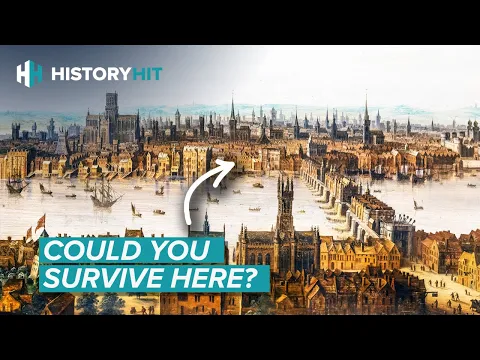
How would you make a living in medieval London? What jobs were available? In this video, medieval historian Dr Eleanor Janega takes us on a whistle-stop tour across London, visiting key historical sites and shining a light on the various communities of medieval London. From Temple Church to the Tower of London, from London Bridge to Smithfield, traces of medieval London are everywhere in the city.

History Hit

Could You Make a Living in Medieval London?

34 minHistory
One Day Mudlarking By The River Thames And Here's What We Found documentary thumbnailEN21 min
One Day Mudlarking By The River Thames And Here's What We Found

'One Day Mudlarking By The River Thames And Here's What We Found' Dan Snow joins author and expert mudlark Lara Maiklem for a spot of mudlarking by the River Thames in London. They find charred roof tiles dating from the time of the Great Fire of London, a Tudor lead cloth seal, part of a 17th century German “bearded man” stoneware jug and a rare coin of George II.

History Hit

One Day Mudlarking By The River Thames And Here's What We Found

21 minNature & Environment
Why Did Britain Abolish Slavery in 1833? (Pt 1) documentary thumbnailEN32 min
Why Did Britain Abolish Slavery in 1833? (Pt 1)

Documentary series exploring the abolition of Slavery in the British Dominions in 1833. In Episode 1 of this two-part documentary series, Luke Tomes explores the rebirth of an abolition movement in Britain with the formation of the Anti-Slavery Society in 1823, driven by the ambitious goal of ending the institution of slavery in British Dominions. Also introduced is the fierce opposition facing the abolitionists, the West India Interest, a political lobby comprised of wealthy merchants, proprietors and influential Members of Parliament – all of whom held vested interests in opposing emancipation at all costs. Presented by Luke Tomes. Featuring Dr Christer Petley, lecturer at the University of Southampton.

History Hit

Why Did Britain Abolish Slavery in 1833? (Pt 1)

32 minSociety
The Real Story Behind The Anglo-Zulu War With Historian Saul David documentary thumbnailEN20 min
The Real Story Behind The Anglo-Zulu War With Historian Saul David

'The Real Story of Isandlwana and Rorke's Drift With Historian Saul David' In this video, Dan Snow talks to Saul David - historian, broadcaster and author - about what was arguably the most brutal and controversial British imperial conflict of the 19th century: the Anglo-Zulu War of 1879. As well as the causes of the war and British colonial expansion in Southern Africa, he explains how the British blundered their way into a catastrophic defeat at the Battle of Isandlwana, the real story of the last stand at Rorke's Drift, and how the Zulu Nation was eventually defeated at the Battle of Ulundi.

History Hit

The Real Story Behind The Anglo-Zulu War With Historian Saul David

20 minPolitics & War
How Did The Allies Stop Japan From Conquering India? documentary thumbnailEN70 min
How Did The Allies Stop Japan From Conquering India?

The Battles of Imphal and Kohima were a crucial turning point in the attempted Japanese invasion of India during World War Two. By October 1942 Singapore, Hong-Kong, Malaysia and Burma had all fallen to the Japanese; the Imperial army looked unbeatable. Yet it was then, when morale was at its lowest, that the new British commander Bill Slim set about reforming and rebuilding the Anglo-Indian British army. Slim aimed to revive Allied fortunes in the region – something many believed was an impossible task. Meanwhile, Japanese commander Renya Mutaguchi had ambitious plans of his own: the conquest of British India. To initiate this plan the Japanese first had to capture one key strategic town: Imphal, the gateway to India. The very close-run battles that followed - fought between March and July 1944 - were clashes on epic proportions as each side attempted to execute a master plan of their respective visionary generals. If they succeeded, Slim knew the British would have a strong base from where they could commence their reconquest of Burma and quell the rise of Japan. If

History Hit

How Did The Allies Stop Japan From Conquering India?

70 minSociety
Get Inside The Soviet T-34 Tank With Historian James Holland documentary thumbnailEN30 min
Get Inside The Soviet T-34 Tank With Historian James Holland

Military historian James Holland gets inside an operational T-34 tank, the pride and joy of the Soviet Union during the Second World War. Introduced in 1940, the T-34 was famously deployed with the Red Army against Operation Barbarossa - Nazi Germany's doomed invasion of Russia. Its 76.2 mm tank gun was more powerful than its contemporaries while its 60 degree sloped armour provided good protection against anti-tank weapons. But as James discovers, life for the crew of these tanks could be hazardous indeed!

History Hit

Get Inside The Soviet T-34 Tank With Historian James Holland

30 minSociety
Dan Jones Explains Every Medieval Crusade In Order documentary thumbnailEN48 min
Dan Jones Explains Every Medieval Crusade In Order

Dan Jones Explains Every Medieval Crusade In Order' The two Dans are back. And this time, they're talking all things crusades. Dan Jones provides his namesake host a thrilling background to the series of holy wars that have come to define Medieval Europe. Dan provides a fascinating account of every crusade, from the successful conquest of Jerusalem in 1099 to the conclusion of the Spanish Reconquista in 1492. He also explores how crusading terminology continues to have some much influence on culture and language today. To download the History Hit app please go to the Android or Apple store.

History Hit

Dan Jones Explains Every Medieval Crusade In Order

48 minHistory
The Evolution of British Army Uniforms Through History documentary thumbnailEN31 min
The Evolution of British Army Uniforms Through History

The Evolution of British Army Uniforms Through History' The British Army is one of the world’s most experienced fighting forces. From Blenheim to Waterloo, from Balaclava to the Somme, it has played its part in the history’s most bloody conflicts. But as these troops executed Herculean tasks in the worlds harshest terrains, what were they wearing? How did epaulettes, sashes, pantaloons and wellington boots end up clothing British troops on the battlefield? From primitive to protective, from efficient to downright extravagant, over the years, military clothing has both enabled and inhibited objectives, and the uniform we see today is the result of 400 years of spectacular trial and error. History Hit's Alice Loxton was recently joined by Sophie Anderton, as they answer these questions through the secrets of the National Army Museum collection.

History Hit

The Evolution of British Army Uniforms Through History

31 minHistory
Tom Holland On How Christianity Has Shaped Western Morality documentary thumbnailEN42 min
Tom Holland On How Christianity Has Shaped Western Morality

Author and historian Tom Holland sits down with Dan Snow to talk about the history of Christianity, and how the religion has shaped morality in Western culture to this day. In this thought provoking interview, Dan quizzes Tom on the birth and rise of Christianity, the debate on religion and science, and whether liberal and socialist values can be divorced from Christian teachings. If you'd like to learn more, we have hundreds of history documentaries, ad-free podcasts and audiobooks at History Hit - subscribe today! To download the History Hit app please go to the Android or Apple store.

History Hit

Tom Holland On How Christianity Has Shaped Western Morality

42 minSociety
Inside Britain's Last Surviving Second World War-Era Submarine | HMS Alliance documentary thumbnailEN29 min
Inside Britain's Last Surviving Second World War-Era Submarine | HMS Alliance

HMS Alliance is a Royal Navy A-class, Amphion-class or Acheron-class submarine, laid down towards the end of the Second World War and completed in 1947. Over her 28-year career, she held the world record for longest dive by a submarine, staying immersed for 30 days, in 1947, served during the Cold War, and was retired in 1973. The submarine is the only surviving example of the class, having been a memorial and museum ship since 1981. In this video, submarine veteran Commodore Eric Thompson gives Dan Snow a tour of beautiful submarine, which is now preserved at the Royal Navy Submarine Museum in Gosport.

History Hit

Inside Britain's Last Surviving Second World War-Era Submarine | HMS Alliance

29 minPolitics & War
Epic Battle Of Marathon Total War Recreation documentary thumbnailEN18 min
Epic Battle Of Marathon Total War Recreation

Epic Battle Of Marathon Total War Recreation In late summer 490BC the citizens of Athens faced off against the superpower of the ancient world, the Persian Empire of Darius I. The fate of western democracy and civilisation was balanced on a knife edge as the two foes clashed at the Battle of Marathon. We've recreated the battle using the Radious mod for the brilliant video game Rome II - Total War. History Hit presenters Louee Dessent and Luke Tomes take you through the strategy and tactics of the two generals on the day, the Athenian strategos Miltiades and the Persian commanders, Datis and Artaphernes. They’ll take you through the background to the battle, the composition of the armies and the key moments that decided the day. The Battle of Marathon has gained legendary status and was certainly a decisive clash of the Greco-Persian Wars, but is it possible to separate history from myth? We examine the key literary source Herodotus and try to give you a balanced view of how this battle played out.

History Hit

Epic Battle Of Marathon Total War Recreation

18 minPolitics & War
The Dark and True Story of The Peaky Blinders Gang documentary thumbnailEN21 min
The Dark and True Story of The Peaky Blinders Gang

Historian Dan Snow heads to Birmingham to discover the true story of the infamous Peaky Blinders gang. Joined by author and local historian Carl Chinn, he sorts the facts about this 19th century gang from the popular myths. This is the true story of the Peaky Blinders, the criminal gang from Birmingham made famous by a TV show of the same name. But who were the real Peaky Blinders? And how did they get their name? The true story behind the name Peaky Blinders and the emergence of gangs in Birmingham is explored in this video. Contrary to popular belief, they did not use razor blades in their caps, but instead relied on various items such as boots and belts. The police's ongoing battle with the Peaky Blinders in the 19th century led to stronger policing and initiatives to keep young men from joining gangs.

History Hit

The Dark and True Story of The Peaky Blinders Gang

21 minCrime & Justice
Top Medieval Historian Reviews Famous Movie Scenes documentary thumbnailEN18 min
Top Medieval Historian Reviews Famous Movie Scenes

Top Medieval Historian Reviews Famous Movie Scenes Dr Eleanor Janega, who holds a doctorate in medieval history and lectures at the London School of Economics, rates 10 well-known scenes from movies focussing on the medieval period. Eleanor reviews both the siege of Stirling and the Battle of Loudoun Hill as portrayed in 'Outlaw King' (2018) starring Chris Pine. She explores how 'The Black Death' (2010) presents medieval attitudes to witchcraft and paganism, before deconstructing scenes featuring jousting and the poet Geoffrey Chaucer in 'A Knight's Tale' (2001). She looks at the presentation of King John and Magna Carta in the movie 'Ironclad' (2011), as well as the famous siege of Rochester Castle. Finally, she discusses the death of Richard the Lionheart as shown in the Russell Crowe movie 'Robin Hood' (2010).

History Hit

Top Medieval Historian Reviews Famous Movie Scenes

18 minHistory
The Secrets of Winston Churchill's Underground War Rooms documentary thumbnailEN23 min
The Secrets of Winston Churchill's Underground War Rooms

Winston Churchill, wartime Prime Minister of Great Britain and its empire during the Second World War, is one of the most recognisable figures of world history. The man dominated Whitehall and Westminster, but many of his most vital decisions during the war years were taken away from the public eye. Not in Parliament, nor in Downing Street. But underground - in the Cabinet War Rooms. To this day, they are beautifully preserved, famously portrayed in the award winning film 'Darkest Hour.' Dan Snow pays a visit to the Churchill War Rooms, walking in the footsteps of the great man and his many associates during the Second World War.

History Hit

The Secrets of Winston Churchill's Underground War Rooms

23 minPolitics & War
Were These WW1 Underground Tunnels The Worst Place To Fight? documentary thumbnailEN17 min
Were These WW1 Underground Tunnels The Worst Place To Fight?

Were These WW1 Underground Tunnels The Worst Place To Fight?' The creation of man-made underground tunnels played a huge role in the outcome of the First World War. They were first dug to mine under enemy positions and detonate bombs or attack in desperate and fierce fights. As the war dragged on, nevertheless, they developed another purpose: providing soldiers with safer accommodation and communication routes. In this short documentary Dan visits the tunnels of the Vimy Ridge built by Canadian miners and the Carrière Wellington tunnels, now a museum in Arras, France.

History Hit
Were These WW1 Underground Tunnels The Worst Place To Fight?

17 minSociety
HENRY VIII's Coastal Fortress | Hurst Castle COLLAPSE!!! documentary thumbnailEN19 min
HENRY VIII's Coastal Fortress | Hurst Castle COLLAPSE!!!

On the 26 February 2021, around 38 metres of wall collapsed at Hurst Castle, one of a series of vital coastal forts built by Henry VIII in the 16th century to protect England from threat of invasion by the European powers. Recently, Dan Snow went out on his kayak to assess the damage at the castle whilst also visiting a number of other fortifications built across the Solent along the way.

History Hit

HENRY VIII's Coastal Fortress | Hurst Castle COLLAPSE!!!

19 minSociety
How Did These Weird Steel Structures Defend London? documentary thumbnailEN23 min
How Did These Weird Steel Structures Defend London?

How Did These Weird Steel Structures Defend London? During the Second World War, the City of London was a major target for both naval and aerial bombardment. In 1943, numerous towers were built in the Thames Estuary as anti-aircraft defences to protect the capital. Known as the Red Sands Forts, these Star Wars Walker-like constructions were initially built on land and floated out to sea in 1943. These bizarre steel structures helped defend Britain during World War Two. The soldiers stationed there shot down a total of 22 attacking German aircraft and 30 doodlebugs, protecting densely populated London from even more devastation. Later in the war, the equipment was replaced, and removed soon after. The forts were eventually abandoned in 1958. It wasn't until 1964 that the Forts served a new purpose. Screaming Lord Sutch set up Radio Sutch (a pirate radio station) in one of the old towers. However, he soon became bored and handed the project to his friend and unpaid manager Reginald Calvert, who then expanded into all five towers that were still connected and called it

History Hit
How Did These Weird Steel Structures Defend London?

23 minSociety
Relive The Battle of Agincourt With Epic Total War Gaming Footage documentary thumbnailEN18 min
Relive The Battle of Agincourt With Epic Total War Gaming Footage

On October 25th, 606 years to the day since it took place, we’ve recreated the Battle of Agincourt using the Total War video game series. For this battle we’ve used the Medieval Kingdoms 1212AD mod for the game Total War: Attila. History Hit presenters Louee Dessent and Luke Tomes take you through the strategy and tactics of the two generals on the day in 1415, King Henry V of England and the Constable of France, Charles D’Albret. They’ll take you through the background to the battle, the composition of the armies and the key moments that decided the day. Did the English archers with their deadly longbows prove decisive? And how were some of the finest medieval knights of their day bested in hand-to-hand combat? Watch to find out. This is the second episode of our brand new Battlefield Replays series where we’ll use gaming footage to recreate some of the best known battles in history.

History Hit

Relive The Battle of Agincourt With Epic Total War Gaming Footage

18 minPolitics & War
Historian Mike Loades Debunks 'The Agincourt Myth' documentary thumbnailEN37 min
Historian Mike Loades Debunks 'The Agincourt Myth'

Historian Mike Loades Debunks 'The Agincourt Myth' Legend of popular history Mike Loades provides Dan a detailed run down of Henry V's famous victory at the Battle of Agincourt on 25 October 1415 and how his men were more a band of brigands than a 'band of brothers'. They discuss the arms, the armour, the tactics and the popular myths today associated with the battle, thanks to the immortal works of Shakespeare and Laurence Olivier.

History Hit

Historian Mike Loades Debunks 'The Agincourt Myth'

37 minSociety
Watch The Battle for North America | Part Two documentary thumbnailEN33 min
Watch The Battle for North America | Part Two

Watch The Battle for North America | Part Two examines the specific people, events and evidence presented in this documentary. On 13 September 1759, on the Plains of Abraham near the city of Quebec, an outnumbered British army fought a battle that would change the history of the world: the Battle of Quebec. For the past three years, Britain and France were locked in a bitter struggle for dominance in the Seven Years War: the world’s first truly global conflict that involved every great European power and spanned five continents, leading some historians to call it World War Zero. One of the most famous theatres of this war was in North America. Today we take it for granted that Americans speak English, not French, but it could have been very different if events in 1759 had had the alternate outcome. Deep in the heart of French territory in the Americas was Quebec, the nucleus of that nation’s power in the New World. From there the French had inflicted wave after wave of defeats on the British in the years preceding

History Hit

Watch The Battle for North America | Part Two

33 minSociety
Watch The Battle for North America | Part One documentary thumbnailEN27 min
Watch The Battle for North America | Part One

Watch The Battle for North America | Part One examines the specific people, events and evidence presented in this documentary. On 13 September 1759, on the Plains of Abraham near the city of Quebec, an outnumbered British army fought a battle that would change the history of the world: the Battle of Quebec. For the past three years, Britain and France were locked in a bitter struggle for dominance in the Seven Years War: the world’s first truly global conflict that involved every great European power and spanned five continents, leading some historians to call it World War Zero. One of the most famous theatres of this war was in North America. Today we take it for granted that Americans speak English, not French, but it could have been very different if events in 1759 had had the alternate outcome. Deep in the heart of French territory in the Americas was Quebec, the nucleus of that nation’s power in the New World. From there the French had inflicted wave after wave of defeats on the British in the years preceding

History Hit

Watch The Battle for North America | Part One

27 minSociety