
About Were These WW1 Underground Tunnels The Worst Place To Fight?
Were These WW1 Underground Tunnels The Worst Place To Fight?' The creation of man-made underground tunnels played a huge role in the outcome of the First World War. They were first dug to mine under enemy positions and detonate bombs or attack in desperate and fierce fights. As the war dragged on, nevertheless, they developed another purpose: providing soldiers with safer accommodation and communication routes. In this short documentary Dan visits the tunnels of the Vimy Ridge built by Canadian miners and the Carrière Wellington tunnels, now a museum in Arras, France.
Were These WW1 Underground Tunnels The Worst Place To Fight? is presented by History Hit. Its listed runtime is 17 minutes. The source link and publisher attribution are provided with the embedded film.
As a society documentary, Were These WW1 Underground Tunnels The Worst Place To Fight? uses these, underground, tunnels as its central frame. Social documentaries work best as invitations to examine systems through lived experience. Distinguish individual testimony from wider claims, and consider which institutions, incentives and inequalities shape the choices shown.
What to consider before watching
- What evidence, testimony or observation does the film use to explain these, underground, tunnels?
- Which people, institutions or historical conditions most influence the story told in Were These WW1 Underground Tunnels The Worst Place To Fight??
- How does History Hit's framing affect the documentary's emphasis, and which perspectives may deserve further research?
Topics covered in this documentary
Documentary details and original source
- Title
- Were These WW1 Underground Tunnels The Worst Place To Fight?
- Category
- Society
- Runtime
- 17 minutes
- Language
- English
- Publisher
- History Hit
Free Documentary Vault provides independent discovery, organization and editorial context. The film remains hosted by its original publisher, who controls availability and playback.
Related Society documentaries

Historian Dan Snow answers the most asked questions about the Napoleonic Wars. Did Napoleon start the wars? How many Napoleonic Wars were there? How passionate is Dan about this history? Watch to find out. You can now become a History Hit member right here on the original video platform! Join for access to a new exclusive documentary every week, and access to over 160+ of our documentaries presented by world-renowned historians like Dan Snow, Eleanor Janega, Tristan Hughes, Mary Beard, Matt Lewis and more.
History HitHistorian Answers Google's Most Popular Questions About The Napoleonic Wars

The Black Watch Snipers were some of the finest soldiers in WWII. From D-Day on into the heart of Northern France, Belgium and Germany they fought like no one else and putting themselves in unimaginable danger. In this exclusive episode we hear from the men of the Black Watch as they remember their lives during WWII, and meet up for one last time to see if they've still got what it takes to be a great shot. War Stories is your one stop shop for all things military history. From Waterloo to Verdun, we'll be bringing you only the best documentaries and stories from history's most engaging and dramatic conflicts. You can find more from us on
War StoriesThe Truth Behind Life As A Sniper In WWII | Black Watch Snipers
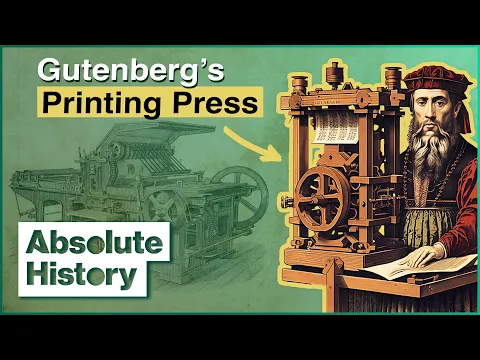
Stephen Fry takes a look at the story of Johannes Gutenberg, inventor of the world's first printing press in the 15th century. Beginning with religious works and textbooks, soon presses were churning out all manner of texts from Reformation pamphlets to romantic novels. The number of books greatly increased, their cost diminished and so more people read than ever before.
Absolute HistoryWhy The Printing Press Is The Most Important Invention Of All Time

How Did These Weird Steel Structures Defend London? During the Second World War, the City of London was a major target for both naval and aerial bombardment. In 1943, numerous towers were built in the Thames Estuary as anti-aircraft defences to protect the capital. Known as the Red Sands Forts, these Star Wars Walker-like constructions were initially built on land and floated out to sea in 1943. These bizarre steel structures helped defend Britain during World War Two. The soldiers stationed there shot down a total of 22 attacking German aircraft and 30 doodlebugs, protecting densely populated London from even more devastation. Later in the war, the equipment was replaced, and removed soon after. The forts were eventually abandoned in 1958. It wasn't until 1964 that the Forts served a new purpose. Screaming Lord Sutch set up Radio Sutch (a pirate radio station) in one of the old towers. However, he soon became bored and handed the project to his friend and unpaid manager Reginald Calvert, who then expanded into all five towers that were still connected and called it
History HitHow Did These Weird Steel Structures Defend London?

Some of the worst aviation disasters in history like Japan Airlines Flight 123 and Swissair Flight 111 were caused by fatal flaws that the pilots had no hope of overcoming to steer the plane to safety. Seemingly insignificant design features or shoddy repair work doomed these flights and their passengers from the start. This special looked at accidents caused by seemingly minor defects or errors. WONDER is packed with binge worthy reality documentaries for hours of entertainment. Check out our hub of diverse and empowering stories which explore the extreme side of life! Content licensed from Cineflix to Little Dot Studios.
WonderThe Technical Faults That Caused Fatal Crashes

When war broke out in Europe in 1914 most Americans paid little notice, with Europe being so far away and seemingly unimportant. Instead they were looking back on a century of progress and prosperity, where their army seemed to big for the little action it saw. But all of this was about to change as we see in this episode of Battlezone. War Stories is your one stop shop for all things military history. From Waterloo to Verdun, we'll be bringing you only the best documentaries and stories from history's most engaging and dramatic conflicts. You can find more from us on
War Stories