
About The rich gets richer, the poor gets poorer | 97% Owned (Full documentary)
Prices keep climbing, workdays are stretching longer, and yet our wages remain stagnant. It's becoming a distant dream to have a home to call our own, but it wasn't always like this. This documentary investigates the deep and often misunderstood sources of all problems: Money and Power. Where does it come from? Who decides how it gets used? And most importantly, what does this mean for the millions of us feeling the pinch, while a select few at the top greatly benefit from this skewed system? These are tough questions, but you might be surprised at how straightforward the answers can be. ------- Chapters ▷ 0:00:00 - Intro ▷ 0:04:12 - Seigniorage ▷ 0:08:08 - Commercial Bank Money and Digital Money ▷ 0:10:30 - Misconceptions ▷ 0:14:08 - Expansion of commercial money supply ▷ 0:19:03 - Issues with allowing banks to create money ▷ 0:24:01 - Paradox of the system leads to cyclical crisis ▷ 0:26:22 - Matter of democracy ▷ 0:27:38 - Central Bank Reserves ▷ 0:34:50 - A short history of money ▷ 0:38:18 - Fiat Money ▷
The rich gets richer, the poor gets poorer | 97% Owned (Full documentary) is presented by wocomoDOCS. Its listed runtime is 104 minutes. The source link and publisher attribution are provided with the embedded film.
As a society documentary, The rich gets richer, the poor gets poorer | 97% Owned (Full documentary) uses richer, poorer, owned as its central frame. Social documentaries work best as invitations to examine systems through lived experience. Distinguish individual testimony from wider claims, and consider which institutions, incentives and inequalities shape the choices shown.
What to consider before watching
- What evidence, testimony or observation does the film use to explain richer, poorer, owned?
- Which people, institutions or historical conditions most influence the story told in The rich gets richer, the poor gets poorer | 97% Owned (Full documentary)?
- How does wocomoDOCS' framing affect the documentary's emphasis, and which perspectives may deserve further research?
Topics covered in this documentary
Documentary details and original source
- Title
- The rich gets richer, the poor gets poorer | 97% Owned (Full documentary)
- Category
- Society
- Runtime
- 104 minutes
- Language
- English
- Publisher
- wocomoDOCS
Free Documentary Vault provides independent discovery, organization and editorial context. The film remains hosted by its original publisher, who controls availability and playback.
Related Society documentaries

Like "Twitch" or"Front", they have to attract worldwide talents to grow fast, and the recipe to keep them is easy : game rooms, free cafeterias, flexible working hours, digital detox… it almost feels like home. This tech rush comes with a price and the social divide has never been so acute with booming poverty rates and over 10% of the bay area population being homeless. ------- Chapters ▷ 00:00 - Introduction ▷ 00:12 - San Francisco: a city that is becoming the exclusive domain of the very rich ▷ 03:50 - A technology capital where tomorrow's world is being invented ▷ 05:30 - In the footsteps of a French engineer living in Oakland in the face of property inflation ▷ 10:00 - Twitch: an example of Silicon Valley start-ups where everything is done to attract the best engineers ▷ 15:10 - TwichtCon ▷ 19:00 - Front, the American dream of a French woman, Mathilde Collins ▷ 24:10 - Silicon Valley, the heart of San Francisco's wealth with the GAFAMs ▷ 29:31 - Naveen Jain, former top executive at Microsoft, one
wocomoDOCSSan Francisco: The Tech capital of striking inequalities, between the GAFAMs and the homeless

If popping a pill could make you smarter and live longer, would you? Since the advent of smart drugs like Nootropics, more and more people have admitted to taking them to boost their productivity. In this critical documentary, self-proclaimed futurist and speaker Nikolas Badminton undergoes a series of personal experiments with smart drugs (FDA-approved or otherwise) and explores various popular biohacking techniques used by the "most successful and creative people" at the heart of technocratic culture. But do they really work? ------- Chapters ▷ 00:00 – Intro ▷ 01:53 – Escaping burnout ▷ 05:30 – First dip ▷ 15:27 – Testing Nootroo ▷ 19:30 – No calories, just water ▷ 22:43 – Microdosing ▷ 24:25 – Wim Hof Method ▷ 30:57 – On top of the schedule ▷ 32:25 – Even stronger: Modafinil ▷ 36:34 – No more sleep ▷ 40:21 – Doctor's advice ▷ 48:43 – Conclusion ▷ 50:40 – Credits ------- ------- Nootropics are an over-the-counter drug that could change the fabric of our society, also known as ‘smart drugs,’ and they’re globally popular both at parties and
wocomoDOCSEscaping Burnout: The substance that allegedly makes you smarter (Full documentary, 2015)

How much oil is left - and what happens when the world’s most important energy source becomes harder, riskier and more expensive to extract? This compelling energy documentary investigates the global dependence on crude oil, the theory of peak oil and the environmental dangers of deep-sea drilling. Beginning with the 2010 Deepwater Horizon disaster in the Gulf of Mexico, it examines how technological failures, financial pressure and difficult drilling conditions contributed to one of the worst oil spills in history. Travel from oil fields in Austria and Saudi Arabia to research centres in Europe, Canadian oil sands and offshore platforms in the Gulf of Mexico. Scientists, geologists, engineers and industry experts reveal how oil is formed, how new reserves are discovered and why many of the world’s largest oil fields may be declining. The documentary also explores enhanced oil recovery, horizontal drilling, water injection, polymer technology, Arctic exploration and the enormous financial and environmental costs of extracting unconventional oil. It investigates the use of chemical dispersants during the Deepwater Horizon cleanup and questions their impact on marine ecosystems and human
wocomoDOCSOil: The Race for the Last Reserves | The Struggle for Oil - Geological Deceptions (Full Film)
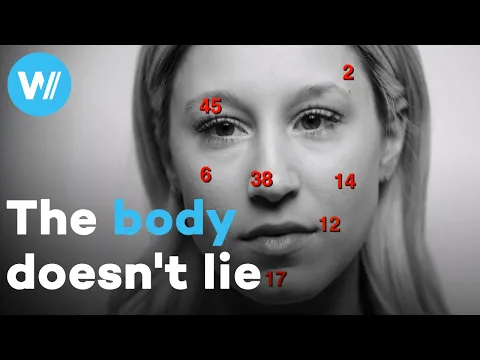
Actions speak louder than words. In this documentary, experts discuss the signals we send without even realizing and explain how to decipher the signals others give us involuntarily. – Forensic Psychologist Dr. Stephen Porter describes how his team helped solve a murder case by detecting deceit in a witness's body language during a televised interview. – In Amsterdam, a pioneering company is developing technology that allows computers to identify a person's gender, ethnicity, and emotional expressions. – Harvard's Social Psychologist Amy Cuddy shares a fascinating insight: not only do our movements reflect our feelings, but altering our body language can also change our emotions. – Behavior Analyst Dr. Lillian Glass analyzes the communication skills of controversial figures such as Donald Trump, exploring what makes them effective communicators beyond political biases. ------- Chapters ▷ 00:00 – Intro ▷ 02:33 – Communicate through facial expressions ▷ 06:47 – Limbic system ▷ 09:30 – The body doesn't lie ▷ 14:54 – Decode: Face ▷ 18:44 – Detection by discomfort ▷ 23:55 – Behavior recognition ▷ 28:31 – Decode: Deception ▷ 34:53 – The
wocomoDOCSReading body language like an expert – the science of non-verbal communication (full documentary)

Set against the wild beauty of Ireland’s Beara Peninsula, this intimate documentary follows the De Ruiter family and their deep relationship with the honey bee after 25 years of life and beekeeping in Ireland. From pollen to pot, the film offers a poetic and immersive portrait of the apiary process, revealing how honey is shaped by landscape, season, family knowledge and the fragile rhythms of nature. Through the family’s daily stewardship, the documentary explores the cultural folklore of bees, the urgent environmental challenges facing pollinators today, and the powerful role conscious human care can play in protecting the natural world. Interwoven with original music and poetry, the film journeys alongside the honey bee and its keepers, uncovering a story of resilience, adaptation, ecology and interdependence. Both lyrical and grounded, this documentary is a moving celebration of Irish beekeeping, sustainable living, family tradition and the quiet intelligence of the honey bee. ------- Chapters ▷ 00:00 - Opening: The Honey Bee and the Irish Landscape ▷ 02:15 - The De Ruiter Family: Keepers of the Hive ▷ 05:36 - Life on the
wocomoDOCSThe Art of Irish Beekeeping: The Keepers | Honey Bee Documentary

India respects cows like no other country. There is even an emergency medical service for them. New Dheli had a population of 15 million people and more than 40,000 stray cattle as of 2006. This has led to numerous road accidents. The Sanjay Gandhi Animal Care Centre is the city's most famous vet clinic. They fight an endless battle against the ever-growing metropolis: residents tend to keep cows as long as they produce milk. Once the cows stop producing, they are often left to graze freely or are abandoned, contributing to the stray cattle overpopulation. ------- Chapters ▷ 00:00 - Introduction ▷ 00:50 - The Hospital for Holy Cows ▷ 27:45 - Credits ------- ------- Original title: The Hospital for Holy Cows Directed by Nadja Maki © 2006, Licensed by Vidicom ------- Documentaries about politics, society and science produced by leading studios around the world. Our goal is to be a reliable source of high-quality information and investigative journalism for a better understanding of relationships, backgrounds and future developments. Check out our other channels to watch high quality documentaries: Wocomo
wocomoDOCS