About Reading body language like an expert – the science of non-verbal communication (full documentary)
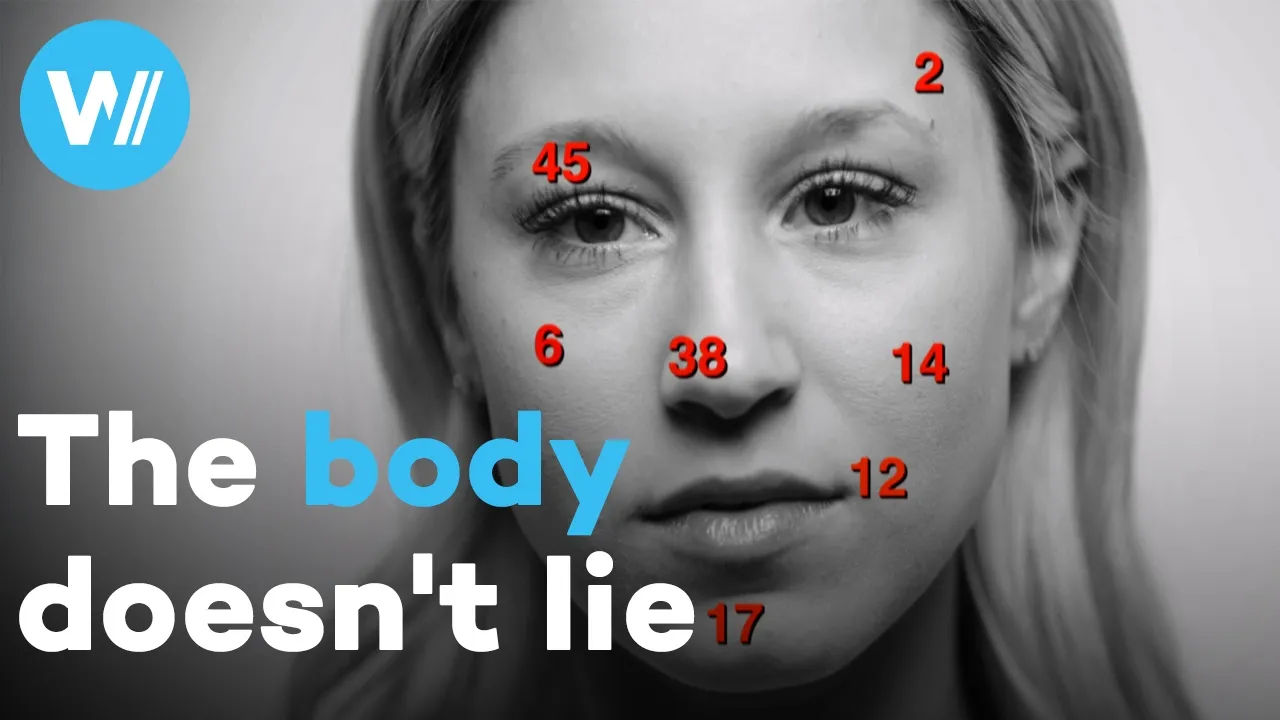
Actions speak louder than words. In this documentary, experts discuss the signals we send without even realizing and explain how to decipher the signals others give us involuntarily. – Forensic Psychologist Dr. Stephen Porter describes how his team helped solve a murder case by detecting deceit in a witness's body language during a televised interview. – In Amsterdam, a pioneering company is developing technology that allows computers to identify a person's gender, ethnicity, and emotional expressions. – Harvard's Social Psychologist Amy Cuddy shares a fascinating insight: not only do our movements reflect our feelings, but altering our body language can also change our emotions. – Behavior Analyst Dr. Lillian Glass analyzes the communication skills of controversial figures such as Donald Trump, exploring what makes them effective communicators beyond political biases. ------- Chapters ▷ 00:00 – Intro ▷ 02:33 – Communicate through facial expressions ▷ 06:47 – Limbic system ▷ 09:30 – The body doesn't lie ▷ 14:54 – Decode: Face ▷ 18:44 – Detection by discomfort ▷ 23:55 – Behavior recognition ▷ 28:31 – Decode: Deception ▷ 34:53 – The
Reading body language like an expert – the science of non-verbal communication (full documentary) is presented by wocomoDOCS. Its listed runtime is 52 minutes. The source link and publisher attribution are provided with the embedded film.
As a society documentary, Reading body language like an expert – the science of non-verbal communication (full documentary) uses reading, language, expert as its central frame. Social documentaries work best as invitations to examine systems through lived experience. Distinguish individual testimony from wider claims, and consider which institutions, incentives and inequalities shape the choices shown.
What to consider before watching
- What evidence, testimony or observation does the film use to explain reading, language, expert?
- Which people, institutions or historical conditions most influence the story told in Reading body language like an expert – the science of non-verbal communication (full documentary)?
- How does wocomoDOCS' framing affect the documentary's emphasis, and which perspectives may deserve further research?
Topics covered in this documentary
Documentary details and original source
- Title
- Reading body language like an expert – the science of non-verbal communication (full documentary)
- Category
- Society
- Runtime
- 52 minutes
- Language
- English
- Publisher
- wocomoDOCS
Free Documentary Vault provides independent discovery, organization and editorial context. The film remains hosted by its original publisher, who controls availability and playback.
Related Society documentaries

What if everything we see, hear, taste, smell, and feel is less reliable than we think? In this documentary, Jennifer Gardy meets scientists using playful, bizarre, and revealing experiments to uncover how the brain builds our perception of reality. As illusions, taste tests, smell trials, touch experiments, and sound tricks expose the hidden links between the senses, the film shows that our experience of the world is not created by one sense at a time, but by a powerful multisensory system that can protect us, mislead us, and even make us feel things that are not really there. ------- Chapters ▷ 00:00 - How Our Senses Create Reality ▷ 01:47 - Seeing Is Believing? ▷ 05:35 - The Truth About Colour ▷ 07:07 - Tasting With Our Eyes ▷ 10:27 - Can Sound Change Taste? ▷ 14:10 - Can We Smell Danger? ▷ 20:02 - Nose Blindness and Bad Smells ▷ 21:24 - Do Names Change What We Smell? ▷ 26:39 - The Rubber Hand Illusion ▷ 32:45 - Can Seeing Make Us Itch? ▷ 37:19 - Can We Trust
wocomoDOCSCan You Trust Your Senses? The Science of Perception | Myth or Science (5/6)

If popping a pill could make you smarter and live longer, would you? Since the advent of smart drugs like Nootropics, more and more people have admitted to taking them to boost their productivity. In this critical documentary, self-proclaimed futurist and speaker Nikolas Badminton undergoes a series of personal experiments with smart drugs (FDA-approved or otherwise) and explores various popular biohacking techniques used by the "most successful and creative people" at the heart of technocratic culture. But do they really work? ------- Chapters ▷ 00:00 – Intro ▷ 01:53 – Escaping burnout ▷ 05:30 – First dip ▷ 15:27 – Testing Nootroo ▷ 19:30 – No calories, just water ▷ 22:43 – Microdosing ▷ 24:25 – Wim Hof Method ▷ 30:57 – On top of the schedule ▷ 32:25 – Even stronger: Modafinil ▷ 36:34 – No more sleep ▷ 40:21 – Doctor's advice ▷ 48:43 – Conclusion ▷ 50:40 – Credits ------- ------- Nootropics are an over-the-counter drug that could change the fabric of our society, also known as ‘smart drugs,’ and they’re globally popular both at parties and
wocomoDOCSEscaping Burnout: The substance that allegedly makes you smarter (Full documentary, 2015)

Prices keep climbing, workdays are stretching longer, and yet our wages remain stagnant. It's becoming a distant dream to have a home to call our own, but it wasn't always like this. This documentary investigates the deep and often misunderstood sources of all problems: Money and Power. Where does it come from? Who decides how it gets used? And most importantly, what does this mean for the millions of us feeling the pinch, while a select few at the top greatly benefit from this skewed system? These are tough questions, but you might be surprised at how straightforward the answers can be. ------- Chapters ▷ 0:00:00 - Intro ▷ 0:04:12 - Seigniorage ▷ 0:08:08 - Commercial Bank Money and Digital Money ▷ 0:10:30 - Misconceptions ▷ 0:14:08 - Expansion of commercial money supply ▷ 0:19:03 - Issues with allowing banks to create money ▷ 0:24:01 - Paradox of the system leads to cyclical crisis ▷ 0:26:22 - Matter of democracy ▷ 0:27:38 - Central Bank Reserves ▷ 0:34:50 - A short history of money ▷ 0:38:18 - Fiat Money ▷
wocomoDOCSThe rich gets richer, the poor gets poorer | 97% Owned (Full documentary)

Summiting Mount Everest is a grueling and dangerous endeavor, known to torture the mind, body, and soul of those who even dare. When a 68-year-old great grandfather attempts this feat, what ensued was the worst disaster in mountaineering history. Documentary Central is the home for compelling documentaries tackling subjects like history, climate change, wildlife, conspiracy and more.
Documentary CentralHow A 68 Year Old Climbed Everest! | Accidental Climber | @DocoCentral

How much oil is left - and what happens when the world’s most important energy source becomes harder, riskier and more expensive to extract? This compelling energy documentary investigates the global dependence on crude oil, the theory of peak oil and the environmental dangers of deep-sea drilling. Beginning with the 2010 Deepwater Horizon disaster in the Gulf of Mexico, it examines how technological failures, financial pressure and difficult drilling conditions contributed to one of the worst oil spills in history. Travel from oil fields in Austria and Saudi Arabia to research centres in Europe, Canadian oil sands and offshore platforms in the Gulf of Mexico. Scientists, geologists, engineers and industry experts reveal how oil is formed, how new reserves are discovered and why many of the world’s largest oil fields may be declining. The documentary also explores enhanced oil recovery, horizontal drilling, water injection, polymer technology, Arctic exploration and the enormous financial and environmental costs of extracting unconventional oil. It investigates the use of chemical dispersants during the Deepwater Horizon cleanup and questions their impact on marine ecosystems and human
wocomoDOCSOil: The Race for the Last Reserves | The Struggle for Oil - Geological Deceptions (Full Film)

Two modern couples are trying to spend a whole year living like 19th Century pioneers in the Canadian wilderness. While summer and autumn were full of activity, winter brings freezing temperatures and a whole lot of boredom. 💚 Join the Absolute History club to get access to exclusive member benefits!
Absolute History