documentaries

Real Wild

Page 12 / 19

Real Life Near Death Animal Attacks | Human Prey Part 1 documentary thumbnailEN95 min
Real Life Near Death Animal Attacks | Human Prey Part 1

Humans love animals but sometimes the consequences of getting too close can be fatal. Here are the stories of wild animals that become almost killers. A Texan man's visit to an African chimp sanctuary becomes a deadly struggle when he and his guide are attacked by the colony's escaped alpha male. A 600-pound Siberian tiger breaks free and pursues one of the organizers, a man is attacked by lions whilst trying to treat a member of the pride, and a hyena attacks a campsite causing havoc.

Real Wild

Real Life Near Death Animal Attacks | Human Prey Part 1

95 minNature & Environment
Searching For The Rarest Bear On Earth | Moksgm'ol documentary thumbnailEN52 min
Searching For The Rarest Bear On Earth | Moksgm'ol

Enter Canada's Great Bear Rainforest & catch a glimpse of a white-colored bear that is not a polar bear! This mammal called the Kermode Bear is the rarest bear to be found. It lives in a unique habitat with other forest dwellers like wolves & other bears. The local community believes that this bear symbolizes the forest's spirit & rightly calls it the Spirit Bear.

Real Wild

Searching For The Rarest Bear On Earth | Moksgm'ol

52 minNature & Environment
Why Are The Galapagos Iguanas Disappearing? | Vanishing Dragons documentary thumbnailEN44 min
Why Are The Galapagos Iguanas Disappearing? | Vanishing Dragons

The Galapagos Islands is home to one of the most unusual creatures in the world, the marine iguana. These animals have for billions of years survived in Galapagos & adapted to their hostile environment. A few years ago, however, they started to die in huge numbers & experts are at a loss. What threatens those dinosaur-like animals & what can be done to prevent them from going extinct?

Real Wild

Why Are The Galapagos Iguanas Disappearing? | Vanishing Dragons

44 minSociety
Tracing The Steps Of The Most Fascinating Animals On Earth | Gobi Bear documentary thumbnailEN51 min
Tracing The Steps Of The Most Fascinating Animals On Earth | Gobi Bear

The extremely shy Gobi bears are among the world‘s rarest animals. About 30 supposedly have survived in the Gobi desert. Mongolian scientists have now verified the existence of the legendary small brown bear. At this moment a comprehensive research and preservation program is getting started. A thrilling expedition, tracing one of the most fascinating animals on earth.

Real Wild

Tracing The Steps Of The Most Fascinating Animals On Earth | Gobi Bear

51 minNature & Environment
Wolf Separated From Pack & Forced To Fend For Itself | Megeti: Africa's Lost Wolf documentary thumbnailEN50 min
Wolf Separated From Pack & Forced To Fend For Itself | Megeti: Africa's Lost Wolf

This is the incredible story of Megeti, a lone Ethiopian wolf who loses her pack and is suddenly left to fend for herself. It is vital for the lost young wolf to find a new family and this quest pushes her into foreign territory, occupied by cattle breeders and other wolves. Her attempts to be accepted into a new pack are risky, but the hunting grounds and group protection are crucial to her survival.

Real Wild

Wolf Separated From Pack & Forced To Fend For Itself | Megeti: Africa's Lost Wolf

50 minMystery
Bear Cubs Experience Snow For The First Time | Band Of Bears Part 1 documentary thumbnailEN44 min
Bear Cubs Experience Snow For The First Time | Band Of Bears Part 1

High up in Europe's North lies the kingdom of brown bears. Hidden in the forests of Finland, Sweden, and Norway, thousands of bears live there to this day. In the middle of winter, the females give birth to their cubs. For months, the bear cubs remain close to their mother and are warmed and suckled, before the triplets begin to discover their world outside of the cave. Together with the three cubs - the band of bears - this exceptional nature documentary takes us on a journey of discovery in Scandinavia's wild forests, from the mighty moose, clever wolves, forest reindeer, and hovering flying squirrels.

Real Wild

Bear Cubs Experience Snow For The First Time | Band Of Bears Part 1

44 minSociety
Tracking Baboon Bandits:Car Break-ins and Restaurant Raids documentary thumbnailEN52 min
Tracking Baboon Bandits:Car Break-ins and Restaurant Raids

They steal handbags, open cars, and have no respect for humans. The last baboons of the Table Mountain region have become a real-life issue. The animals are deliberately run over by cars, shot, and poisoned. According to scientists the baboons have to relearn that humans are a threat in order to survive. This documentary follows the "Baboon Police“ and their marauding monkey clans. Is there still a chance for humans and baboons to live in a peaceful neighborhood?

Real Wild

Tracking Baboon Bandits:Car Break-ins and Restaurant Raids

52 minSociety
The Man Who Raises Wild Bears | The Gentle Bearman Of Emo documentary thumbnailEN69 min
The Man Who Raises Wild Bears | The Gentle Bearman Of Emo

In northwestern Ontario, lies the little town of Emo. Michael Scheibler and his wife, Betty, bought 320 acres of land here. Little did they know there was something unusual about this place. Animals started appearing, finding sanctuary here. Deer, raccoons, a wolf, and then...Bears! Soon, Michael and the bears would develop mutual trust in each other and he began to do the remarkable. He began to feed the bears by hand. This unique documentary will take you on an unpredictable journey and a heartwarming story of how wild animals taught one broken man to be human again.

Real Wild

The Man Who Raises Wild Bears | The Gentle Bearman Of Emo

69 minSociety
The Largest Grey Seal Gathering In The World | Sable Island Documentary documentary thumbnailEN49 min
The Largest Grey Seal Gathering In The World | Sable Island Documentary

On the remote shores of Sable Island, N.S., we meet the world's largest breeding colony of grey seals and the people who study them. These creatures are sleek, aquadynamic, and very fast in the water. They spend months at sea but are preparing for what's ahead, 3 weeks on Sable Island where they will give birth, nurse their pubs, and mate again. Nobody knows for sure why so many breeds here but one thing we do know is that they love companionship.

Real Wild

The Largest Grey Seal Gathering In The World | Sable Island Documentary

49 minTravel & Adventure
Why Orca Whales Are Close To Extinction | Dammed Extinction documentary thumbnailEN47 min
Why Orca Whales Are Close To Extinction | Dammed Extinction

Orca whales have hunted chinook salmon along the Pacific Coast of the United States for years. For the last 40 years, renowned whale scientist Ken Balcomb has closely observed them. Orcas need roughly a million salmon a year but as salmon numbers plummet so do orcas. This documentary takes an insight into how four dams are causing a scarcity of chinook salmon and pushing the critically endangered southern resident orcas toward extinction.

Real Wild

Why Orca Whales Are Close To Extinction | Dammed Extinction

47 minSociety
The Yellowstone Coyote: From Top Dog To Underdog documentary thumbnailEN52 min
The Yellowstone Coyote: From Top Dog To Underdog

In the 1920s wolves were completely wiped out of Yellowstone Park. The coyote then became the top dog in the Park for 60 years. With the re-introduction of the wolf in 1995, coyotes went from top dog to underdog. It is in Yellowstone that we can best understand the coyote of the past, for it is here that the coyote must confront the grizzly bear, the mountain lion, and now the gray wolf, his closest relative, and now his most dangerous adversary. Coyotes mate for life, with the male helping to feed, guard, and defend the pups. They eat mostly small rodents, mice, and voles. But in winter they may survive largely on the remains from wolf kills.

Real Wild

The Yellowstone Coyote: From Top Dog To Underdog

52 minSociety
How Otters Survive In The Rocky Mountains | River Masters documentary thumbnailEN51 min
How Otters Survive In The Rocky Mountains | River Masters

In remote regions of the Rocky Mountains of the United States, the river otter still thrives. They live in the lakes and rivers where fish also prosper. We follow two families of otters – two mothers with their young. At first, they fish and frolic as independent families. However, the families join together to face challenges, such as beavers invading their habitat, as well as migrating cutthroat trout to their spawning beds, and in the wintertime, avoiding coyotes who depend on the otters for some of their winter sustenance.

Real Wild

How Otters Survive In The Rocky Mountains | River Masters

51 minNature & Environment
Australia's Diverse Tropical Rainforest | Australia's Wild Places documentary thumbnailEN50 min
Australia's Diverse Tropical Rainforest | Australia's Wild Places

Daintree National Park is a magical meeting of rainforest and reef, lying at the heart of the world heritage-listed wet tropics of Queensland. The area is a living link to our planet's distant past, to a primeval world from more than 50 million years ago. Biologist Peter Byrne and his research team ride a giant crane to gain a unique view of what many consider to be the last biological frontier.

Real Wild

Australia's Diverse Tropical Rainforest | Australia's Wild Places

50 minNature & Environment
Whale Shark: Amazing Lifestyle Of The Largest Fish In The Sea | Australia's Wild Places documentary thumbnailEN50 min
Whale Shark: Amazing Lifestyle Of The Largest Fish In The Sea | Australia's Wild Places

On the remote coastline of Australia's northwest, there are great natural wonders to be found. Above the sea on this sun-baked coast, there is very little, but each year, mysterious ocean visitors arrive. The biggest fish in the sea, the whale shark, vanishes almost as soon as they arrive, but what brings them to this place at all?

Real Wild

Whale Shark: Amazing Lifestyle Of The Largest Fish In The Sea | Australia's Wild Places

50 minSociety
Surviving The Harsh Australian Outback | Australia's Wild Places documentary thumbnailEN50 min
Surviving The Harsh Australian Outback | Australia's Wild Places

The Australian desert is home to some of the most deadly animals in the world. In this Real Wild documentary, we explore how animals live in the high heated Australian outback. The famous marsupial kangaroo along with lizards, camels, and wild horses are among these animals. We also see how the bush operates and struggles in the extreme heat, which often leads to uncontrollable fires. The Australian red desert is named this due to the rocks containing high amounts of iron. In this type of environment, these rocks actually begin to rust. As the rust expands, it weakens the rock and helps break it apart. The oxides produced through this process give the ground its reddish hue.

Real Wild

Surviving The Harsh Australian Outback | Australia's Wild Places

50 minSociety
The Reason Why Extinction Rate Is So High | 1000 Days For The Planet documentary thumbnailEN86 min
The Reason Why Extinction Rate Is So High | 1000 Days For The Planet

We are changing our world and species are disappearing. We can't just do things and not think about the long-term consequences. Human impact on biodiversity has greatly increased and the massive expansion of civilization has caused nature to suffer. All over the earth plants and animals are struggling to coexist. Can we change this before it's too late?

Real Wild

The Reason Why Extinction Rate Is So High | 1000 Days For The Planet

86 minSpace & Universe
What Exactly Are Tasmanian Devils? | Australia's Wild Places documentary thumbnailEN49 min
What Exactly Are Tasmanian Devils? | Australia's Wild Places

Just 460,000 people live in Tasmania, an island off the southeast coast of mainland Australia. While its human population is small, the majestic state is rich in natural wonders and is known for its large tracts of pristine wilderness. Wallabies, wombats, and the island's unique carnivorous marsupial, the Tasmanian devil, enjoy their isolated habitat, nearly devoid of natural predators.

Real Wild

What Exactly Are Tasmanian Devils? | Australia's Wild Places

49 minSociety
A Deep Sea Dive With Turtles And Manatees | 1000 Days For The Planet documentary thumbnailEN84 min
A Deep Sea Dive With Turtles And Manatees | 1000 Days For The Planet

The manatee lives in coastal areas which are being damaged by the inhabitation of humans. Located in the south of Mexico, Belize is a tourist hotspot that means lots of boats. This means increased danger to the manatee. Can the locals do enough to protect them? Sea turtles have inhabited the oceans for over 1000 million years. There are 7 species of sea turtles with 6 of them on the red list. Today they are threatened by pollution, poaching, and accidental entrapment.

Real Wild

A Deep Sea Dive With Turtles And Manatees | 1000 Days For The Planet

84 minSpace & Universe
Did You Know This About The Australian Alps? | Australia's Wild Places documentary thumbnailEN50 min
Did You Know This About The Australian Alps? | Australia's Wild Places

It may come as a surprise that Australia doesn't just have flat plains and searing deserts. It actually has snow-capped mountains of its own. The peaks of the Australian Alps are over 600 million years old. Mt. Kosciuszko is the highest mountain on the continent and its slopes harbor rare and unusual species, adapted to the harsh conditions. See how the wombat survives in these cold temperatures and how wild horses thrive.

Real Wild

Did You Know This About The Australian Alps? | Australia's Wild Places

50 minSociety
Is It Too Late To Save Orangutan's? | 1,000 Days For The Planet documentary thumbnailEN81 min
Is It Too Late To Save Orangutan's? | 1,000 Days For The Planet

Is it too late to save the Orangutans? On the island of Sumatra, in Indonesia, these iconic species are barely hanging on. Orangutans are considered critically endangered. The massive wave of deforestation for oil palm production shows no sign of slowing down. Theoretically protected, the island's precious peatlands are being chewed up. Whole forests are set on fire killing every living thing in this paradise of biodiversity. But scientists have mobilized to save the remaining orangutans. In the heart of the tropical forest, they do what they can to halt the carnage and rehabilitate the last few survivors of an uneven fight against a corrupt and merciless authority.

Real Wild

Is It Too Late To Save Orangutan's? | 1,000 Days For The Planet

81 minSpace & Universe
The Ocean's Spectacular Migrators 4K | 1,000 Days For The Planet documentary thumbnailEN88 min
The Ocean's Spectacular Migrators 4K | 1,000 Days For The Planet

In this episode of 1,000 Days for the planet, the Sedna 4 team travels to the archipelago of the Azores in the Atlantic to learn more about humpback whales, as the ocean's biodiversity continues to be threatened. They learn about the research the local population undertaking to protect some of the biggest migratory species like whales, turtles, sharks, and sea birds. Next the team travels to the small Island of Anuta, a smaller island which is part of the Solomon Islands in the Pacific Ocean, and one of the world's most remote destinations. Here, they speak with the indigenous community and see how they live, using only the available resources at hand. TW* Dead fish at 2:32

Real Wild

The Ocean's Spectacular Migrators 4K | 1,000 Days For The Planet

88 minSpace & Universe
Tracking Indonesia's Komodo Dragons 4K | 1,000 Days For The Planet documentary thumbnailEN84 min
Tracking Indonesia's Komodo Dragons 4K | 1,000 Days For The Planet

The Sedna 4 team travels to Komodo island in Indonesia to learn more about the infamous Komodo dragons. As they are joined by biologists Achmad and Denny, they will work to undertake a a population census of the dragons on a number of islands in the area. The team locates the dragons to track their population for conservation purposes, as well as interview some of the locals to understand how the villagers and dragons manage to coexist. Next, the Sedna 4 team travels to the Cayman Islands in the Caribbean. On the island of Grand Cayman, the population explosion has reduced the habitat of already threatened species, such as the rare blue iguana. Considered extinct in the wild, biologist Fred has made it his mission to save them from extinction. Elsewhere in the Caribbean, some Indo-pacific fish were accidentally released into the sea back in the 1990’s. This lionfish has reproduced and populated the Caribbean at an alarming rate, causing other species to decline up to 80%. The team meets with local divers to see how they keep the lionfish

Real Wild

Tracking Indonesia's Komodo Dragons 4K | 1,000 Days For The Planet

84 minSpace & Universe
Protecting Our Sharks and Humpbacks 4K | 1,000 Days For The Planet documentary thumbnailEN88 min
Protecting Our Sharks and Humpbacks 4K | 1,000 Days For The Planet

The Sedna 4 team heads to the Azores which is one of the places where Hammerhead sharks can be found. Hammerhead sharks are amongst the most endangered sharks in the world, and the team aims to install temporary satellites on the young hammerhead sharks in hopes of protecting the Azores nursery habitats where they typically reside. The team then heads to Cocos island off the coast of Costa Rica to do the same there. Next, the Sedna 4 team then travels to Silver Bank, which is off the coast of the Dominican Republic. Every winter humpback whales return to this protected area to breed and give birth By going here and spending time with them the team hopes to better understand them so they can better protect them. Because so few people have permits to go to Silver Bank during the breeding season, the Sedna 4 team joins the Sun Dancer en route for the sanctuary. Using photography as the basis of their research, they can identify different whales as they come and go and get a better understanding of

Real Wild

Protecting Our Sharks and Humpbacks 4K | 1,000 Days For The Planet

88 minSpace & Universe
Saving Indonesia's Elephants and Gibbons 4K | 1,000 Days For The Planet documentary thumbnailEN80 min
Saving Indonesia's Elephants and Gibbons 4K | 1,000 Days For The Planet

The Sedna 4 Team travels to the island of Sumatra in Indonesia, where much of the biodiversity has been removed in exchange for monoculture, creating habitat loss for wildlife, like the Sumatran elephants. Arriving in the Province of Riau, National Parks have been recently established to protect the remaining biodiversity and wildlife, with the WWF and local conservationists and biologists, working with them to show which areas are safe to migrate to and which aren’t. The team then travels to Borneo where habitat loss continues to be a problem for the Gibbons. They go to Kalaweit, the worlds largest private Gibbon Protection Project. By re-creating natural living conditions for the animals they can learn to socialize with fellow Gibbons and learn to rehabituate. Due to continual loss of habitat, many of the Gibbons find Kalaweit to be their permanent home, which is why Kalaweit is now working on habitat protection by buying land to preserve it.

Real Wild

Saving Indonesia's Elephants and Gibbons 4K | 1,000 Days For The Planet

80 minSpace & Universe
The Tropical Wildlife Of Costa Rica And Panama 4K | 1,000 Days For The Planet documentary thumbnailEN88 min
The Tropical Wildlife Of Costa Rica And Panama 4K | 1,000 Days For The Planet

The Sedna 4 Team travels to the Highlands of Costa Rica and through its lush forests to find the elusive jaguar. Due to loss of habitat and coexistence with humans, the jaguars space is becoming smaller and their protected spaces are not connected by migration corridors, rather in small scattered pockets throughout Central and South America. Because of this, jaguars have less prey and are often found preying on livestock. The team meets some of the conservationists working to help keep the jaguar population protected. Elsewhere in Panama, due to the heavy traffic that comes through the canal, a mysterious microscopic fungus has made its way into the rainforests and is killing off the frogs and other amphibians. With no cure for this epidemic, species are beginning to go extinct, so conservation has become imperative. The Sedna 4 team continues on in the Panama rainforest for a look at the 3 toed sloth on Barro Colorado Island. Residing in the canopy of the rainforest, researcher Bryson takes the team for an exclusive look into their habitat on this private research-only

Real Wild

The Tropical Wildlife Of Costa Rica And Panama 4K | 1,000 Days For The Planet

88 minSpace & Universe
Pack Life At Yellowstone National Park | White Wolf documentary thumbnailEN104 min
Pack Life At Yellowstone National Park | White Wolf

In the of Yellowstone National Park lies Hayden Valley, where in the winter months it can reach temperatures of 40 below with up to 20 feet of snow. Few animals can survive in these conditions, and the wolves that currently live there were hunted to extinction and gone for almost 80 years. With their reintroduction to the Park in the late 1990’s, this documentary intimately looks at the lives of both the Hayden pack and the Canyon pack.

Real Wild

Pack Life At Yellowstone National Park | White Wolf

104 minSociety
3 Hours of Dangerous Animal Encounters | Wild America documentary thumbnailEN172 min
3 Hours of Dangerous Animal Encounters | Wild America

In this compilation, we discover what happens when animal encounters go wrong. Like when a wild bear comes face to face with a woman on a TV set, or when a mother gets protective of her babies. We also see dangerous encounters between different species, like a grasshopper mouse and a scorpion, or a copyu and an alligator. We also cover some of Marty’s favorite animals, and explore some of the wonderful aviary species, like white pelicans and the ever-majestic bald eagle. TW* 4:31 bear attack and graphic photo

Real Wild

3 Hours of Dangerous Animal Encounters | Wild America

172 minNature & Environment
The Increasingly Rare Monkeys Of Bangladesh | Hoolock Gibbons Grasping The Last Branch documentary thumbnailEN49 min
The Increasingly Rare Monkeys Of Bangladesh | Hoolock Gibbons Grasping The Last Branch

The Western Hoolock Gibbon is the only species of ape that is native to Bangladesh and due to forest destruction, both their habitat and population is shrinking at a rapid rate. With the remaining species at risk, this documentary looks at public awareness of the problem to help conserve and protect.

Real Wild

The Increasingly Rare Monkeys Of Bangladesh | Hoolock Gibbons Grasping The Last Branch

49 minSociety
German Wildlife's Spring Awakening | Germany's Underworld documentary thumbnailEN50 min
German Wildlife's Spring Awakening | Germany's Underworld

In the middle of winter in the highlands of Germany, snow covers the ground and the lakes are frozen over, While eagles penetrate the ice to try and find food, most of the marine life like carp and catfish lie dormant until it warms up again, with the exception of the pike who hunts all year round. As the winter comes to an end, we head towards the North Sea where the snow begins to melt, and encounter the wildlife awakening again for Spring, from toads and snakes, to beavers looking for their latest meal.

Real Wild

German Wildlife's Spring Awakening | Germany's Underworld

50 minNature & Environment
2 Hours Of Apex Predators Hunting Their Prey | Wild America documentary thumbnailEN165 min
2 Hours Of Apex Predators Hunting Their Prey | Wild America

In this compilation, predator and prey is the main event. From bobcats hunting hares to wolves hunting possums, no animal is safe every time from an apex predator. And when thats not the case, there's always disputes, whether its between a pack of wolves and a wolverine over some food or some rams who just cant seem to get along. However, sometimes these prey species are clever with their manoeuvres, and these herbivores manage to outsmart their carnivorous counterparts.

Real Wild

2 Hours Of Apex Predators Hunting Their Prey | Wild America

165 minSociety
The Wildlife Of The Alps and The River Rhine | Germany's Underworld documentary thumbnailEN49 min
The Wildlife Of The Alps and The River Rhine | Germany's Underworld

Germany's rivers, streams, and lakes behold an entire secret world hidden beneath the surface with creatures both big and small. From the Berchtesgaden National Park in the Alps to the River Rhine, this documentary explores how water flows. In the Spring when the sun melts the snow, the glaciers melt from below forming an underground cave, creating the ice back river. This river flows down the mountain leading to some of the highest waterfalls in Germany, flowing down through limestone creeks and into fjords. Explore the wildlife that lives in this water and see this rarely filmed environment!

Real Wild

The Wildlife Of The Alps and The River Rhine | Germany's Underworld

49 minNature & Environment
Up Close With Our Most Ferocious Predators | Animal Society documentary thumbnailEN47 min
Up Close With Our Most Ferocious Predators | Animal Society

In this compilation, learn about some of earths most majestic predators. From wolves and bears to alligators and carnivorous turtles. Related to the North American coyote, the wolf typically lives in a pack of 5-12 in a highly sophisticated social structure, run by one alpha. Learn more about the ins and outs of pack life before moving onto foxes, a relative of the fox which lives on every continent except Antartica. These predators pounce on their prey and live in smaller groups, pairs, or alone unlike the wolf. With bear species ranging from 140-2,400 pounds with powerful canines and claws for eating and digging, most bears are actually omnivorous. Alligators, caimans, crocodiles, and, gharials, all have a noticeable difference between their teeth and jaws based on their diet. Turtles are the oldest living group of reptiles and are distantly related to both crocodiles and dinosaurs, ranging from 3 inches all the way to 6.5 feet! And lastly, with over 3,000 species, snakes are one of the most diverse species of reptiles, including the sea snake who only comes ashore to

Real Wild

Up Close With Our Most Ferocious Predators | Animal Society

47 minNature & Environment
The Amazing Harpy Eagle | Animal River Challenge documentary thumbnailEN50 min
The Amazing Harpy Eagle | Animal River Challenge

Deep in the South American rainforest in the country of Guyana lies the Essequibo River which is full of wildlife like tapirs, anacondas, and eagles. Follow along as Rainer and Sandy adventure the rainforest and seek out the Harpy Eagle in the canopy of the Rainforest. The Harpy Eagle is the one of the greatest predators in the rainforest, with claws longer than a grizzly bear, and the sharpest beak in nature. These caring parents rule the canopy.

Real Wild

The Amazing Harpy Eagle | Animal River Challenge

50 minNature & Environment
Can Ladybug DNA Fight Off Cancer? | Bugs: Nature's Little Superheroes documentary thumbnailEN52 min
Can Ladybug DNA Fight Off Cancer? | Bugs: Nature's Little Superheroes

Did you know that with over 6 million species, insects are natures most successful creatures on earth? They make up more than 90% of the animals on the planet. In this documentary, Professor Andreas, one of the worlds leading biotechnology specialists, is keen to learn more about Asian Ladybirds/Ladybugs and their powerful immune systems. He believes that their germ defending abilities will help to develop new medicine for mankind. Elsewhere, could the Colorado Potato Beetle provide insight into innovative new ways of construction and design?

Real Wild

Can Ladybug DNA Fight Off Cancer? | Bugs: Nature's Little Superheroes

52 minHealth & Medicine
Chasing The Giants Of Guyana With Caimans and Anacondas documentary thumbnailEN50 min
Chasing The Giants Of Guyana With Caimans and Anacondas

Deep in the South American rainforest in the country of Guyana lies the Essequibo River which is full of wildlife like tapirs, anacondas, and eagles. Follow along as Rainer and Sandy adventure the rainforest and search for the elusive Black Caiman. The Caiman is a relative of the alligator, but can outgrow it in size, and it is the biggest predator in the South American rainforest river.

Real Wild

Chasing The Giants Of Guyana With Caimans and Anacondas

50 minSociety
Alaska's Gigantic Grizzly Bears | Giant Grizzlies documentary thumbnailEN48 min
Alaska's Gigantic Grizzly Bears | Giant Grizzlies

The Kodiak Bear is a unique species of Grizzly, known to be the largest species of bear in the world, living along the Kodiak Archipelago of Southern Alaska. In this documentary, cinematographer Andreas journeys into the depths of the great Alaskan wilderness to find some of the largest grizzly bears in the US. In his expedition, he travels through some of Alaska's most remote areas with his friend Greg and learns more about how the native Alaskan population lives in some of the most inhospitable spots of the frigid US State.

Real Wild

Alaska's Gigantic Grizzly Bears | Giant Grizzlies

48 minSociety
Baby Warthog Goes On The Hunt For A Friend | Wildlife Nannies documentary thumbnailEN26 min
Baby Warthog Goes On The Hunt For A Friend | Wildlife Nannies

Nelly, the 5-week-old baby Warthog is on the search to make new friends in the wildlife park she lives on when she cant find her nanny Heike. Elsewhere, 18-month-old Lumholtz Tree Kangaroo Dorothy is learning how to climb trees, as well as what she can and cannot eat from the help of her nanny Margit before she is released into the rainforest.

Real Wild

Baby Warthog Goes On The Hunt For A Friend | Wildlife Nannies

26 minNature & Environment
Saving The American Crocodile From Poachers | Changing Seas documentary thumbnailEN25 min
Saving The American Crocodile From Poachers | Changing Seas

The American Crocodile is found in 17 countries, from the south United States and Caribbean through to Central America and down to Peru. In Jamaica, crocodiles live along the coast due to their nesting habitats, and because of construction and hunting, their habitat is shrinking. Learn more about the cultural heritage of crocodiles in Jamaica and how the country is working to save the species.

Real Wild

Saving The American Crocodile From Poachers | Changing Seas

25 minSociety
Orphaned Vervet Monkey Finds New Family | Wildlife Nannies documentary thumbnailEN26 min
Orphaned Vervet Monkey Finds New Family | Wildlife Nannies

10-week-old orphaned Vervet Monkey Alfi goes for a trip to the monkey house to meet his other Vervet Monkeys, as all goes well they then all travel to the wilderness and baby Alfi feels very comfortable with his new monkey family. Elsewhere, 2-year-old Dolphin Juan lives with his mom and grandma and is training to learn new tricks with his nanny Miguel.

Real Wild

Orphaned Vervet Monkey Finds New Family | Wildlife Nannies

26 minNature & Environment
The Parasitic Sea Worm Devastating Florida's Coral Reefs | Changing Seas documentary thumbnailEN25 min
The Parasitic Sea Worm Devastating Florida's Coral Reefs | Changing Seas

The Florida Keys National Marine Sanctuary is home to the worlds third largest coral barrier reef, and is home to all kinds of diverse species of flora and fauna. To take pressure off the reef and allow for regeneration, the retired Military ship Vandenberg was deliberately sunk in 2009 which has since given divers and marine life a new space to inhabit. However, one of its new inhabitants is the invasive worm snail, the Vandy. Could this non-native species spread past the ship and to other coral reefs?

Real Wild

The Parasitic Sea Worm Devastating Florida's Coral Reefs | Changing Seas

25 minSociety
Baby Elephant Meets Schoolchildren | Wildlife Nannies documentary thumbnailEN26 min
Baby Elephant Meets Schoolchildren | Wildlife Nannies

In South Africa, handler Joseph has been taking care of 4-year-old Elephant Maliaka her whole life since she lost her mom. They have a special bond, and in this episode, he takes her to a wildlife park to meet and educate schoolchildren about elephants. Elsewhere in Australia, Anya, a baby Wallaby is being nursed by her nanny Guni and a rescued Echidna with an injured snout is treated. *TW at 21:30: animal surgery

Real Wild

Baby Elephant Meets Schoolchildren | Wildlife Nannies

26 minNature & Environment
The Incredible Life Of Dolphins | Changing Seas documentary thumbnailEN25 min
The Incredible Life Of Dolphins | Changing Seas

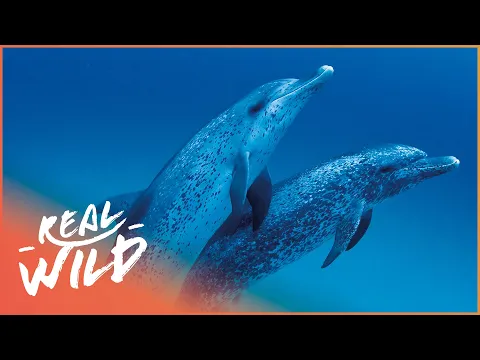
Dr. Denise has dedicated her career to learning about how dolphins communicate, behave, and socialize in one area of the Bahamas. Through her observations she has documented multiple generations of Atlantic Spotted Dolphins, understanding how they comprehend one another and function as a society of their own. Follow along to see the friendships she has made with one of the oceans favourite creatures.

Real Wild

The Incredible Life Of Dolphins | Changing Seas

25 minBiography