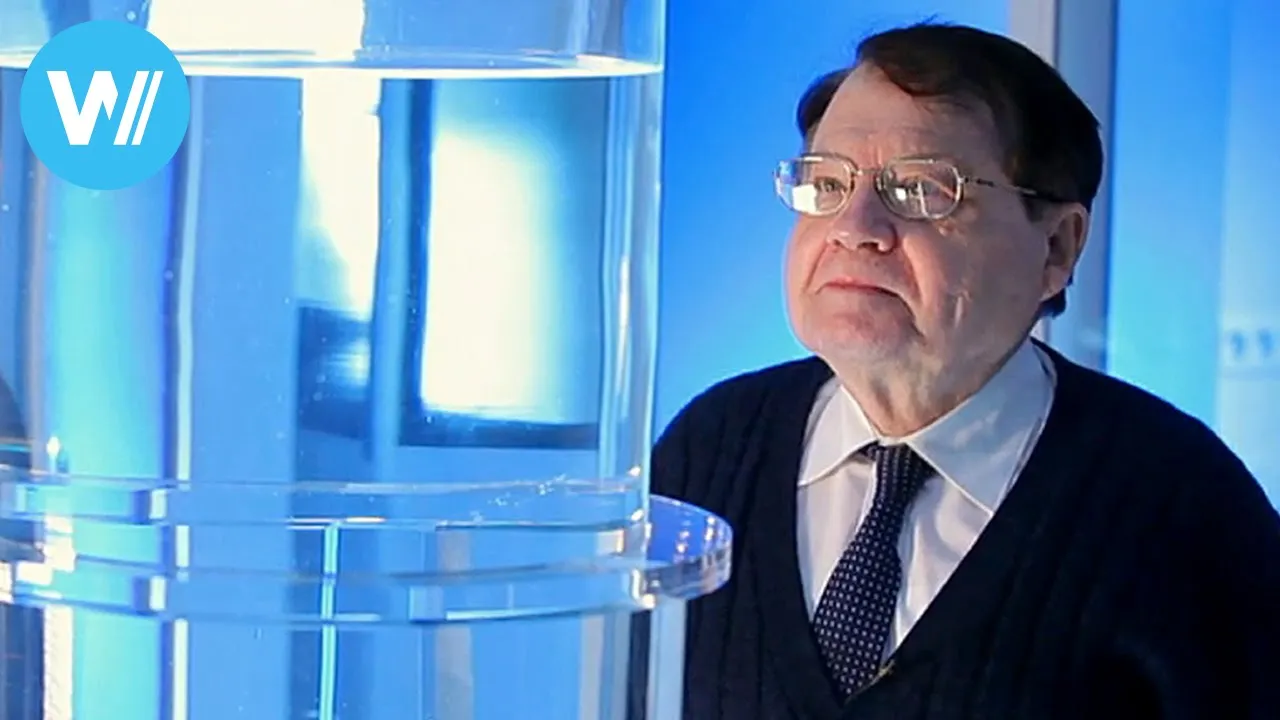
About Water Memory (2014 Documentary about Nobel Prize laureate Luc Montagnier)
Water is the key element of life, but new information is coming to light on the element which we thought we were so familiar with: information which could potentially reimagine our tree of life. That is the belief shared by the advocates of a surprising theory called "water memory". For Prof. Luc Montagnier, water has the ability to reproduce the properties of any substance it once contained. Water would have the ability to retain a memory of the properties of the molecules. What if Alzheimer's, Parkinson's, autism, HIV and even cancer could be treated thanks to this controversial theory? Directors: Christian Manil & Laurent Lichtenstein Duration: 52' Year: 2014 Producer: Daniel Leconte
Water Memory (2014 Documentary about Nobel Prize laureate Luc Montagnier) is presented by wocomoDOCS. Its listed runtime is 50 minutes. The source link and publisher attribution are provided with the embedded film.
As a society documentary, Water Memory (2014 Documentary about Nobel Prize laureate Luc Montagnier) uses water, memory, nobel as its central frame. Social documentaries work best as invitations to examine systems through lived experience. Distinguish individual testimony from wider claims, and consider which institutions, incentives and inequalities shape the choices shown.
What to consider before watching
- What evidence, testimony or observation does the film use to explain water, memory, nobel?
- Which people, institutions or historical conditions most influence the story told in Water Memory (2014 Documentary about Nobel Prize laureate Luc Montagnier)?
- How does wocomoDOCS' framing affect the documentary's emphasis, and which perspectives may deserve further research?
Topics covered in this documentary
Documentary details and original source
- Title
- Water Memory (2014 Documentary about Nobel Prize laureate Luc Montagnier)
- Category
- Society
- Runtime
- 50 minutes
- Language
- English
- Publisher
- wocomoDOCS
Free Documentary Vault provides independent discovery, organization and editorial context. The film remains hosted by its original publisher, who controls availability and playback.
Related Society documentaries

"We thought we were going to attend a U.N. meeting and we witnessed a racist hate fest instead". Anti-Semitic slogans, flyers praising Hitler to come back from the dead, fundamentalist propaganda etc. These are images that have haunted many NGOs since the 2001 Durban Conference in South Africa. It all happened a week before 9/11. As the United States waged war against terrorism and deserted UN regulations, Asian and African states took hold of the majority in the new Human Rights Council created in 2006. For the first time, a documentary explains the inner workings of Geneva’s UN premises. The documentary seeks to get to the bottom of what became of the 1948 Universal Declaration on Human Rights. What we discover there seems very far from the miraculous consensus orchestrated by Eleanor Roosevelt 60 years ago. Nowadays, the Council hosts a direct confrontation between two visions of the world. Dictatorships and authoritarian states lecturing the few democracies present in the Assembly. As Robert Badinter - the father of death penalty’s abolition in France - puts it: "the question of human
wocomoDOCSHuman Rights: an endless battle (2009 Documentary on the U.N. debates)

The battle for the elixir of life - water - is currently a salient topic of discussion in Europe. This has been triggered by fears that the EU might privatise the water supply. The basic question: does the provision of water have to be state-organised or should private companies be allowed a shot too? The EU Commission claims their stance isn't a question of forced privatisation, rather greater transparency in public procurement. Nevertheless, opponents see the common ownership of water being threatened by the commercial interests of big business. Furthermore, critics fear that water is increasingly becoming a profit-making object of speculation. Many even predict that water will ultimately overtake oil in its ability to spark conflict as a resource. The consequences for consumers are always the same - lower water quality and increased costs. But is this all just scaremongering and unnecessary hysteria? Original title: The Battle for Water Year: 2013 Directed by Alexander Steinbach and Patrick Hafner Produced by ORF, Interspot Film and AGB Films
wocomoDOCSWater - human right or private commodity? Europe's ongoing battle with privatisation

Climate change, pollution, depleting natural resources… the consequences of global energy production are numerous and of great concern. The situation is critical; it’s time we started producing in a way that meets the growing needs of populations and building the future, all the while preserving the planet. Going forward, what innovations will enable us to be independent tomorrow? What will the energy of the future look like? Chapters ▷ 00:00 - Introduction ▷ 01:56 - Wind Farms ▷ 09:18 - Altaeros Energies, Airborne Turbines ▷ 12:06 - Kitepower, EnerKíte ▷ 17:22 - KiteGen ▷ 19:37 - Wind Tree ▷ 22:11 - El Hierro ▷ 31:13 - Fountain Trees ▷ 35:19 - Brazil's First Player-Powered Football Pitch ▷ 38:03 - Pavegen ▷ 42:29 - Grätzel Cells, Solaronix ▷ 53:38 - End Credits ------- ------- From new technologies to great discoveries, today, we leave for a trip in the Future. This journey is the opportunity for us to find out what innovations are being – or about to be – made by men and women who decides to move forward. With a
wocomoDOCSEnergy of the Future: Clean Energy Solutions That Could Power Tomorrow | Shapers of Tomorrow (4/8)

Michael 'Wolf' Pasakarnis often claimed that he walked in two worlds at once. An artist with a kind heart and adventurous spirit, he was struck and killed by lightning at 29 years old. He left stunning evidence that he knew where, when, and how it would happen. He came back with an important message for all of us. Now Wolf’s story is a brave and captivating documentary, Wolf’s Message, inspired by the book of the same name by acclaimed author and spiritual teacher, Suzanne Giesemann, which explores the profound true story of a young man's afterlife communication. Directed by filmmaker Jim Spruell, Wolf's Message follows the true story of Wolf's parents, Mike and Beth Pasakarnis. After his passing, they discovered a poem and drawings he left behind, along with other clues about how he would depart from this world. Through Giesemann, they began receiving undeniable and astonishing messages from beyond, offering irrefutable proof of his continued presence. Through intimate interviews, expert insights, and compelling real-life accounts, Wolf’s Message delves into the nature of consciousness, the continuity of love, and the
wocomoDOCSHe Predicted His Own Death — And Sent Messages From Beyond | Wolf’s Message (Documentary, 2025)

What if the food advice we follow every day is wrong? In Episode 3: Myth or Science?, Dr Jennifer Gardy investigates the everyday health claims that shape how we eat, drink, and think about our bodies. Do we really need eight glasses of water a day? Does sugar make children hyper? Is the five-second rule safe? Can caffeine improve memory? And can the size or colour of a plate change how much we eat? Through real experiments, expert analysis, and surprising results, this episode uncovers the science behind common food myths - from hydration and dieting to brain performance and eating habits. ------- Chapters ▷ 00:00 - Intro: Food Myths Tested ▷ 01:02 - Do We Need 8 Glasses of Water? ▷ 04:19 - Hydration Results ▷ 06:43 - Hidden Water in Food ▷ 09:16 - Does Sugar Make Kids Hyper? ▷ 12:01 - The Sugar Party Experiment ▷ 14:47 - Beer Goggles Tested ▷ 19:26 - The Five-Second Rule ▷ 23:20 - The Blood Type Diet ▷ 28:08 - Plate Size and Weight Loss ▷ 33:52 - Can Caffeine
wocomoDOCSWhat Science Really Says About Sugar, Caffeine & Diet | Myth or Science (3/6)

Set against the wild beauty of Ireland’s Beara Peninsula, this intimate documentary follows the De Ruiter family and their deep relationship with the honey bee after 25 years of life and beekeeping in Ireland. From pollen to pot, the film offers a poetic and immersive portrait of the apiary process, revealing how honey is shaped by landscape, season, family knowledge and the fragile rhythms of nature. Through the family’s daily stewardship, the documentary explores the cultural folklore of bees, the urgent environmental challenges facing pollinators today, and the powerful role conscious human care can play in protecting the natural world. Interwoven with original music and poetry, the film journeys alongside the honey bee and its keepers, uncovering a story of resilience, adaptation, ecology and interdependence. Both lyrical and grounded, this documentary is a moving celebration of Irish beekeeping, sustainable living, family tradition and the quiet intelligence of the honey bee. ------- Chapters ▷ 00:00 - Opening: The Honey Bee and the Irish Landscape ▷ 02:15 - The De Ruiter Family: Keepers of the Hive ▷ 05:36 - Life on the
wocomoDOCS