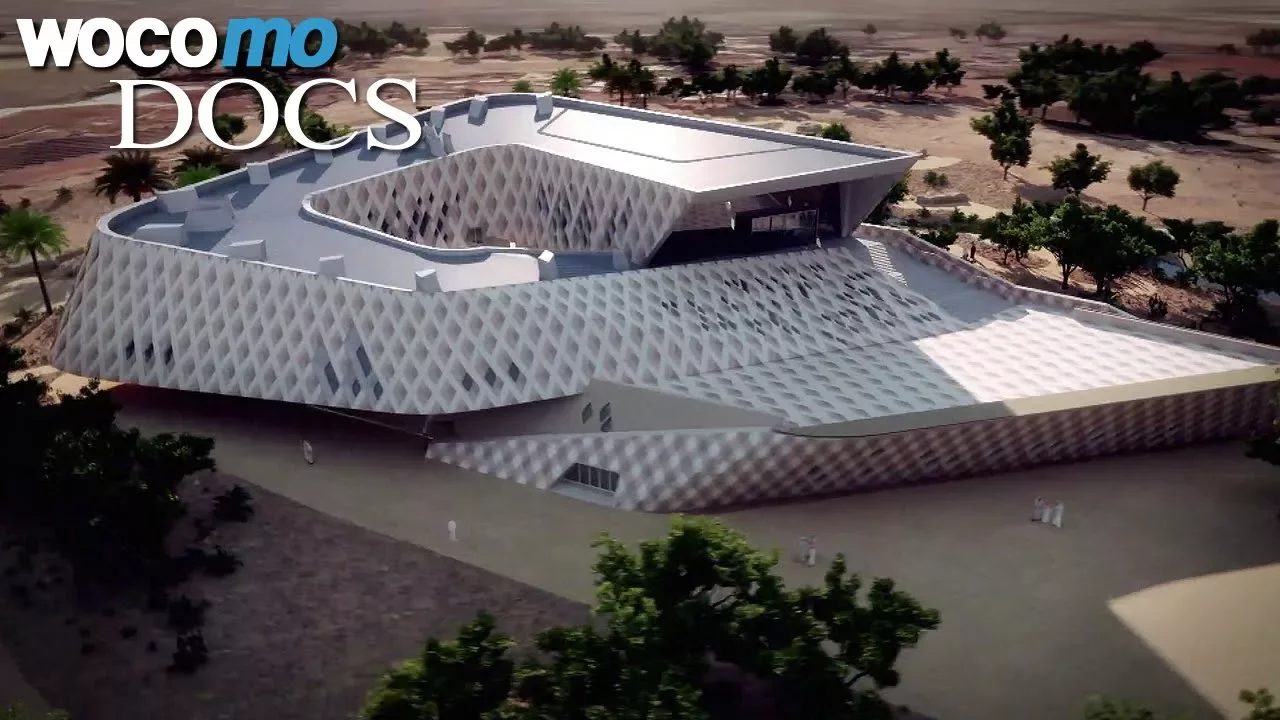
About Smart Cities - Building for the Cities of Tomorrow (Documentary, 2015)
More people than ever are living in cities, while only 10 percent of the worlds population did so at the start of the 20th century. The number has grown to 50 percent today. By the end of this century, humans will be a predominantly urban species. As our cities grow, so do the challenges. Space is becoming scarce and social tensions, traffic, noise and pollution are all on the rise. At the same time cities offer many opportunities such as more efficient use of resources, energy and infrastructure. After remaining a relatively small specialty field for decades, sustainable building today hold the technical key for the future.
Smart Cities - Building for the Cities of Tomorrow (Documentary, 2015) is presented by wocomoDOCS. Its listed runtime is 44 minutes. The source link and publisher attribution are provided with the embedded film.
As a cities & architecture documentary, Smart Cities - Building for the Cities of Tomorrow (Documentary, 2015) uses smart, cities, building as its central frame. Urban stories connect architecture with transport, housing, public space and unequal access to opportunity. Look beyond landmark images to the workers, residents and infrastructure that make the city function.
What to consider before watching
- What evidence, testimony or observation does the film use to explain smart, cities, building?
- Which people, institutions or historical conditions most influence the story told in Smart Cities - Building for the Cities of Tomorrow (Documentary, 2015)?
- How does wocomoDOCS' framing affect the documentary's emphasis, and which perspectives may deserve further research?
Topics covered in this documentary
Documentary details and original source
- Title
- Smart Cities - Building for the Cities of Tomorrow (Documentary, 2015)
- Category
- Cities & Architecture
- Runtime
- 44 minutes
- Language
- English
- Publisher
- wocomoDOCS
Free Documentary Vault provides independent discovery, organization and editorial context. The film remains hosted by its original publisher, who controls availability and playback.
Related Cities & Architecture documentaries

This episode explores the profound relationship between humans and animals, showcasing how centuries-old traditions of reverence have evolved into complex conflicts in the face of urban expansion. From the bustling streets of Asian cities to the shrinking wilderness on their outskirts, the narrative follows the lives of various animal species, highlighting their adaptability and resilience in navigating the challenges posed by human encroachment. Amidst the concrete jungles and bustling cityscapes, dramatic struggles and triumphs of wildlife unfold as they strive to carve out a place for themselves in an ever-changing landscape.
Real WildHow Wild Animals And Humans Co-exist In Urban Asia | WILD ASIA

We start with how a little guy took on a corporate goliath using chocolate pudding as his only weapon, then you'll meet a Marine who receives a package from home containing his just desserts and finally we have the cash-trapped dimwit who decided to ship himself home in a box to join his family for Thanksgiving. Urban Legends: Series which dramatises 3-4 well-known urban legends each episode. The catch is one (or more) of the 'legends' actually did happen, and it's for the viewer to figure it out. WONDER is packed with binge worthy reality documentaries for hours of entertainment. Check out our hub of diverse and empowering stories which explore the extreme side of life! Content licensed from Cineflix to Little Dot Studios.
WonderDid This Man Win 1.25 Million Air Miles Buying Only Pudding? | Urban Legends S1 EP9

New roads, buildings and urban sprawl eat up natural habitats, sending plant and animal populations in worrying decline. How does nature react to this loss of biodiversity? Scientists reveal its ingenious responses, showing that plants and animals adapt much faster than previously believed possible. ------- Chapters ▷ 00:00 - Introduction ▷ 01:11 - Urban Predators and Prey ▷ 04:12 - How Cities Drive Evolution ▷ 05:18 - City Bugs and Light Pollution ▷ 07:29 - Moths Evolve in the City ▷ 09:20 - Fast Evolution - Urban Style ▷ 09:58 - Mice of New York City ▷ 12:22 - City Parks as Urban Islands ▷ 14:10 - Plants Adapting to Concrete ▷ 16:31 - Rapid Urban Evolution Discovered ▷ 18:01 - Birds of Los Angeles - The City Junco ▷ 23:27 - Lessons from Industrial Evolution ▷ 25:29 - Fish Surviving Pollution - Nature's Experiment ▷ 30:32 - Global Studies on White Clover and Adaptation ▷ 34:04 - Mice Mutations in Central Park ▷ 36:50 - Evolution in Action - Fast Food Mice ▷ 40:28 - Fish That Resist Toxins
wocomoDOCSUrban Evolution: How Times Square Proves Darwin's Survival of the Fittest (Documentary, 2020)

First, there's the bizarre cat who manages to mimic her owner's every illness - with drastic results. Then, the unlucky cat who's rescued by the fire brigade only to find a far worse fate. And lastly, the feisty fish who took on a big man - and won the battle. Urban Legends: Dramatising 3-4 well-known urban legends each episode, the catch is one (or more) of the 'legends' actually did happen, and it's for the viewer to figure it out. WONDER is packed with binge worthy reality documentaries for hours of entertainment. Check out our hub of diverse and empowering stories which explore the extreme side of life! Content licensed from Cineflix to Little Dot Studios.
WonderIs This Cat Mimicking Her Owner's Illnesses? | Urban Legends S1 EP7

We introduce you to the man who was buried under a pile snow and escaped by doing what he likes best - drinking beer. How about being crushed by a 4-ton road roller and living to tell the tale! Finally, we have the story of an army recruit who was pushed to the edge and whose drastic actions backfired. In each episode, Urban Legends brings to life three amazing tales, stories so incredible and far-fetched that we’re not sure whether to believe them or not. These stories are all presented as fact, pieced together from dramatic reconstructions and interviews to look like genuine documentary-style reports. The twist is that some stories are true and some stories are false. It's up to the viewers to guess. WONDER is packed with binge worthy reality documentaries for hours of entertainment. Check out our hub of diverse and empowering stories which explore the extreme side of life! Content licensed from Cineflix to Little Dot Studios.
WonderThis Man Survived Being Crushed By A 4-Ton Truck | Urban Legends S1 EP2

For Los Angeles natives living in the early 1900's, bicycles and streetcars shared the road as our primary modes of transportation. But the arrival of the freeway effectively wiped them out. Today, communities of cyclists fight for protected bike lanes and road safety, determined to bring a new era of mobility justice to the city. This documentary short film won the following awards: -Outstanding Cinematography - First Look, USA, 2021 -Best Film for Change - Bolton Film Festival, 2021 -Best Short Documentary - Spotlight Documentary Film Awards, 2021 -Best Short Documentary Film Award - Arpa International Film Festival, 2022 -Jury Prize - Annapolis Film Festival, 2023 ------- Chapters ▷ 00:00 - Introduction ▷ 01:42 - Los Angeles, a city designed for the cars ▷ 05:58 - Cycling in L.A. is an act of activism ▷ 15:03 - A growing community of cyclists seeks to make L.A. a safer place for bikers ▷ 22:00 - Credits ------- ------- An award-winning documentary. An insight into the campaign to make Los Angeles more bicycle friendly, a movement which also aims to honour the
wocomoDOCS