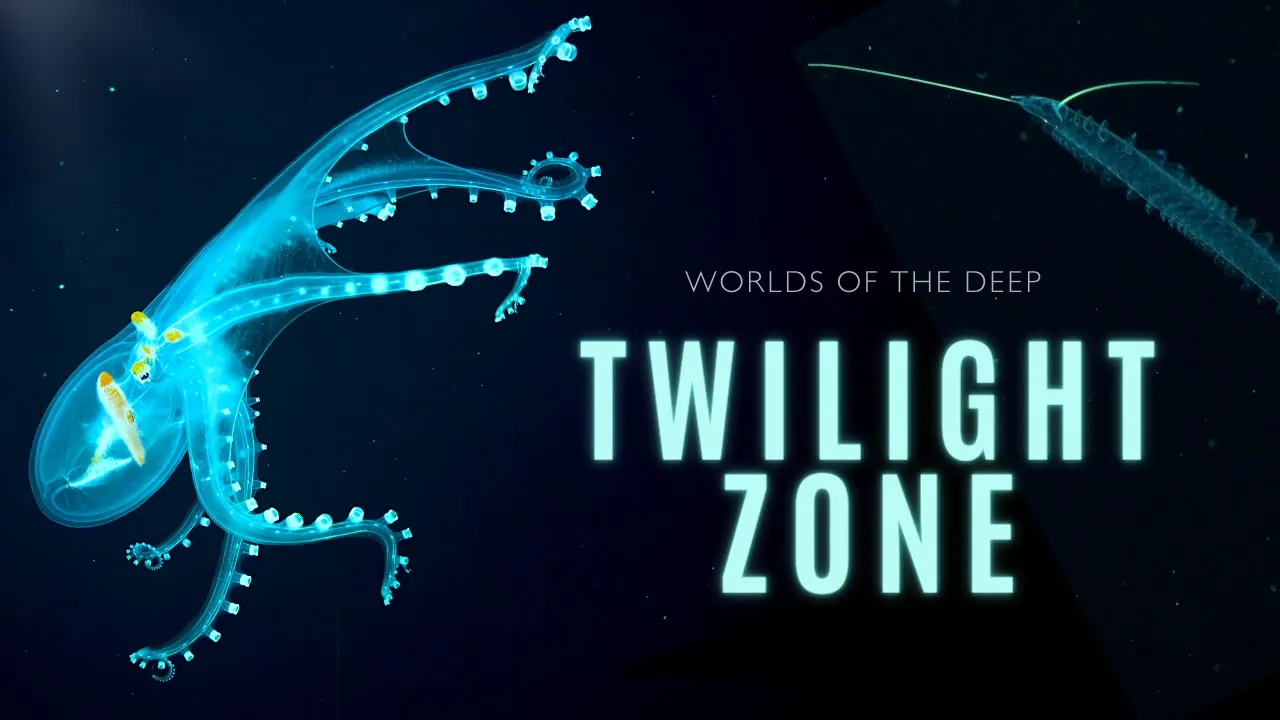
About Mysteries of the Twilight Zone | Worlds of the Deep
In the deep ocean, life is concentrated at chemosynthetic oases where primary production is made possible via chemosynthesis at cold seeps and deep sea hydrothermal vents. The non-chemosynthetic regions of the deep are divided into two very different worlds. First is the midwater, where pelagic wanderers tread migratory routes that span entire oceans, and planktonic drifters and their predators take part in bioluminescent light shows. It is separated into zones based on depth, including the sunlight zone (epipelagic), twilight zone (mesopelagic), midnight zone (bathypelagic), abyssal and hadal zones. And below, lies the deep sea floor. A kingdom of mud and ooze, where sessile creatures cling to any solid outcrop and corals craft kingdoms on the seamount crusts. The worlds of the deep sea could not be more different, and yet their stories are fundamentally intertwined. In this episode, we delve into the Twilight Zone. Episodes: 1 - The Twilight Zone 2 - The Midnight Zone - coming soon 3 - The Abyssal Plain - coming soon 4 - Seamounts and Canyons - coming soon 5 - Hydrothermal Vents - coming
Mysteries of the Twilight Zone | Worlds of the Deep is presented by Natural World Facts. Its listed runtime is 37 minutes. The source link and publisher attribution are provided with the embedded film.
As a society documentary, Mysteries of the Twilight Zone | Worlds of the Deep uses mysteries, twilight, worlds as its central frame. Social documentaries work best as invitations to examine systems through lived experience. Distinguish individual testimony from wider claims, and consider which institutions, incentives and inequalities shape the choices shown.
What to consider before watching
- What evidence, testimony or observation does the film use to explain mysteries, twilight, worlds?
- Which people, institutions or historical conditions most influence the story told in Mysteries of the Twilight Zone | Worlds of the Deep?
- How does Natural World Facts' framing affect the documentary's emphasis, and which perspectives may deserve further research?
Topics covered in this documentary
Documentary details and original source
- Title
- Mysteries of the Twilight Zone | Worlds of the Deep
- Category
- Society
- Runtime
- 37 minutes
- Language
- English
- Publisher
- Natural World Facts
Free Documentary Vault provides independent discovery, organization and editorial context. The film remains hosted by its original publisher, who controls availability and playback.
Related Society documentaries

The process of chemosynthesis is similar to photosynthesis. Both can be defined as the creation of organic matter from the fixation of inorganic carbon using energy. But what differs is the source of that energy. In parts of the deep sea, primary production is fuelled by chemical energy, rather than energy from the sun. But this can only take place at certain sea-floor environments where the required chemicals are released into the water. The two main examples of such environments are hydrothermal vents, and cold seeps. The former were only discovered in 1977 when scientists were exploring an oceanic spreading ridge near the Galapagos Islands. What they discovered was a hidden world that revolutionised our understanding of how and where life on Earth can exist. Since then, hundreds more vent field have been discovered, often at depths of 2km or more, along Earth’s convergent plate boundaries and at sea-floor spreading regions where the oceanic crust is moving apart. Written, Narrated and Edited by Leo Richards Vent Animation custom made by Fabio Albertelli and Jakub Misiek I do not own any
Natural World FactsHydrothermal Vents | Oases in the Deep Sea
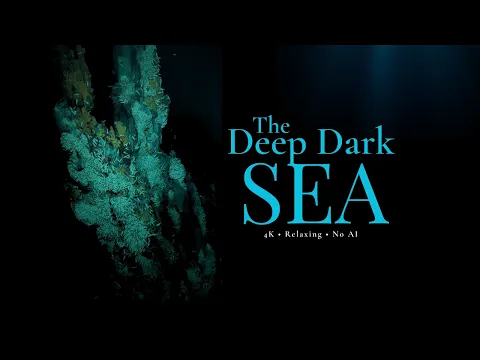
Sink into this relaxing deep sea documentary, a calm descent (structured for deep sleep or relaxation) through some of the most iconic species and features of the twilight zone (mesopelagic), midnight zone (bathypelagic), abyssal plain, and hadal trenches. Designed for sleep, study, focus, meditation, and ASMR, this film blends ocean ambience, gentle narration, and fascinating scientific knowledge to give a “space documentary” feeling (but underwater and therefore far superior, wink wink). Meet real deep sea creatures: sixgill sharks, ghost sharks (chimaeras), bigfin squid (Magnapinna), telescope octopus, siphonophores (Bathyphysa), drifting jellyfish, and the quiet clean-up crew of the abyss... sea cucumbers and giant isopods. Visit hydrothermal vents, where chemosynthetic microbes power oases of life with giant tubeworms (Riftia pachyptila) and Pompeii worms; glide over seamount coral gardens and ancient sponge grounds; witness wood falls and whale falls turning darkness into cities of life; and pause at octopus nurseries warmed by gentle seepage. If you love interesting science videos, relaxing nature films, ocean sounds, or space vibes for sleep, this is for you; a calm, immersive journey where light is a language
Natural World FactsThe Abyss | Deep Sea Documentary for Sleep (4K)

The degradation of food-falls at the bottom of the ocean can create partially chemosynthetic environments. In the case of sunken whale carcasses (whale falls), the supply of organic material supports an ecological succession of communities. But perhaps less well-documented than the scavengers at whale-falls are the creatures that rely on wood instead. When trees become uprooted by storms or ships capsize at sea, losing their buoyancy as the pressure of the ocean forces out any air trapped within, bits of wood sink to the ocean floor where they create fleeting oases of life (wood falls), including shipwrecks, like that of the Titanic. The scarcity of food in parts of the deep ocean creates an environment where very little goes to waste. The animal and microbial life that dwells down here has become resourceful, able to make the most of even unexpected resources. So it comes as no surprise that the deep ocean hosts complex biological communities adapted to thrive on this sunken wood. Written, Narrated and Edited by Leo Richards I do not own any of the footage. I write
Natural World FactsDeep-Sea Food Falls | A Tale of Wood and Bone

One of the many ways Princess Diana breathed new life into the Royal Family was through the way she dressed. Turning away from the pomp of royalty, she crafted her own unique style whether it be through casual or classy outfits.
Real HistoryHow Princess Diana Became A Fashion Icon | Diana: A Model Princess

Deep Sea Aggregations Explained. In the deep sea, going alone is rarely an option. The harsh environments of the deep ocean are an imposing challenge for a lone organism to face, as the dark conceals many dangers, while dazzling bioluminescence deceives unwitting prey. For this reason, deep sea animals tend not to spread out. Instead, wherever possible, they come together in their masses to create abundant patches of life in the lonely depths. Hotspots of biodiversity, in stark contrast with the otherwise barren stretch of darkness. Safety in numbers is a fool-proof survival strategy that increases their chances of finding food, evading predation, or having reproductive success in the endless blue. From vibrant coral gardens and deep sea scavenger communities, to expansive jellyfish blooms that cloud the ocean surface, these are the animal aggregations of the oceans. I do not own any of the footage. I write the script, narrate, and edit what footage I can find, which is allowed due to the original video platform's 'Fair Use' policy as these films are for educational purposes. Footage used belongs to
Natural World FactsDiscovering Deep Sea Swarms | Safety in Numbers

Molluscs like cephalopods and gastropods dominate the marine world. Inhabiting nearly every ecosystem from shallow reefs to deep sea vents and the pelagic midwater, the success of molluscs is unparalleled. Nearly 25% of all marine organisms are molluscs, including such oddities as sea snails, nudibranchs, and coleoids like squid with their specialised tentacles. Even the snails you might find in your garden belong to the molluscs, for this is the only phylum with species found in the sea, freshwater and on land. A testament to their adaptability. With an estimated 85,000 living species known to science, the abundance and diversity of molluscs is what allows them to occupy a great many niches and habitats, and diversify into an assortment of shapes and sizes. The smallest meiofauna molluscs grow to just 0.4 mm long, while in the pelagic deep they dominate as voracious predators, looming out of the dark. This is the alien world of molluscs. I do not own any of the footage. I write the script, narrate, and edit what footage I can find. Footage used belongs to the
Natural World Facts