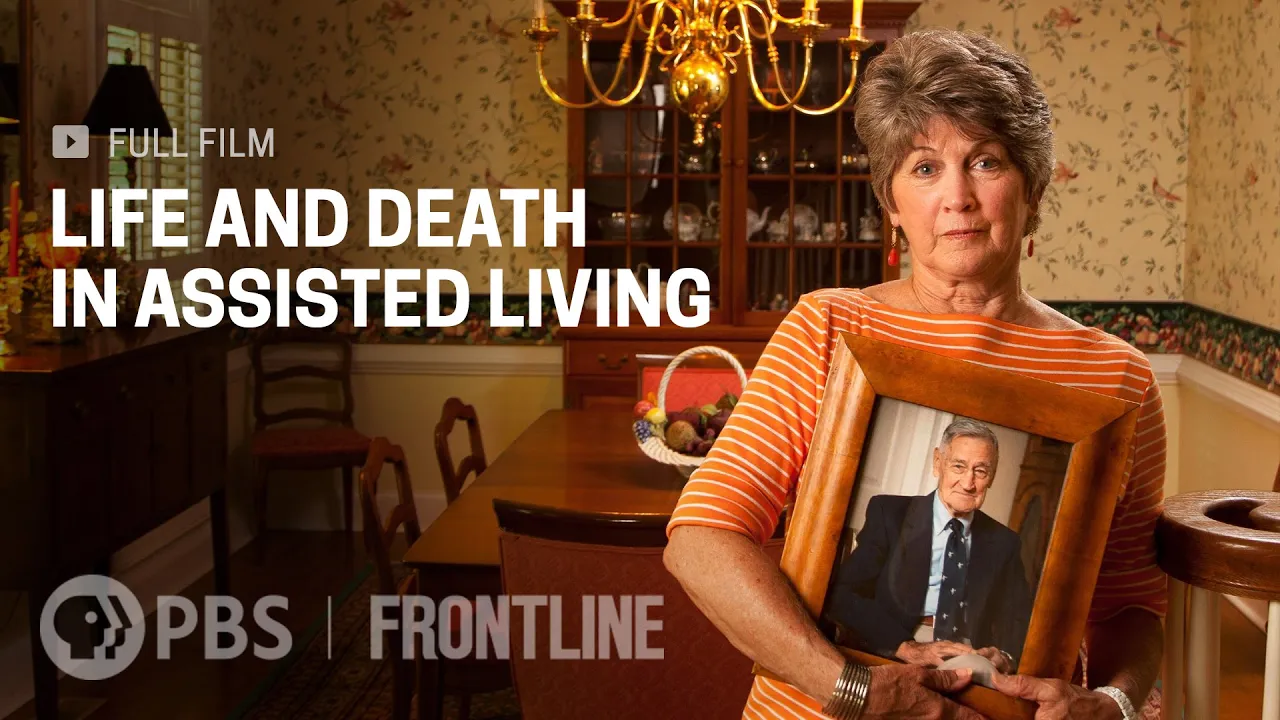
About Life and Death in Assisted Living (full documentary) | FRONTLINE
More and more elderly Americans will be faced with the decision as to whether to spend their later years in assisted living facilities, which have sprung up as an alternative to nursing homes. But is this loosely regulated, multi-billion dollar industry putting seniors at risk? (Aired 2013) In this major 2013 investigation with ProPublica, FRONTLINE examines the operations of the nation’s largest assisted living company, raising questions about the drive for profits and fatal lapses in care. Assisted living started in the 1980s as a reaction to nursing homes, which had become more oriented toward hospitalization, and as a way of offering seniors more choices and more independence in the way they live. But over the years, assisted living has evolved to house seniors who need specialized care, such as those with memory impairments. That means that people have more needs, require more attention — and, some senior advocates argue, more or better regulations to ensure that the residents are safe and getting the quality of care they need. FRONTLINE is produced at GBH in Boston and is broadcast nationwide
Life and Death in Assisted Living (full documentary) | FRONTLINE is presented by FRONTLINE PBS | Official. Its listed runtime is 53 minutes. The source link and publisher attribution are provided with the embedded film.
As a society documentary, Life and Death in Assisted Living (full documentary) | FRONTLINE uses death, assisted, living as its central frame. Social documentaries work best as invitations to examine systems through lived experience. Distinguish individual testimony from wider claims, and consider which institutions, incentives and inequalities shape the choices shown.
What to consider before watching
- What evidence, testimony or observation does the film use to explain death, assisted, living?
- Which people, institutions or historical conditions most influence the story told in Life and Death in Assisted Living (full documentary) | FRONTLINE?
- How does FRONTLINE PBS | Official's framing affect the documentary's emphasis, and which perspectives may deserve further research?
Topics covered in this documentary
Documentary details and original source
- Title
- Life and Death in Assisted Living (full documentary) | FRONTLINE
- Category
- Society
- Runtime
- 53 minutes
- Language
- English
- Publisher
- FRONTLINE PBS | Official
Free Documentary Vault provides independent discovery, organization and editorial context. The film remains hosted by its original publisher, who controls availability and playback.
Related Society documentaries

The baby boomer generation will be long on life expectancy but short on income. Amid vanishing pensions and faltering 401(k) plans, FRONTLINE investigates how middle-class Americans might fare in their retirement years. (Aired 2006) Two main strategies for funding retirement are lifetime pensions and 401(k)-style savings plans, but both are in trouble. Buffeted by pension cuts, corporate bankruptcies, and stock market crashes, most boomers can now expect to be working into their retirement years. In the 2006 documentary, Can Your Afford to Retire?, FRONTLINE correspondent Hedrick Smith investigates the financial crisis and what middle class Americans face in retirement. FRONTLINE is produced at GBH in Boston and is broadcast nationwide on PBS. Funding for FRONTLINE is provided through the support of PBS viewers and by the Corporation for Public Broadcasting. Additional funding is provided by the Abrams Foundation; the John D. and Catherine T. MacArthur Foundation; Park Foundation; and the FRONTLINE Journalism Fund with major support from Jon and Jo Ann Hagler on behalf of the Jon L. Hagler Foundation, and additional support from Koo and Patricia Yuen. CHAPTERS: Prologue
FRONTLINE PBS | OfficialCan You Afford to Retire? (full documentary) | FRONTLINE

Why have American families struggled to keep their homes during the COVID pandemic, despite a federal eviction moratorium? We investigate in a new documentary with Retro Report. Filmed over the course of a year during the COVID-19 pandemic, “Facing Eviction” follows people and families across the country who struggled to remain housed as COVID upended the economy. The documentary examines how federal pandemic housing protections — including a temporary ban on evictions and a massive rental assistance program — played out in the experiences of people living through this precarious time: from tenants and landlords to lawyers, judges and the law enforcement officers carrying out evictions. “Facing Eviction” was produced with support from The WNET Group’s Chasing the Dream initiative. The documentary is a FRONTLINE production with Retro Report. The producer and writer is Bonnie Bertram. The co-producers are Anne Checler and Erik German. The associate producer is Emily Orr. The senior producers are Nina Chaudry and Frank Koughan. The executive producer of Retro Report is Kyra Darnton. The executive producer of FRONTLINE is Raney Aronson-Rath. “Facing Eviction” premiered Tuesday
FRONTLINE PBS | OfficialFacing Eviction (full documentary) | FRONTLINE

An inside look into the controversy over the Wal-Mart way of doing business, investigating whether the retail giant changed the American economy. (Aired 2004) In "Is Wal-Mart Good for America?," FRONTLINE offered two starkly contrasting images: one of empty storefronts in Circleville, Ohio, where the local TV manufacturing plant had closed down; the other, a sea of high rises in the South China boomtown of Shenzhen. The connection between American job losses and soaring Chinese exports? Wal-Mart. Through interviews with retail executives, product manufacturers, economists and trade experts, correspondent Hedrick Smith does a deep dive into the company’s business practices. FRONTLINE is produced at GBH in Boston and is broadcast nationwide on PBS. Funding for FRONTLINE is provided through the support of PBS viewers and by the Corporation for Public Broadcasting. Additional funding is provided by the Abrams Foundation; the John D. and Catherine T. MacArthur Foundation; Park Foundation; the Heising-Simons Foundation; and the FRONTLINE Journalism Fund with major support from Jon and Jo Ann Hagler on behalf of the Jon L. Hagler Foundation, and additional support from Koo and
FRONTLINE PBS | OfficialIs Wal-Mart Good for America? (full documentary) | FRONTLINE

Inside a counterterrorism police unit in Karachi, Pakistan, dedicated to tracking down suspected members of the Pakistani Taliban. (Aired 2015) In the nearly five years since the Taliban seized control of Afghanistan, there’s been a dramatic increase in attacks within neighboring Pakistan by the militant group Tehreek-e-Taliban Pakistan, commonly called the Pakistani Taliban or TTP. Pakistan has accused Taliban-controlled Afghanistan of harboring the group and enabling it to launch cross-border attacks, which the Afghan government denies — and in recent weeks, the fight between the two countries escalated into what Pakistan’s government called “open war.” Against this volatile backdrop, FRONTLINE’s 2015 documentary “Taliban Hunters” offers relevant history on TTP and Pakistani security forces’ fight against it. This short documentary went inside a Karachi-based counterterrorism police unit dedicated to tracking down Taliban suspects. As the documentary reported, TTP first emerged in 2007 and used to have only a small, underground presence in Karachi, Pakistan’s largest city. But by the time the documentary aired, the group had been gaining ground in the city of over 20 million people, and carrying out suicide
FRONTLINE PBS | OfficialTracking Suspected Members of the Pakistani Taliban | Taliban Hunters (full documentary) | FRONTLINE
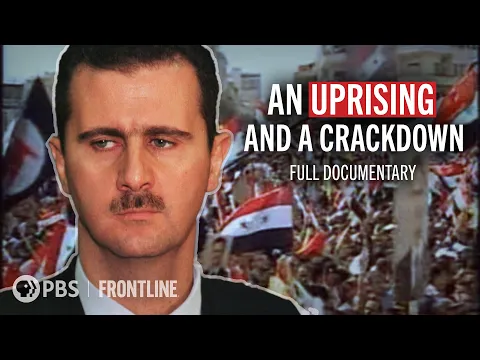
It’s been 15 years since the rebellion in Syria against Bashar al-Assad’s government began. “The Regime” examined how the uprising started and the brutal crackdown that followed. (Aired 2011) On March 6, 2011, young boys painted messages on the walls of a school 60 miles south of Syria’s capital, Damascus. “Freedom, freedom and freedom, only,” read one message. “Down with the corrupt Assad,” read another. Soon after, the boys were rounded up by the government’s secret police. Their fathers went to see the police chief, a cousin of Syria’s then-president, Bashar al-Assad, and begged him to release their children. Airing later that year, “The Regime” examined what happened to the boys, and how outrage over their fate helped to fuel the Syrian uprising. “That very instance of repression, of torture, seemed to galvanize the town itself,” the late reporter Anthony Shadid said in the documentary. “And almost from that moment, the uprising seemed to gain momentum.” As Syrians took to the streets to protest and to call for more freedoms, the swift and brutal response by Assad’s security forces followed
FRONTLINE PBS | OfficialHow Assad Moved to Crush Syria’s Uprising | The Regime (full documentary) | FRONTLINE (PBS)

An investigation into the fight for justice after a deadly 1981 attack on the village of El Mozote and surrounding areas, and how the case against high-ranking military officials faltered. (Aired 2021) This short documentary from FRONTLINE, Retro Report and ProPublica examined the horrors of what happened when U.S.-trained and equipped Salvadoran soldiers killed some 1,000 civilians, many of them children, in an attack more than 40 years ago. In the documentary, Raymond Bonner — who was one of the first journalists to bear witness to the aftermath of the massacre — recounted the experience of reporting the story and spoke with survivors of the attack. This on-the-ground investigation detailed how, for decades following the tragedy, there was little movement towards holding anyone accountable, and how the case against high-ranking military officials faltered under Salvadoran President Nayib Bukele. “Massacre in El Salvador” laid bare the nation’s grisly past and the decades-long struggle for justice. “Massacre in El Salvador” is a FRONTLINE and Retro Report production with ProPublica. The producer and writer is Kit R. Roane. The senior producers are Frank
FRONTLINE PBS | Official