
About Life After Chernobyl and Fukushima | Full Documentary
Thirty years after Chernobyl and five years after Fukushima, millions of people continue to live on lands quietly marked by radioactive contamination. This documentary enters the “grey zones” of Belarus, Norway, and Japan, where the consequences of nuclear disaster are not only historical, but part of everyday life. After Chernobyl, the scientific program Ethos was launched with support from France and the European Union to work directly with communities in contaminated territories, helping residents identify daily risks, adapt their behaviors, and continue living in affected areas. In central Norway, heavy fallout from Chernobyl deeply disrupted the lives of the Sami people, whose traditional reindeer herding practices were severely impacted by radioactivity. Decades later, Japan faced similar questions after Fukushima, where Ethos-inspired meetings brought together people from Belarus, Norway, and Japan to share experiences, fears, knowledge, and survival strategies. Through rare personal testimony and unique encounters across three countries, the film asks urgent human questions: What does it mean to live in a contaminated territory? What risks remain invisible? And how do communities rebuild daily life in the long shadow of
Life After Chernobyl and Fukushima | Full Documentary is presented by wocomoDOCS. Its listed runtime is 88 minutes. The source link and publisher attribution are provided with the embedded film.
As a society documentary, Life After Chernobyl and Fukushima | Full Documentary uses after, chernobyl, fukushima as its central frame. Social documentaries work best as invitations to examine systems through lived experience. Distinguish individual testimony from wider claims, and consider which institutions, incentives and inequalities shape the choices shown.
What to consider before watching
- What evidence, testimony or observation does the film use to explain after, chernobyl, fukushima?
- Which people, institutions or historical conditions most influence the story told in Life After Chernobyl and Fukushima | Full Documentary?
- How does wocomoDOCS' framing affect the documentary's emphasis, and which perspectives may deserve further research?
Topics covered in this documentary
Documentary details and original source
- Title
- Life After Chernobyl and Fukushima | Full Documentary
- Category
- Society
- Runtime
- 88 minutes
- Language
- English
- Publisher
- wocomoDOCS
Free Documentary Vault provides independent discovery, organization and editorial context. The film remains hosted by its original publisher, who controls availability and playback.
Related Society documentaries

Discover how Princess Diana shaped the lives of Prince William and Prince Harry, leaving a legacy that changed the royal family forever. Her story still inspires millions. This in-depth documentary explores the extraordinary upbringing of William and Harry under the loving guidance of Princess Diana. From summer holidays at Balmoral to adventurous trips to theme parks and global tours, Diana was determined to give her sons a childhood unlike any royal generation before. The video delves into the unique challenges they faced after their parents' divorce, the emotional impact of Diana's tragic death, and the unprecedented public outpouring of grief that followed. You'll see how Diana’s hands-on, modern approach to motherhood broke royal traditions, teaching her sons empathy, resilience, and a sense of duty balanced with real-world experience. Through rare anecdotes and touching stories, we reveal how Diana nurtured a strong bond between the brothers, preparing William for the pressures of future kingship and encouraging Harry’s independence. The video also examines the role of Prince Charles, the influence of royal relatives, and the complexities of growing up in the public
Real HistoryDiana’s Legacy - How She Changed Royal Life for William and Harry

Millions of years ago, humanity wasn't the apex predator of the planet — we were the prey. In this extreme survival investigation, scientific detectives go deep into South African cave systems to uncover the brutal, high-stakes evolution of our species. Licensed to Little Dot Studios. WONDER is packed with binge worthy reality documentaries for hours of entertainment. Check out our hub of diverse and empowering stories which explore the extreme side of life!
WonderWhat Caused The Sudden Explosion of Human Intelligence 60,000 Years Ago?
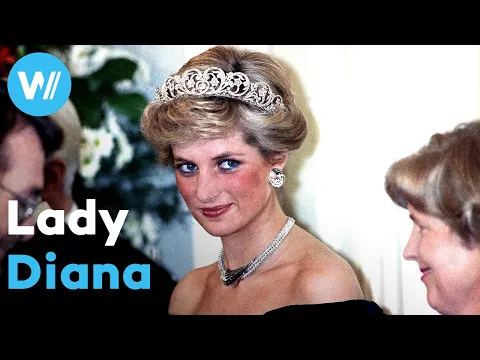
This major new documentary rewrites many of the myths of her legacy. Rather than portraying Diana as unhappy, at war with the Royal family - we discover an exceptional woman who changed the future of the Royal family forever. With special interviews with those closest to Diana: Ken Wharfe, Simone Simmons, Carolan Browne, Richard Kay, Elizabeth Emanuel, Robert Lacey and many more. ------- Chapters ▷ 00:00 - Introduction ▷ 07:30 - Diana's family and childhood ▷ 13:20 - A privileged upbringing: Education, ballet and music ▷ 23:40 - Meeting Prince Charles - life instantly changes ▷ 29:38 - A fashion and beauty icon ▷ 33:25 - Moving into Buckingham palace and preparing for the wedding ▷ 37:40 - The public's obsession with Princess Diana ▷ 49:29 - William and Harry ▷ 52:32 - Adapting to a life of royalty ▷ 56:09 - A manipulator of the media? ▷ 59:13 - Suffering from post-natal depression and bulimia ▷ 1:08:03 - The downfall of her marriage, turning to alternative medicines and therapies ▷ 1:15:35 - The Martin Bashir interview and the divorce
wocomoDOCSPrincess Diana: Full documentary about Lady Di, from her privileged upbringing to her tragic death

How much oil is left - and what happens when the world’s most important energy source becomes harder, riskier and more expensive to extract? This compelling energy documentary investigates the global dependence on crude oil, the theory of peak oil and the environmental dangers of deep-sea drilling. Beginning with the 2010 Deepwater Horizon disaster in the Gulf of Mexico, it examines how technological failures, financial pressure and difficult drilling conditions contributed to one of the worst oil spills in history. Travel from oil fields in Austria and Saudi Arabia to research centres in Europe, Canadian oil sands and offshore platforms in the Gulf of Mexico. Scientists, geologists, engineers and industry experts reveal how oil is formed, how new reserves are discovered and why many of the world’s largest oil fields may be declining. The documentary also explores enhanced oil recovery, horizontal drilling, water injection, polymer technology, Arctic exploration and the enormous financial and environmental costs of extracting unconventional oil. It investigates the use of chemical dispersants during the Deepwater Horizon cleanup and questions their impact on marine ecosystems and human
wocomoDOCSOil: The Race for the Last Reserves | The Struggle for Oil - Geological Deceptions (Full Film)

Presented by Arthur C. Clarke and with music by David Gilmour, this documentary will take you on a trip into the Twilight Zone with the deeply strange Mandelbrot set and fractal geometry. ------- Chapters ▷ 00:00 - Introduction ▷ 02:13 - The Mandelbrot set, a.k.a. "The Thumbprint of God" ▷ 07:27 - The Equation ▷ 11:45 - The colours and shapes of the Mandelbrot Set ▷ 16:24 - Fractal geometry allows us to describe nature ▷ 24:27 - Applications of fractal geometry ▷ 26:50 - Discussion with Stephen Hawking about the limit of the universe ▷ 31:27 - Applications of fractal geometry ▷ 34:54 - Fractal image compression systems ▷ 41:24 - Application of fractal geometry in medicine and art ▷ 44:43 - The philosophical implications of fractal geometry ▷ 49:10 - Credits ------- ------- Original Title: Colours of Infinity Directed by Nigel Lesmoir-Gordon © 1995, Licensed by Screenbound ------- Documentaries about politics, society and science produced by leading studios around the world. Our goal is to be a reliable source of high-quality information and investigative journalism for a better
wocomoDOCSThe Mandelbrot Set | The origin and applications of Fractal Geometry (Full Documentary)

Experience the real-life manhunt as the FBI tracks down Boston's most dangerous armored car robbers in this gripping tale of crime, code of silence, and ultimate justice. Dive deep into the high-stakes world of FBI takedowns as elite agents pursue the notorious Charlestown crew, masterminds behind a wave of violent armored car and bank robberies in 1990s Boston. This documentary reveals the meticulous planning and ruthless tactics of Anthony Shea and his gang, their chilling code of silence, and the relentless efforts of law enforcement to bring them to justice. Follow the investigation from adrenaline-fueled robberies and daring escapes to forensic breakthroughs and undercover operations that finally crack the case. Discover how the crew's legendary “Minutemen” robberies evolved into deadly heists, the cultural roots of Charlestown's criminal underworld, and the pivotal role of FBI surveillance and RICO prosecution in ending their reign. Through dramatic retellings and first-hand accounts, learn about the dangers faced by armored car couriers, the pain inflicted on their victims, and the dedication of agents who refused to let these criminals escape justice. If you’re fascinated by
World's Greatest Heists