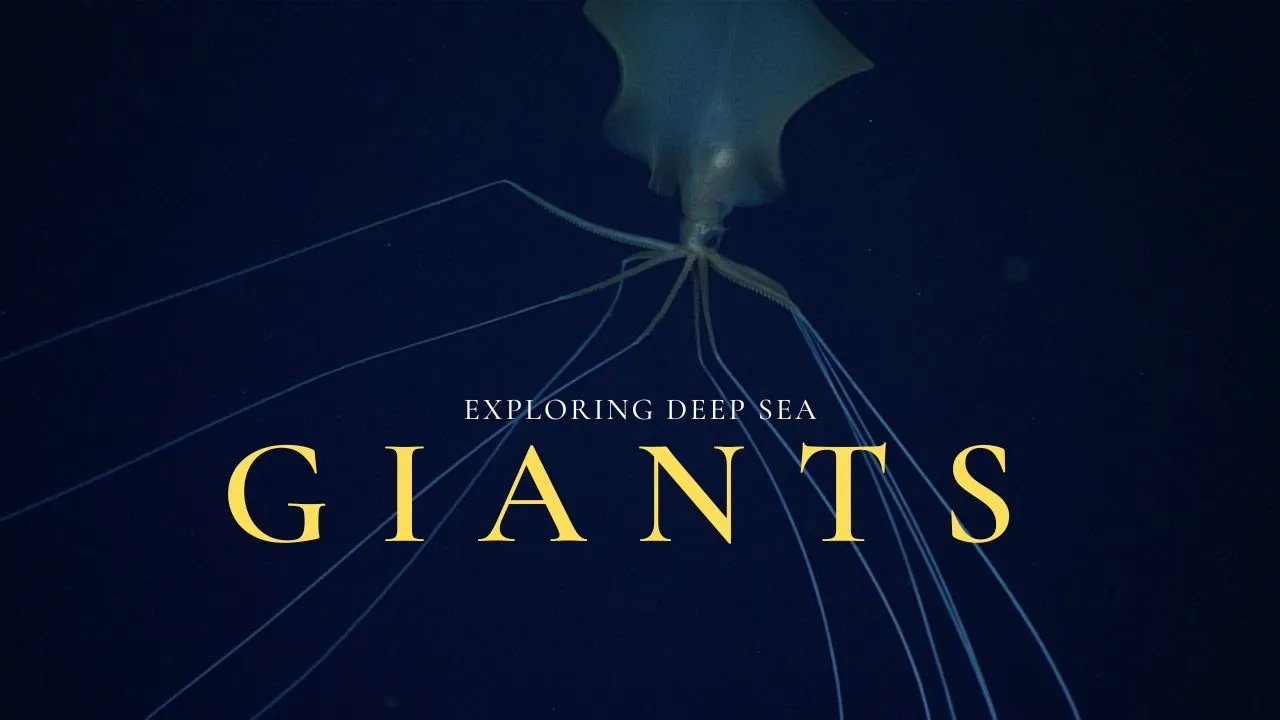
About Deep Sea Gigantism | Why the Ocean Breeds Giants
Deep sea (abyssal) gigantism demonstrates the role of natural selection in driving evolution and survival, particularly in an environment characterised by challenging conditions and limited resources. Evolution tends towards the most effective adaptations to grant animals the best chances of survival. And whether large or small, evolution selects for the best-adapted body size to survive these conditions. Though widely debated and often controversial, the research that has been done into the science behind deep sea gigantism has significant implications in the human world; it is believed that climate change may have a greater impact on ocean dwellers than any other population of animals. As the colder oceans warm up, the balance of temperature, oxygen supply, and what organisms are present, will throw the equilibrium off course. And the giants, which rely so heavily on this fine balance, may be the first to go. Written, Narrated and Edited by Leo Richards I do not own any of the footage. I write the script, narrate, and edit what footage I can find, which is allowed due to the original video platform's 'Fair
Deep Sea Gigantism | Why the Ocean Breeds Giants is presented by Natural World Facts. Its listed runtime is 33 minutes. The source link and publisher attribution are provided with the embedded film.
As a nature & environment documentary, Deep Sea Gigantism | Why the Ocean Breeds Giants uses gigantism, ocean, breeds as its central frame. Nature films connect close observation with larger environmental systems. Consider habitat, seasonal change, human activity and the limits of what a single location can demonstrate about a global ecological issue.
What to consider before watching
- What evidence, testimony or observation does the film use to explain gigantism, ocean, breeds?
- Which people, institutions or historical conditions most influence the story told in Deep Sea Gigantism | Why the Ocean Breeds Giants?
- How does Natural World Facts' framing affect the documentary's emphasis, and which perspectives may deserve further research?
Topics covered in this documentary
Documentary details and original source
- Title
- Deep Sea Gigantism | Why the Ocean Breeds Giants
- Category
- Nature & Environment
- Runtime
- 33 minutes
- Language
- English
- Publisher
- Natural World Facts
Free Documentary Vault provides independent discovery, organization and editorial context. The film remains hosted by its original publisher, who controls availability and playback.
Related Nature & Environment documentaries

Ocean Watch: A Tale of Deep Sea Exploration, created in collaboration with Schmidt Ocean Institute. Written, narrated and edited by me, Leo Richards. This channel (Natural World Facts) is my passion project dedicated to exploring the wonders of the natural world and telling stories that inspire! This film is unusual in that it is my first piece of contract work, commissioned by Schmidt Ocean Institute, who have kindly given me permission to post it here on the original video platform - so the style might seem a little different to usual, but I had a blast making it. The film premiered at the Royal Institution in London. See the film's outro for full credits. Thank you to everyone at SOI who recorded the footage, gave interviews, piloted the ROV, kept the ship running, and managed a boat-load (literally) of media and footage to make this film possible! If you love my content, you should check out Planet Wild. They're an environmental protection the original video platform channel from Berlin. They’re on a mission to protect biodiversity in troubled ecosystems around
Natural World FactsOcean Watch | A Tale of Deep Sea Exploration
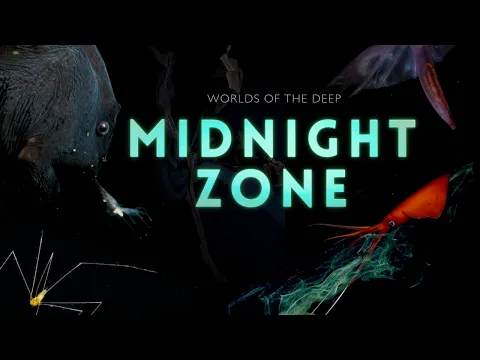
In the deep ocean, life is divided between very different worlds. In the midwater, pelagic wanderers tread migratory routes that span entire oceans, and planktonic drifters and their predators take part in bioluminescent light shows. It is separated into zones based on depth, including the sunlight zone (epipelagic), twilight zone (mesopelagic), midnight zone (bathypelagic), abyssal and hadal zones. And below, lies the deep sea floor. A kingdom of mud and ooze, where sessile creatures cling to any solid outcrop and corals craft kingdoms on the seamount crusts. The worlds of the deep sea could not be more different, and yet their stories are fundamentally intertwined. In this episode, we delve into the Midnight Zone, a pitch-black zone of the deep sea where life has found peculiar ways to survive the immense pressure, from anglerfish to vampire squid to giant sharks. Episodes: 2 - The Midnight Zone - (this episode) 3 - The Abyssal Plain - coming soon 4 - Seamounts and Canyons - coming soon 5 - Hydrothermal Vents - coming soon Written, narrated and edited by me, Leo Richards.
Natural World FactsInto the Midnight Zone: Secrets of the Ocean Void

Spinner Dolphins - Dancers of the Ocean | Ocean Documentary This is the story of the most charismatic inhabitant of the most beautiful island of Brazil: the spinner dolphins from Fernando de Noronha. Famous for their amazing acrobatics, in which spinners may raise more than 3 metres above the water and spin up to 7 times around their bodies, the dolphins are true ocean wanderers. They live in tropical open waters around the world, and some may spend years without ever seeing land. But a population of these dolphins, the Noronha Spinners, behave very differently. Almost every day they visit Noronha and gather in an area considered as the most visited bay by dolphins in the world. But why do these oceanic specialists seem to need the sheltered waters of Noronha so much? This film reveals, in intimate details, the behaviour of the Noronha spinners, showing what these dolphins do in the sheltered island waters and the spectacular acrobatics they perform. The relationship between the dolphins and the island of Noronha, however, is now threatened by anthropogenic changes and by
Free Documentary - NatureSpinner Dolphins - Dancers of the Ocean | Free Documentary Nature

Flying Rainbow - An Epic Tale of Survival | Wildlife Documentary The Oriental Dwarf Kingfisher is one of the most enigmatic and rarely filmed birds in the world. This fascinating documentary spends a year with them as they survive monsoons, drouths, and predators to raise their brood for the next season. ▬▬▬▬▬▬▬▬▬ ▬▬▬▬▬▬▬▬▬ ▬▬▬▬▬▬▬▬▬ Free Documentary is dedicated to bringing high-class documentaries to you on the original video platform for free. With the latest camera equipment used by well-known filmmakers working for famous production studios. You will see fascinating shots from the deep seas and up in the air, capturing great stories and pictures of everything our amazing planet offers. Enjoy stories about nature, wildlife, culture, people, history, and more to come.
Free Documentary - NatureFlying Rainbow - An Epic Tale of Survival | Free Documentary Nature

When she set out on her first voyage to New York in 1845, SS Great Britain was the largest passenger ship ever built, and she would go on to transport over 30,000 people during her 41-year-working life. For most of that period, the ship carried emigrants between Liverpool and Melbourne on the notoriously testing Australia run - a non-stop sea journey that lasted anywhere between two to three months. Great Britain made this journey 32 times between 1852 and 1875, battling through all conditions with a combination of steam and sail power. But who were the passengers that embarked on such a gruelling voyage? What were their reasons for leaving home? And what was it really like to be a passenger on Brunel’s revolutionary ocean liner? Using original diaries from the passengers who sailed aboard SS Great Britain, History Hit presenters Luke Tomes (@histluketomes) and Louee Dessent (@loueedj) show you how a voyage across the world could look very different, depending on who you were and how much money you had… Whilst Louee enjoys a first class experience aboard SS
History HitCould You Survive a Victorian Ocean Cruise on SS Great Britain?

What was working on SS Great Britain really like? Isambard Kingdom Brunel's SS Great Britain is undoubtedly one of the most important historic ships in the world. When she was launched from Bristol by Prince Albert in 1843, she was called 'the greatest experiment since the creation'. No one else in the Victorian era had designed an iron ship so vast or revolutionary. It was also the world's first great luxury ocean liner, carrying passengers to the United States and Australia throughout her long career. SS Great Britain changed history. As well as being built of iron and steam powered, Brunel rejected using conventional paddle wheels to drive his ship. Instead, his revolutionary screw propeller was the newest invention in maritime technology. But what was it like to work on SS Great Britain? What were the jobs aboard ship? And did the crew get to share the comforts of passengers aboard the world’s first luxury ocean liner? History Hit presenters Louee Dessent and Luke Tomes step aboard to experience the life of the crew in the 19th century, to see
History Hit