
About Could You Survive as a Sailor on a Victorian Ocean Liner?
What was working on SS Great Britain really like? Isambard Kingdom Brunel's SS Great Britain is undoubtedly one of the most important historic ships in the world. When she was launched from Bristol by Prince Albert in 1843, she was called 'the greatest experiment since the creation'. No one else in the Victorian era had designed an iron ship so vast or revolutionary. It was also the world's first great luxury ocean liner, carrying passengers to the United States and Australia throughout her long career. SS Great Britain changed history. As well as being built of iron and steam powered, Brunel rejected using conventional paddle wheels to drive his ship. Instead, his revolutionary screw propeller was the newest invention in maritime technology. But what was it like to work on SS Great Britain? What were the jobs aboard ship? And did the crew get to share the comforts of passengers aboard the world’s first luxury ocean liner? History Hit presenters Louee Dessent and Luke Tomes step aboard to experience the life of the crew in the 19th century, to see
Could You Survive as a Sailor on a Victorian Ocean Liner? is presented by History Hit. Its listed runtime is 37 minutes. The source link and publisher attribution are provided with the embedded film.
As a nature & environment documentary, Could You Survive as a Sailor on a Victorian Ocean Liner? uses could, survive, sailor as its central frame. Nature films connect close observation with larger environmental systems. Consider habitat, seasonal change, human activity and the limits of what a single location can demonstrate about a global ecological issue.
What to consider before watching
- What evidence, testimony or observation does the film use to explain could, survive, sailor?
- Which people, institutions or historical conditions most influence the story told in Could You Survive as a Sailor on a Victorian Ocean Liner??
- How does History Hit's framing affect the documentary's emphasis, and which perspectives may deserve further research?
Topics covered in this documentary
Documentary details and original source
- Title
- Could You Survive as a Sailor on a Victorian Ocean Liner?
- Category
- Nature & Environment
- Runtime
- 37 minutes
- Language
- English
- Publisher
- History Hit
Free Documentary Vault provides independent discovery, organization and editorial context. The film remains hosted by its original publisher, who controls availability and playback.
Related Nature & Environment documentaries

When she set out on her first voyage to New York in 1845, SS Great Britain was the largest passenger ship ever built, and she would go on to transport over 30,000 people during her 41-year-working life. For most of that period, the ship carried emigrants between Liverpool and Melbourne on the notoriously testing Australia run - a non-stop sea journey that lasted anywhere between two to three months. Great Britain made this journey 32 times between 1852 and 1875, battling through all conditions with a combination of steam and sail power. But who were the passengers that embarked on such a gruelling voyage? What were their reasons for leaving home? And what was it really like to be a passenger on Brunel’s revolutionary ocean liner? Using original diaries from the passengers who sailed aboard SS Great Britain, History Hit presenters Luke Tomes (@histluketomes) and Louee Dessent (@loueedj) show you how a voyage across the world could look very different, depending on who you were and how much money you had… Whilst Louee enjoys a first class experience aboard SS
History HitCould You Survive a Victorian Ocean Cruise on SS Great Britain?

Where Desert Meets Sea - Peru's Pacific Coast | Nature Documentary Dramatically, the coast plunges into the sea, the so-called Costa of Peru is a gigantic desert on the Pacific Ocean, 2,400 kilometers long. Rugged, bizarre, like from another star. Ancient cultures settled here, the Moche and the Chimú. Later the proud Inca, the self-proclaimed royal people of the Andes, ruled. In the small town of Huanchaco in northern Peru, the fishermen build a new boat every month: from reed. The small ships are called Caballito de Totora (reed horses), because the shape is reminiscent of a horse and the fishermen ride in it kneeling in the waves. About 2,000 years ago, the moche used it to go out to sea. Carlos Segura Azola is a descendant of the moche. He is currently building a "reed horse" again. But actually something completely different occupies him. Carlos has been afraid of the sea ever since his father drowned at work. The fisherman consults a Brucha, a witch. She tries to drive him out of panic at the Pacific with mysterious ceremonies.
Free Documentary - NatureWhere Desert Meets Sea - Peru's Pacific Coast | Free Documentary Nature

Enter Canada's Great Bear Rainforest & catch a glimpse of a white-colored bear that is not a polar bear! This mammal called the Kermode Bear is the rarest bear to be found. It lives in a unique habitat with other forest dwellers like wolves & other bears. The local community believes that this bear symbolizes the forest's spirit & rightly calls it the Spirit Bear.
Real WildSearching For The Rarest Bear On Earth | Moksgm'ol

Join woodsman and survival expert Ray Mears as he embarks on a unique journey into the heart of English history to uncover the truth behind one of Britain’s most enduring legends: Robin Hood. Blending his totally unique knowledge of wilderness skills with a passion for history, Ray explores the landscapes, forests, and historical records that have shaped the myth of the heroic outlaw. From Sherwood’s ancient oak to a document hidden in a medieval castle library, he examines the evidence for the man behind the legend, asking whether Robin was a real figure, a combination of a number of people, or a timeless symbol of justice. To help him on his quest Ray has enlisted the help of a team of experts and some close friends who can help bring to life the harsh realities of medieval life and highlight the real history that is contained within the tale of Robin Hood. You can now become a History Hit member right here on the original video platform! Join for access to a new exclusive documentary every week, and access to
History HitIn The Robin Hood Forest With Ray Mears
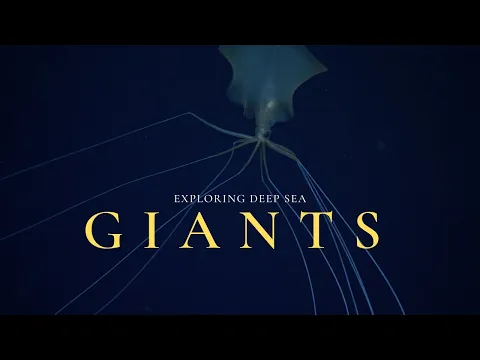
Deep sea (abyssal) gigantism demonstrates the role of natural selection in driving evolution and survival, particularly in an environment characterised by challenging conditions and limited resources. Evolution tends towards the most effective adaptations to grant animals the best chances of survival. And whether large or small, evolution selects for the best-adapted body size to survive these conditions. Though widely debated and often controversial, the research that has been done into the science behind deep sea gigantism has significant implications in the human world; it is believed that climate change may have a greater impact on ocean dwellers than any other population of animals. As the colder oceans warm up, the balance of temperature, oxygen supply, and what organisms are present, will throw the equilibrium off course. And the giants, which rely so heavily on this fine balance, may be the first to go. Written, Narrated and Edited by Leo Richards I do not own any of the footage. I write the script, narrate, and edit what footage I can find, which is allowed due to the original video platform's 'Fair
Natural World FactsDeep Sea Gigantism | Why the Ocean Breeds Giants

The ocean is one of the most powerful forces on our planet and can create the deadliest disaster of them all, tsunamis. We take a look at the most devastating tsunamis the earth has ever seen, and the chaos left in their wake. Mega Disaster takes you on a journey, looking at some of the most destructive and life changing natural disasters that have happened on our plane WONDER is packed with binge worthy reality documentaries for hours of entertainment. Check out our hub of diverse and empowering stories which explore the extreme side of life!
Wonder