documentaries

Absolute History

Page 5 / 13

Francisco Goya: The Romantic Painter Whose Art Turned Dark | The Great Artists documentary thumbnailEN50 min
Francisco Goya: The Romantic Painter Whose Art Turned Dark | The Great Artists

Recognized as the foremost Spanish artist of the late 18th and early 19th centuries, Francisco José de Goya y Lucientes underwent a transformative journey in his extensive career. Shifting from cheerful and lighthearted works to paintings steeped in profound pessimism, Goya's evolution raises the intriguing question: What prompted this dramatic change in his artistic expression?

Absolute History

Francisco Goya: The Romantic Painter Whose Art Turned Dark | The Great Artists

50 minBiography
The Insanely Dangerous Job Of A 19th-Century Railway Builder | Building Ireland documentary thumbnailEN26 min
The Insanely Dangerous Job Of A 19th-Century Railway Builder | Building Ireland

The Industrial Revolution brought significant social and economic changes to Europe and Britain. The construction of the Cork and Bandon Railway presented substantial engineering challenges, including the need for a deep tunnel through Goggin's Hill. The Goggin's Hill tunnel, about a kilometer long, was a remarkable engineering feat of the Victorian Railway age. The construction involved blasting through rock using gunpowder, with teams of workers enduring difficult and dangerous conditions, working day and night. Join the Absolute History club to get access to exclusive member benefits! 💚

Absolute History

The Insanely Dangerous Job Of A 19th-Century Railway Builder | Building Ireland

26 minTransport & Logistics
The Female Bare-Knuckle Prizefighters Of Georgian London | Fight Club documentary thumbnailEN185 min
The Female Bare-Knuckle Prizefighters Of Georgian London | Fight Club

Actor Sean Bean narrates this four-part documentary, which focuses on the history of one-on-one combat and how people have used organised fighting - to gamble, aid diplomatic relations, settle scores and protect personal honour, for example - throughout the ages. Four eras of fighting are covered in the series - Victorian, Georgian, Elizabethan and Tudor - and each hour-long episode brings to life the duels, the pugilism and the fascination Britain has had with this grim form of entertainment. Witness the rise of female warriors, including Britain's first prizefighter superstar Elizabeth Wilkinson Stokes, plus the impact of Charles Dickens and the evolution of combat rules, marking a transformative era in London's tumultuous past. 💚 Join the Absolute History club to get access to exclusive member benefits!

Absolute History

The Female Bare-Knuckle Prizefighters Of Georgian London | Fight Club

185 minSociety
How Eugene Delacroix Liberated Art From 19th-Century Constraints | Great Artists documentary thumbnailEN50 min
How Eugene Delacroix Liberated Art From 19th-Century Constraints | Great Artists

Discover the vivid world of Romanticism as we unravel the life and art of Eugène Delacroix, the greatest French artist of his era. From revolutionary Paris to the exotic landscapes of North Africa, delve into his masterpieces, exploring the fusion of passion, color, and rebellion that shaped art for generations to come. 💚 Join the Absolute History club to get access to exclusive member benefits!

Absolute History

How Eugene Delacroix Liberated Art From 19th-Century Constraints | Great Artists

50 minHistory
Has Our Attitude To War Changed Since The Middle Ages? | Literary Classics documentary thumbnailEN61 min
Has Our Attitude To War Changed Since The Middle Ages? | Literary Classics

The profound world of war poetry traces its historical and cultural significance through different periods. From early examples like "The Battle of Maldon," which captures the heroic spirit of the Dark Ages, to the evolving nature of war poetry during the 18th century, this episode explores how poets have depicted the human experience of war. We journey through the verses of renowned poets such as Robert Burns, Victor Hugo, Lord Tennyson, and Wilfred Owen, each offering a unique perspective on the impact of war on humanity. Discover how war poetry transitioned from glorifying deeds of valor to expressing the raw emotions stirred by conflict. Join the Absolute History club to get access to exclusive member benefits! 💚

Absolute History

Has Our Attitude To War Changed Since The Middle Ages? | Literary Classics

61 minPolitics & War
Why Did Vincent Van Gogh Cut Off His Own Ear? | The Great Artists documentary thumbnailEN49 min
Why Did Vincent Van Gogh Cut Off His Own Ear? | The Great Artists

Vincent Van Gogh tragically ended his life on July 27, 1890, in the French Village of Auvers. Van Gogh, born in 1853, struggled with loneliness, persecution, and madness, with only one of his paintings sold during his lifetime. Despite his difficult life, Van Gogh's artistic genius became widely recognized in the early 1900s, and his paintings gained significant financial value. Van Gogh's art, characterized by bold brushstrokes and emotional expression, challenged traditional conceptions of art, especially in terms of color usage. Join the Absolute History club to get access to exclusive member benefits! 💚

Absolute History

Why Did Vincent Van Gogh Cut Off His Own Ear? | The Great Artists

49 minBiography
What Was The Romantic Movement? | Literary Classics documentary thumbnailEN53 min
What Was The Romantic Movement? | Literary Classics

The English Romantic poets of the 19th century, including Lord Byron, William Wordsworth, Samuel Taylor Coleridge, and Percy Bysshe Shelley, and John Keats, pioneered a literary movement marked by an emphasis on emotion, nature, and individual expression. Wordsworth's celebration of spontaneous feelings and connection with nature, Coleridge's imaginative and experimental works, and Shelley's radicalism and visionary poetry collectively shaped the Romantic Age. Their contributions defined a period characterized by introspection, a deep connection with nature, and a rejection of traditional poetic forms. Join the Absolute History club to get access to exclusive member benefits! 💚

Absolute History

What Was The Romantic Movement? | Literary Classics

53 minSociety
How Jane Eyre Scandalised Victorian High Society | Literary Classics documentary thumbnailEN31 min
How Jane Eyre Scandalised Victorian High Society | Literary Classics

Jane Eyre was released in 1847 and is considered a masterpiece of literature, offering a critique and celebration of Victorian society. Brontë stunned the aristocratic Victorian elite by boldly criticizing prevailing Victorian ideals in her novel, crafting a love story that defied conventional expectations. Charlotte Bronte, the author, was born in 1816 and grew up in a household marked by sickness and death, losing her mother at a young age. Charlotte's early education included a harsh experience at the Cowbridge Clergy Daughters School, which influenced her depiction of Lowood in Jane Eyre. Join the Absolute History club to get access to exclusive member benefits! 💚

Absolute History

How Jane Eyre Scandalised Victorian High Society | Literary Classics

31 minSociety
Beowulf: The Pagan Hero Of The Anglo-Saxons | Literary Classics documentary thumbnailEN31 min
Beowulf: The Pagan Hero Of The Anglo-Saxons | Literary Classics

Anglo-Saxon poetry reflects a fourth or fifth-century Pagan reality, creating noble pagan characters, such as Beowulf, in a Christian context. The tension arises as Christian theology requires damnation for these pagan characters, yet the poet sympathetically presents them in a favorable light. Beowulf, set in a fifth-century Danish Dynasty, exemplifies the heroic ideal of a pagan Anglo-Saxon. Join the Absolute History club to get access to exclusive member benefits! 💚

Absolute History

Beowulf: The Pagan Hero Of The Anglo-Saxons | Literary Classics

31 minSociety
The Canterbury Tales: The English Language's First Masterpiece | Literary Classic documentary thumbnailEN33 min
The Canterbury Tales: The English Language's First Masterpiece | Literary Classic

Geoffrey Chaucer, a poet living in the late 1300s, witnessed significant societal changes in England during the transition from feudalism to a more mercantile system. Chaucer began writing the Canterbury Tales around 1387 during a period when the Catholic Church still held extreme power and the Black Death and the 100 Years War were still having profound impacts on England. Chaucer employs satire, irony, and humor throughout the tales, making readers laugh at first and then revealing the seriousness and tragedy beneath. His innovative use of the five-stress line in Middle English enhances the complexity of his mature poetry, setting him apart as a groundbreaking writer. Despite the unfinished nature of the Canterbury Tales, Chaucer's overarching design and exploration of morality and social reality make it one of the greatest works in English literature. Join the Absolute History club to get access to exclusive member benefits! 💚

Absolute History

The Canterbury Tales: The English Language's First Masterpiece | Literary Classic

33 minSociety
How Dickens Explained Everything Wrong With Victorian Britain | Literary Classics documentary thumbnailEN32 min
How Dickens Explained Everything Wrong With Victorian Britain | Literary Classics

Great Expectations is the thirteenth novel by Charles Dickens and his penultimate completed novel. It depicts the education of an orphan nicknamed Pip. The novel explores themes such as class, snobbery, money, and forgiveness. Pip's journey reflects Dickens' contemplation on social class mobility. It is Dickens' second novel, after David Copperfield, to be fully narrated in the first person. Here, experts why in on the elements of the story, while the narrative plays out before your eyes.

Absolute History

How Dickens Explained Everything Wrong With Victorian Britain | Literary Classics

32 minSociety
Underwater Archaeologists Explore Island Of 1,000 Shipwrecks | Legend of Magdalen documentary thumbnailEN45 min
Underwater Archaeologists Explore Island Of 1,000 Shipwrecks | Legend of Magdalen

We explore the marine mysteries of the Magdalen Islands, an archipelago in North America's tumultuous inland saltwater sea. Leonard Clark and his family, spanning three generations in the village, have meticulously documented over 1,000 sunken ships. They seek to help the people of the Magdalen Islands, all descendants of shipwrecked sailors, to uncover their ancestery. Leonard, an amateur archaeologist and shipwreck descendent, has dedicated his life to unraveling the history of the Magdalen Islands, tracing the origins of numerous shipwrecks, and deciphering clues to sunken treasures claimed by the sea. Along this unique journey, Leonard Clark shares historical insights and tales of sunken treasures with Mario Cyr, a local hero and globally acclaimed underwater cameraman. Join the Absolute History club to get access to exclusive member benefits! 💚

Absolute History

Underwater Archaeologists Explore Island Of 1,000 Shipwrecks | Legend of Magdalen

45 minTransport & Logistics
The Metaphysicals: The Punk Poets Of 17th-Century Literature | Literary Classic documentary thumbnailEN30 min
The Metaphysicals: The Punk Poets Of 17th-Century Literature | Literary Classic

The metaphysical poets lived in a period of significant social and cultural change in the early 17th century. This era was marked by challenges to traditional beliefs due to scientific advances, religious and political upheavals, and the shift from medieval to modern society. The poets' works reflected the influences and pressures of this dynamic period, responding to the anxiety and uncertainty of the time. John Donne, the most renowned metaphysical poet, explored love in various forms—divine, sexual, and platonic.

Absolute History

The Metaphysicals: The Punk Poets Of 17th-Century Literature | Literary Classic

30 minHistory
The Complete History Of The Ancient Egyptian Empire | Immortal Egypt Full Series documentary thumbnailEN232 min
The Complete History Of The Ancient Egyptian Empire | Immortal Egypt Full Series

Egypt is home to one of the world's earliest civilizations, with its earliest settlements in northern Africa dating to 17000 BC. Ancient Egypt was a powerful, influential, and expansionist empire that grew from the Nile River Valley to include much of the eastern Mediterranean. The civilization brought many inventions and advancements, including agriculture, art, architecture, astronomy, mathematics, medicine, religion, writing, and so much more.

Absolute History

The Complete History Of The Ancient Egyptian Empire | Immortal Egypt Full Series

232 minHistory
What Dickens' Most Famous Book Says About His Troubled Psyche | Literary Classics documentary thumbnailEN30 min
What Dickens' Most Famous Book Says About His Troubled Psyche | Literary Classics

Charles Dickens' classic novel 'A Tale Of Two Cities' tells the story of the French Doctor Manette, his 18-year-long imprisonment in the Bastille in Paris, and his release to live in London with his daughter Lucie whom he had never met. The story is set against the conditions that led up to the French Revolution and the Reign of Terror. But what was going on in Dicken's personal life that he was trying to express through this novel?

Absolute History

What Dickens' Most Famous Book Says About His Troubled Psyche | Literary Classics

30 minSociety
Jumbo: David Attenborough On The Tragic Life Of The Superstar Elephant | Jumbo documentary thumbnailEN59 min
Jumbo: David Attenborough On The Tragic Life Of The Superstar Elephant | Jumbo

David Attenborough investigates the remarkable life and death of Jumbo the elephant - the biggest animal celebrity of the 19th century whose story is said to have inspired the movie Dumbo. The most famous animal in the world, Jumbo captivated the world. But behind the curtain, was a tragic story of abuse, alcoholism, violence, and a mysterious death.

Absolute History

Jumbo: David Attenborough On The Tragic Life Of The Superstar Elephant | Jumbo

59 minBiography
What Was It Like Aboard The First Luxury Ocean Liners? | Great Liners documentary thumbnailEN56 min
What Was It Like Aboard The First Luxury Ocean Liners? | Great Liners

Discover the Queen Elizabeth II, the flagship of the historic Cunard line, boasting cutting-edge technology and a record-breaking speed of 34 knots. In the golden era of ocean liners, names like Queen Mary and Queen Elizabeth symbolized a life of opulence and leisure. We will uncover the surprising origins of ocean liners in steam engine technology and how visionaries like Isambard Kingdom Brunel revolutionized maritime travel. We will learn about the challenges and risks faced by pioneers in the 1830s, leading to the creation of the first purpose-built ocean liner, the Great Western. Follow the evolution of transatlantic passenger services, from the impact of World War I to the development of steam turbo-electric propulsion, transforming ocean liners into cruise ships and military transports. Join the Absolute History club to get access to exclusive member benefits! 💚

Absolute History
What Was It Like Aboard The First Luxury Ocean Liners? | Great Liners

56 minNature & Environment
Why Did Britain Get China Addicted To Opium? | Empires of Silver documentary thumbnailEN59 min
Why Did Britain Get China Addicted To Opium? | Empires of Silver

It's hard to believe but silver was at one time worth more than gold. China used silver as their currency and the West had to pay in silver for Chinese goods. This angered the British and so they sought a commodity that the Chinese would be forced to buy. China did not covet any goods that the West had except one: Opium. Join the Absolute History club to get access to exclusive member benefits! 💚

Absolute History

Why Did Britain Get China Addicted To Opium? | Empires of Silver

59 minHistory
How The Opium Trade Destroyed China’s Greatest Empire | Empires Of Silver documentary thumbnailEN59 min
How The Opium Trade Destroyed China’s Greatest Empire | Empires Of Silver

China's lust for silver helped establish their formidable economic position on the global stage. However, Western powers were reluctant to engage in silver trade and in their search for an alternative avenue they discovered something that would change history forever: Opium. As opium surged throughout the nation, it brought forth multifaceted societal issues, ultimately fueling the harrowing Opium Wars. These conflicts marked the onset of a devastating "Century of Humiliation" for China, leaving an indelible mark on its history and global standing

Absolute History

How The Opium Trade Destroyed China’s Greatest Empire | Empires Of Silver

59 minHistory
The Ming Dynasty's Destructive Appetite For Silver | Empires of Silver documentary thumbnailEN59 min
The Ming Dynasty's Destructive Appetite For Silver | Empires of Silver

In 1581, China's Emperor sparked a global demand for silver, changing the course of history forever. This was how Spain's silver trade with China shaped the New World, funding America's Industrial Revolution and driving the growth of cities worldwide. Uncover the conflicts and consequences as silver becomes both a source of power and a catalyst for China's 'century of humiliation.' Join us on a journey that reveals the intricate connections between China and the rest of the world.

Absolute History

The Ming Dynasty's Destructive Appetite For Silver | Empires of Silver

59 minHistory
What Was Daily Life Like For An Anglo-Saxon? | Life in Anglo-Saxon Times documentary thumbnailEN55 min
What Was Daily Life Like For An Anglo-Saxon? | Life in Anglo-Saxon Times

Most Anglo-Saxons were farmers and lived off the land. They were able to make equipment such as ploughs and tools to help them in their work. They would grind wheat to make flour so they could make bread. Some Anglo-Saxons were skilled craftsmen who made decorative jewellery such as brooches and necklaces. But ultimately, Anglo Saxon life provided challenges long forgotten by today's Brits.

Absolute History

What Was Daily Life Like For An Anglo-Saxon? | Life in Anglo-Saxon Times

55 minSociety
100º Below: What Was It Like To Be Stranded In Antarctica? | Great Adventurers documentary thumbnailEN141 min
100º Below: What Was It Like To Be Stranded In Antarctica? | Great Adventurers

Join us on a captivating journey to the coldest and most inhospitable environment on Earth - Antarctica. We delve into the early 20th-century expeditions that set out to unravel the mysteries of this uncharted southern land, where temperatures can plummet to 100° below zero and winds can reach a staggering 200 mph. We will learn about the legendary explorer Ernest Shackleton and his adventurous spirit, drive for fame, and rivalry with fellow explorer Robert Scott. We will then head further back in time to a much earlier maritime explorer who changed the course of human history, Christopher Columbus. While he set the blueprint for future sea-borne exploration, he left untold suffering and centuries of colonization in his wake.

Absolute History

100º Below: What Was It Like To Be Stranded In Antarctica? | Great Adventurers

141 minNature & Environment
The Intimate Secrets Of Queen Victoria's Enduring Reign | Victoria's Secrets documentary thumbnailEN59 min
The Intimate Secrets Of Queen Victoria's Enduring Reign | Victoria's Secrets

Queen Victoria inherited the throne of Great Britain at the tender age of 18 and rules for 63 years, giving her name to an enitre era. Victoria was a complex character, her personality a strange mixture of contradictions. This fascinating documentary provides a penetrating insight into the Queen's life as Victoria's Secrets are revealed at last.

Absolute History

The Intimate Secrets Of Queen Victoria's Enduring Reign | Victoria's Secrets

59 minMystery
Is There A Sunken Bronze Age Civilisation Under The Black Sea? | Dark Secrets documentary thumbnailEN55 min
Is There A Sunken Bronze Age Civilisation Under The Black Sea? | Dark Secrets

The Black Sea is a place of great mystery and antiquity. Scientists have found evidence of ancient submerged civilizations in the Black Sea, indicating a sudden rise in sea levels around 6000 BC. Ancient legends describe a time when the oceans rose above the land, causing an entire civilization to vanish beneath the cold waters of this ocean region. Could this be the great flood described in the Bible during the time of Noah?

Absolute History

Is There A Sunken Bronze Age Civilisation Under The Black Sea? | Dark Secrets

55 minMystery
Black Death: The Disease That Wiped Out Half Of Europe | Secrets in the Bones documentary thumbnailEN53 min
Black Death: The Disease That Wiped Out Half Of Europe | Secrets in the Bones

It was called the Black Death, a disease that started in the 14th century, and swept across Europe wiping out half the population, one of the most lethal killers in human history. But the cause of the Black Death has eluded scientists. Now, Evolutionary biologist Hendrik Poinar embarks on an epic journey to solve the 600-year old mystery and change the way we fight infectious diseases today.

Absolute History

Black Death: The Disease That Wiped Out Half Of Europe | Secrets in the Bones

53 minHealth & Medicine
The Brutal & Bizarre World Of The Medieval Fight Tournament | Fight Club documentary thumbnailEN47 min
The Brutal & Bizarre World Of The Medieval Fight Tournament | Fight Club

In the late 1400s in Tudor England, knights were born and bred to face combat, both on the battlefield and the tournament ground. We explore the intriguing world of medieval tournaments, highlighting the role of knights as both warriors and symbols of heroism. We also delve into the Field of the Cloth of Gold, a lavish and opulent tournament hosted by Henry VII in 1520, which became a symbol of power and prestige in Europe. This event, with its extravagant pageantry, marked the zenith of medieval tournaments.

Absolute History

The Brutal & Bizarre World Of The Medieval Fight Tournament | Fight Club

47 minHistory
Admiral Nelson: The Man Who Saved Britain From Napoleon | Nelson's Trafalgar documentary thumbnailEN78 min
Admiral Nelson: The Man Who Saved Britain From Napoleon | Nelson's Trafalgar

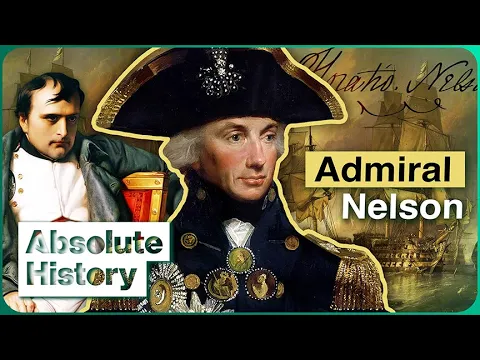
Admiral Nelson's heroic death at the Battle of Trafalgar is immortalized in bronze and stone on the great column in Trafalgar Square. Nelson, a brave and brilliant war leader, was also known for being vain, ruthless, and impetuous. In 1805, the Royal Navy was on blockade duty, preparing for a possible invasion of England by Napoleon's forces. Nelson's personal life included a complex relationship with Lady Emma Hamilton, and his career was marked by significant victories and controversies. Nelson's daring and unconventional tactics in the Battle of Trafalgar led to a decisive victory for the British fleet, although he was mortally wounded during the battle, ultimately securing his place as a national hero.

Absolute History

Admiral Nelson: The Man Who Saved Britain From Napoleon | Nelson's Trafalgar

78 minSociety
The Brutal World Of Bare-Knuckle Boxing In Victorian Britain | Fight Club documentary thumbnailEN47 min
The Brutal World Of Bare-Knuckle Boxing In Victorian Britain | Fight Club

This is the history of bare-knuckle fighting in Victorian Britain, a brutal sport that seeks to decide the undisputed champion of the world. The rise of fighters like Tom Spring, who came from humble working-class origins to become sporting superstars, paved the way for Tyson Fury, Mohammed Ali, and Mike Tyson. Bare-knuckle fighting was a sport with few rules, no gloves, and often resulted in death. The fight between Tom Sayers and Jack Heenan marked the end of the era of bare-knuckle prizefighting and was a turning point in the history of combat sports.

Absolute History

The Brutal World Of Bare-Knuckle Boxing In Victorian Britain | Fight Club

47 minSociety
Georgian Death Match: The Bloody History Of The Pistol Duel | Fight Club documentary thumbnailEN47 min
Georgian Death Match: The Bloody History Of The Pistol Duel | Fight Club

We explore the history of dueling in Georgian England, where individuals fought to the death to settle disputes, clear their names, or prove their courage and skill. The evolution of the dueling weapon ranged from swords to pistols, and various modifications were made for accuracy and ease of use. The prevalence of dueling can be attributed to excessive alcohol consumption, gambling, and the concept of honor.

Absolute History

Georgian Death Match: The Bloody History Of The Pistol Duel | Fight Club

47 minHistory
The Dramatic Fall Of Ancient Egypt Explained | Immortal Egypt documentary thumbnailEN60 min
The Dramatic Fall Of Ancient Egypt Explained | Immortal Egypt

Joann discovers how Egypt's enemies exploited a country weakened by internal strife, ultimately leading to its destruction. Joann leaves Egypt and journeys south to Sudan where she finds the remarkable story of the forgotten Nubian Kings. Alexandria was once Egypt's capital, known for its power, wealth, and luxury. During the 22nd Dynasty Libyan generals seized power and plundered royal tombs. The influence of Nubian culture on Egypt and the restoration efforts by the Kushite kings. Alexander the Great's role in Egypt, the establishment of Alexandria, and the Ptolemaic dynasty had immense influence on the fall of Egypt.

Absolute History

The Dramatic Fall Of Ancient Egypt Explained | Immortal Egypt

60 minHistory
The Underground Female Bare-Knuckle Boxing Scene Of Georgian London | Fight Club documentary thumbnailEN47 min
The Underground Female Bare-Knuckle Boxing Scene Of Georgian London | Fight Club

The history of organized fighting in Britain begins in the Georgian era. Lucy Inglis takes a look at the dark world of women's bare-knuckle boxing in London during the 18th century. The Georgian period in London was a time of expansion and upheaval. Women fought for honor, settled disputes, and competed for sport. Uncover the gritty world of Women's bare-knuckle prizefighting,, in an era marked by rough and unregulated fights. Learn about the social and health challenges faced by London's most impoverished population.

Absolute History

The Underground Female Bare-Knuckle Boxing Scene Of Georgian London | Fight Club

47 minSociety
What Was Life Like In Medieval England Under The Feudal System? | Medieval Life documentary thumbnailEN56 min
What Was Life Like In Medieval England Under The Feudal System? | Medieval Life

From the Norman invasion in 1066 to the end of the Wars of the Roses in 1485, Medieval England transformed from an agricultural feudal society to one on the brink of creating an empire. The feudal system under William the Conqueror emphasized that all land was the crown's property, and peasants worked on their lord's land for rent. The Manor Court addressed agricultural disputes and enforced the lord's rights, with a bailiff overseeing it. Medieval England had village settlements in forests, with Forest Law infamous for harsh punishments for deer hunting. Life was challenging for peasants with seasonal food scarcity, and education and social status were evolving during this period.

Absolute History

What Was Life Like In Medieval England Under The Feudal System? | Medieval Life

56 minHistory
The Most Disgusting Rural Jobs In History documentary thumbnailEN48 min
The Most Disgusting Rural Jobs In History

*We apologize for any sections with uneven audio levels, we are aware of the issue.* This week we take a close look at the worst rural jobs and remember those who risked their necks to maintain the heart of rural life, shifted excrement to produce enduring images of the countryside and saved souls in the villages by eating bread. Tony experiences life as a shepherd boy, nettle harvester, reddle man, thresher, chaff-box boy, sedge cutter, sin eater, pole man, lead-white maker and featherier. Then he tackles the most arduous job of all, that of the steeplejack when he climbs the highest spire in Oxfordshire.

Absolute History

The Most Disgusting Rural Jobs In History

48 minHistory
How England's Most Barbaric Execution Method Was Finally Banned | The Tower documentary thumbnailEN46 min
How England's Most Barbaric Execution Method Was Finally Banned | The Tower

Every imaginable execution method took place at The Tower of London in its 1000-year-old past. The most grisly of all was live disembowelment. The method was so gross and barbaric that Queen Elizabeth I finally banned the practice. The last time it was used was in 1586 on the conspirators of the Babington Plot. The plot was the work of Francis Walsingham, the father of modern espionage. He was known as The Spymaster.

Absolute History

How England's Most Barbaric Execution Method Was Finally Banned | The Tower

46 minSociety
What Was It Like To Be Tortured In The Tower Of London? | The Tower documentary thumbnailEN45 min
What Was It Like To Be Tortured In The Tower Of London? | The Tower

Torture, treason, and bizarre executions were standard practices at The Tower Of London. The Tower is the United Kingdom's foremost tourist attraction - an imposing stronghold that has been part of London's royal heritage for more than 1,000 years. It has changed roles, from fortress to palace to prison; if the stones of this mighty citadel could talk imagine what stories they could tell. The events that have taken place here and the tragic and heroic characters that have passed through the gates have shaped the destiny of the United Kingdom.

Absolute History

What Was It Like To Be Tortured In The Tower Of London? | The Tower

45 minSociety
The Surprisingly Lethal Life Of Medieval Royal Servants | Worst Jobs documentary thumbnailEN49 min
The Surprisingly Lethal Life Of Medieval Royal Servants | Worst Jobs

*We apologize for any sections with uneven audio levels, we are aware of the issue.* You'd suspect that working in a royal palace wood have been preferable to working in the fields. But these royal jobs are among the worst in history. Life was gruelling for those who found themselves working as a lance maker, falcon-keeper, whipping boy, food taster, groom of the chamber, royal messenger, royal washerwoman, fireworker, boot boy, and the dreaded purple maker.

Absolute History

The Surprisingly Lethal Life Of Medieval Royal Servants | Worst Jobs

49 minHistory
The Sadistic Torturer Of The Tudor Tower Of London | Tales Of The Tower documentary thumbnailEN46 min
The Sadistic Torturer Of The Tudor Tower Of London | Tales Of The Tower

The Tower Of London is the United Kingdom's foremost tourist attraction - an imposing stronghold that has been part of London's royal heritage for more than 1,000 years. It has changed roles, from fortress to palace to prison; if the stones of this mighty citadel could talk imagine what stories they could tell. The events that have taken place here and the tragic and heroic characters that have passed through the gates have shaped the destiny of the United Kingdom.

Absolute History

The Sadistic Torturer Of The Tudor Tower Of London | Tales Of The Tower

46 minSociety
Brontë Sisters: The Tragic Lives Of The Literary Icons | Walking Through History documentary thumbnailEN47 min
Brontë Sisters: The Tragic Lives Of The Literary Icons | Walking Through History

Tony Robinson is exploring the West Yorkshire Moors, known as Bronte country, to discover the inspiration behind the works of the legendary Bronte sisters. Charlotte, Emily, and Anne Bronte were born into a world of mills and moors in the early 19th century in Yorkshire. The writing prowess in the Bronte family produced timeless literary classics like "Jane Eyre" and "Wuthering Heights". Their lives, remarkable storytelling, and tragic early deaths have left a lasting imprint on the psyche of West Yorkshire.

Absolute History

Brontë Sisters: The Tragic Lives Of The Literary Icons | Walking Through History

47 minHistory
Scotland’s Tragic Last Stand To Overthrow The English Throne | History Of Warfare documentary thumbnailEN53 min
Scotland’s Tragic Last Stand To Overthrow The English Throne | History Of Warfare

Scotland’s Tragic Last Stand To Overthrow The English Throne | History Of Warfare examines the specific people, events and evidence presented in this documentary. On 16 April 1746, on Drummossie Moor overlooking Inverness, a well supplied Hanoverian army led by the Duke of Cumberland annihilated the much smaller army of Lord John Murray and the leader he mistrusted, Prince Charles Edward Stuart. It was Bonnie Prince Charlie's final assault on the English, and the bloodiest of all the Jacobite battles. It was also the last battle fought on British soil.

Absolute History

Scotland’s Tragic Last Stand To Overthrow The English Throne | History Of Warfare

53 minHistory
The Hunt For The Great American Dinosaurs Cemeteries | Time Team documentary thumbnailEN49 min
The Hunt For The Great American Dinosaurs Cemeteries | Time Team

Tony Robinson and Phil Harding travel to the Rocky Mountains in Montana, USA, for this special program on dinosaurs and the professional and private 'dinosaur hunters' who seek and recover fossil remains. Accompanying several digs, they soon learn that the methods used by the dinosaur hunters turn out to be similar to those employed by archaeologists. After joining a museum dig to excavate the bones of various tyrannosauroids, they discover the profitable tourist industry that dinosaur hunting has spawned in the US. Their journey culminates in a trip to the Badlands, where they help dinosaur hunter Jack Horner dig up the remains of a Tyrannosaurus.

Absolute History

The Hunt For The Great American Dinosaurs Cemeteries | Time Team

49 minSociety
Battle Of Naseby: How The English Civil War Was Won documentary thumbnailEN48 min
Battle Of Naseby: How The English Civil War Was Won

The battle of Naseby was fought on the foggy morning of 14th June 1645 and is considered one of the most important battles in the English Civil War. Sir Thomas Fairfax, Captain-General of Parliament's New Model Army, led his troops to victory over King Charles I. Charles escaped, but the destruction of his forces meant that his ultimate defeat was simply a question of time.

Absolute History

Battle Of Naseby: How The English Civil War Was Won

48 minPolitics & War
Culloden: The Brutal 18th-Century Battle In The Scottish Highlands | Line Of Fire documentary thumbnailEN48 min
Culloden: The Brutal 18th-Century Battle In The Scottish Highlands | Line Of Fire

Culloden: The Brutal 18th-Century Battle In The Scottish Highlands | Line Of Fire examines the specific people, events and evidence presented in this documentary. On 16 April 1746, on Drummossie Moor overlooking Inverness, a well supplied Hanoverian army led by the Duke of Cumberland annihilated the much smaller army of Lord John Murray and the leader he mistrusted, Prince Charles Edward Stuart. It was Bonnie Prince Charlie's final assault on the English, and the bloodiest of all the Jacobite battles. It was also the last battle fought on British soil.

Absolute History

Culloden: The Brutal 18th-Century Battle In The Scottish Highlands | Line Of Fire

48 minHistory
Great Fire & Plague: When 17th-Century London Became A Living Hell | Fire & Fever documentary thumbnailEN51 min
Great Fire & Plague: When 17th-Century London Became A Living Hell | Fire & Fever

Over the span of two years, London faced a series of unimaginable disasters. A devastating outbreak of the plague was soon followed by a fire that leveled the city. Based on such sources as the diaries of Samuel Pepys, Dr. Nathaniel Hodges, Rev. Thomas Vincent, and others of the disastrous Great Plague of 1665 and the equally destructive Great Fire of 1666 and their effects on life in 17th-century London.

Absolute History

Great Fire & Plague: When 17th-Century London Became A Living Hell | Fire & Fever

51 minHistory