
About What Dickens' Most Famous Book Says About His Troubled Psyche | Literary Classics
Charles Dickens' classic novel 'A Tale Of Two Cities' tells the story of the French Doctor Manette, his 18-year-long imprisonment in the Bastille in Paris, and his release to live in London with his daughter Lucie whom he had never met. The story is set against the conditions that led up to the French Revolution and the Reign of Terror. But what was going on in Dicken's personal life that he was trying to express through this novel?
What Dickens' Most Famous Book Says About His Troubled Psyche | Literary Classics is presented by Absolute History. Its listed runtime is 30 minutes. The source link and publisher attribution are provided with the embedded film.
As a society documentary, What Dickens' Most Famous Book Says About His Troubled Psyche | Literary Classics uses dickens, famous, troubled as its central frame. Social documentaries work best as invitations to examine systems through lived experience. Distinguish individual testimony from wider claims, and consider which institutions, incentives and inequalities shape the choices shown.
What to consider before watching
- What evidence, testimony or observation does the film use to explain dickens, famous, troubled?
- Which people, institutions or historical conditions most influence the story told in What Dickens' Most Famous Book Says About His Troubled Psyche | Literary Classics?
- How does Absolute History's framing affect the documentary's emphasis, and which perspectives may deserve further research?
Topics covered in this documentary
Documentary details and original source
- Title
- What Dickens' Most Famous Book Says About His Troubled Psyche | Literary Classics
- Category
- Society
- Runtime
- 30 minutes
- Language
- English
- Publisher
- Absolute History
Free Documentary Vault provides independent discovery, organization and editorial context. The film remains hosted by its original publisher, who controls availability and playback.
Related Society documentaries

Great Expectations is the thirteenth novel by Charles Dickens and his penultimate completed novel. It depicts the education of an orphan nicknamed Pip. The novel explores themes such as class, snobbery, money, and forgiveness. Pip's journey reflects Dickens' contemplation on social class mobility. It is Dickens' second novel, after David Copperfield, to be fully narrated in the first person. Here, experts why in on the elements of the story, while the narrative plays out before your eyes.
Absolute HistoryHow Dickens Explained Everything Wrong With Victorian Britain | Literary Classics

In this film, we walk the modern streets of London to uncover the scars of a night that should have broken the nation's morale. From the "grimy-faced heroes" of the Auxiliary Fire Service—many of whom were taxi drivers towing pumps with rope—to the frantic struggle to save St Paul’s Cathedral under direct orders from Winston Churchill, we explore the courage that kept the city standing. 💚 Join the Absolute History club to get access to exclusive member benefits! 📺 You can now become a History Hit member right here on the original video platform! Join for access to a new exclusive documentary every week, and access to over 160+ of our documentaries presented by world renowned historians like Dan Snow, Eleanor Janega, Tristan Hughes, Mary Beard, Matt Lewis and more.
Absolute HistoryThe Bombing Raid That Almost Wiped London Off The Map

Geoffrey Chaucer, a poet living in the late 1300s, witnessed significant societal changes in England during the transition from feudalism to a more mercantile system. Chaucer began writing the Canterbury Tales around 1387 during a period when the Catholic Church still held extreme power and the Black Death and the 100 Years War were still having profound impacts on England. Chaucer employs satire, irony, and humor throughout the tales, making readers laugh at first and then revealing the seriousness and tragedy beneath. His innovative use of the five-stress line in Middle English enhances the complexity of his mature poetry, setting him apart as a groundbreaking writer. Despite the unfinished nature of the Canterbury Tales, Chaucer's overarching design and exploration of morality and social reality make it one of the greatest works in English literature. Join the Absolute History club to get access to exclusive member benefits! 💚
Absolute HistoryThe Canterbury Tales: The English Language's First Masterpiece | Literary Classic
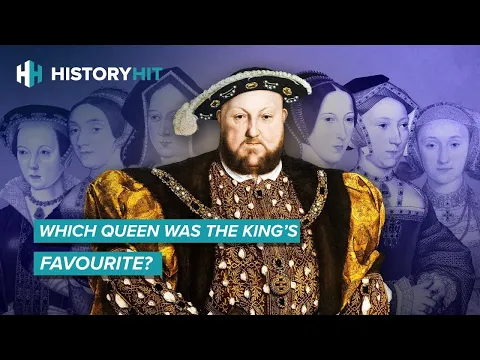
Henry VIII is one of England’s most famous kings. Known for his love of feasting, getting married and chopping people’s heads off (in that order), Henry oversaw some of the most dramatic changes in England’s history. Chief of these was his break with the Catholic Church and the launch of the English Reformation. But it’s not just his policies that have caught people’s interest. Henry’s love life was just as juicy as his reign, and his six wives are renowned all over the world. Their history has been told and retold over and over again - in television, film… and a rather fun musical, live in CONSORT. Divorced, beheaded and died, divorced, beheaded, survived so the rhyme goes. In this video, Lily Johnson delves into the history of these six fascinating women who served as queens of England through times of intense change - and with a famously difficult King beside them. Each of their stories tell us a lot about both Henry VIII and England at the time - they’re so full of gossip, intrigue and downright outrageous moments
History HitWho Were Henry VIII's 6 Wives?

The life of a centurion was a tough one. Being part of the most effective and efficient military machine the world had ever seen brought with it long tough days of marching, building and training and that's before you've even set foot on the battlefield. Discover what the real lives of these legendary soldiers were like. Odyssey is your journey into the world of Ancient History; from the dawn of Mesopotamia to the fall of Rome. We'll be bringing you only the best documentaries that journey into the mysteries and ruins of worlds long lost.
Odyssey - Ancient History DocumentariesWhat Was Normal Life Like For A Roman Centurion? | Warriors Way | Odyssey

Most Anglo-Saxons were farmers and lived off the land. They were able to make equipment such as ploughs and tools to help them in their work. They would grind wheat to make flour so they could make bread. Some Anglo-Saxons were skilled craftsmen who made decorative jewellery such as brooches and necklaces. But ultimately, Anglo Saxon life provided challenges long forgotten by today's Brits.
Absolute History