
About Truth, Power and the Importance of Press Freedom: An exclusive conversation with Maria Ressa
“Truth, Power and the Importance of Press Freedom: An Exclusive Conversation with Maria Ressa” was a virtual discussion produced in partnership with FRONTLINE and the International Center for Journalists. Maria Ressa, chief executive of independent news site Rappler, has been convicted with Cyber Libel charges, and faces up to six years in prison. On the eve of the court's ruling, Maria led a vital conversation on reporting, truth and its impact on democracy. The conversation explores how journalism is essential to the function of democracy, informing and empowering citizens, yet journalists worldwide have become embattled for covering the news. In the Philippines, President Rodrigo Duterte has cracked down on news outlets critical of his brutal war on drugs. A top target: Maria Ressa, the subject of an upcoming FRONTLINE documentary, “A Thousand Cuts.” The virtual discussion includes exclusive clips from “A Thousand Cuts.” Featured speakers: Maria Ressa, CEO & Executive Editor, Rappler Ramona Diaz, Film Director, “A Thousand Cuts” Raney Aronson-Rath, Executive Producer, FRONTLINE Moderated by Dr. Julie Posetti, Global Director of Research, International Center for Journalists (ICFJ) And for
Truth, Power and the Importance of Press Freedom: An exclusive conversation with Maria Ressa is presented by FRONTLINE PBS | Official. Its listed runtime is 75 minutes. The source link and publisher attribution are provided with the embedded film.
As a society documentary, Truth, Power and the Importance of Press Freedom: An exclusive conversation with Maria Ressa uses truth, power, importance as its central frame. Social documentaries work best as invitations to examine systems through lived experience. Distinguish individual testimony from wider claims, and consider which institutions, incentives and inequalities shape the choices shown.
What to consider before watching
- What evidence, testimony or observation does the film use to explain truth, power, importance?
- Which people, institutions or historical conditions most influence the story told in Truth, Power and the Importance of Press Freedom: An exclusive conversation with Maria Ressa?
- How does FRONTLINE PBS | Official's framing affect the documentary's emphasis, and which perspectives may deserve further research?
Topics covered in this documentary
Documentary details and original source
- Title
- Truth, Power and the Importance of Press Freedom: An exclusive conversation with Maria Ressa
- Category
- Society
- Runtime
- 75 minutes
- Language
- English
- Publisher
- FRONTLINE PBS | Official
Free Documentary Vault provides independent discovery, organization and editorial context. The film remains hosted by its original publisher, who controls availability and playback.
Related Society documentaries

FRONTLINE goes inside the showdown between U.S. President Donald Trump and the courts over presidential power. President Donald Trump’s allies, opponents and experts talk about how he is testing the extent of his power, the legal pushback and the impact on the rule of law. “Trump’s Power & the Rule of Law” is a FRONTLINE production with Kirk Documentary Group, Ltd. The director is Michael Kirk. The producers are Michael Kirk, Mike Wiser, Vanessa Fica and Philip Bennett. The writers are Michael Kirk & Mike Wiser. The reporters are Vanessa Fica and Brooke Nelson Alexander. The editor-in-chief and executive producer of FRONTLINE is Raney Aronson-Rath. Explore additional reporting on “Trump’s Power & the Rule of Law” on our website: FRONTLINE is produced at GBH in Boston and is broadcast nationwide on PBS. Funding for FRONTLINE is provided through the support of PBS viewers and by the Corporation for Public Broadcasting. Additional support for FRONTLINE is provided by the Abrams Foundation, Park Foundation, the John D. and Catherine T. MacArthur Foundation, and the FRONTLINE Journalism Fund, with major support from Jon
FRONTLINE PBS | OfficialTrump’s Power & the Rule of Law (full documentary) | FRONTLINE
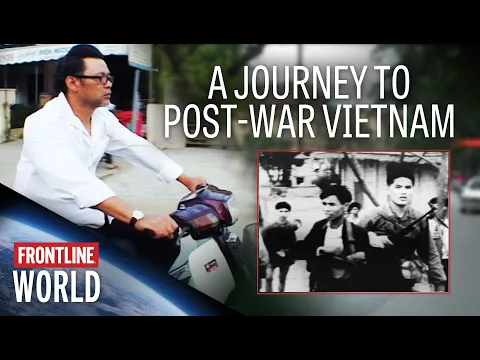
Decades after the Vietnam War shattered his childhood, journalist Nguyen Qui Duc traveled to his homeland and documented the changes he witnessed in the country. (Aired 2003) Decades ago, the Vietnam War shattered Nguyen Qui Duc’s childhood. Over the years, Nguyen, who came to the U.S. as a refugee, returned to his homeland as a journalist, reporting on the country’s culture and establishing connections with writers and artists living there. In 2003, he documented a journey through Vietnam for FRONTLINE/World, looking, he said, “for home, for a bit of myself, for a country that always exists in my memory.” As Nguyen traveled to different parts of the country in “Vietnam: Looking for Home,” he shared his reflections about the nation: “It’s easy to remember Vietnam has a habit of adopting and resisting changes. The culture, the people, will survive.” Several years after “Vietnam: Looking for Home” aired, Nguyen returned to Vietnam, this time for good. He filed occasional dispatches with FRONTLINE and FRONTLINE/World, and opened an influential arts and culture salon that pushed the boundaries of Vietnam’s communist government. Nguyen
FRONTLINE PBS | OfficialInside a Changing Nation | Vietnam: Looking for Home (full documentary) | FRONTLINE/World

A 2004 examination of India’s AIDS crisis through the eyes of girls and young women sold into sex work, originally aired as part of the FRONTLINE/World series. (Aired 2004) Starting with “India: The Sex Workers,” we are making episodes from FRONTLINE/World’s archive newly available here on the original video platform and on pbs.org as part of an effort to make our past reporting widely accessible. Originally developed by FRONTLINE producers in conjunction with public television stations KQED San Francisco and WGBH Boston, FRONTLINE/World launched in 2002 as a national public TV series that turned its lens on the global community, covering countries and cultures rarely seen on American television. The series completed its final broadcast season in 2010. At the time this FRONTLINE/World documentary was filmed, more than two million women and girls were working in India’s sex trade, and being forced to navigate their country’s AIDS crisis. With more than 4.5 million HIV infections across India at the time, often, the women and girls’ only defense against HIV was convincing men to wear condoms. But frequently, the documentary revealed
FRONTLINE PBS | OfficialCaught in India’s AIDS Crisis | India: The Sex Workers (full documentary) | FRONTLINE/World

Rafael Grossi has served as the director general of the International Atomic Energy Agency, the United Nations’ nuclear watchdog, since 2019. Prior to that, Grossi held various positions related to nuclear safety and the non-proliferation of nuclear weapons. A veteran diplomat, he was also Argentina’s ambassador to Austria and the Argentine Representative to the IAEA and other international organizations. FRONTLINE is produced at GBH in Boston and airs nationwide on PBS. The editor-in-chief and executive producer of FRONTLINE is Raney Aronson-Rath. Funding for FRONTLINE is provided through the support of PBS viewers and by the Corporation for Public Broadcasting, with major support from Ford Foundation, and The Fialkow Family Foundation, as part of the Plum Bush Foundation. Additional support for FRONTLINE is provided by the Abrams Foundation, Park Foundation, John D. and Catherine T. MacArthur Foundation, Heising-Simons Foundation, and the FRONTLINE Trust, with major support from Jon and Jo Ann Hagler on behalf of the Jon L. Hagler Foundation, and Corey David Sauer, and additional support from Koo and Patricia Yuen.
FRONTLINE PBS | OfficialWhat does the IAEA know about Iran’s stockpile of highly enriched uranium?

Inside a counterterrorism police unit in Karachi, Pakistan, dedicated to tracking down suspected members of the Pakistani Taliban. (Aired 2015) In the nearly five years since the Taliban seized control of Afghanistan, there’s been a dramatic increase in attacks within neighboring Pakistan by the militant group Tehreek-e-Taliban Pakistan, commonly called the Pakistani Taliban or TTP. Pakistan has accused Taliban-controlled Afghanistan of harboring the group and enabling it to launch cross-border attacks, which the Afghan government denies — and in recent weeks, the fight between the two countries escalated into what Pakistan’s government called “open war.” Against this volatile backdrop, FRONTLINE’s 2015 documentary “Taliban Hunters” offers relevant history on TTP and Pakistani security forces’ fight against it. This short documentary went inside a Karachi-based counterterrorism police unit dedicated to tracking down Taliban suspects. As the documentary reported, TTP first emerged in 2007 and used to have only a small, underground presence in Karachi, Pakistan’s largest city. But by the time the documentary aired, the group had been gaining ground in the city of over 20 million people, and carrying out suicide
FRONTLINE PBS | OfficialTracking Suspected Members of the Pakistani Taliban | Taliban Hunters (full documentary) | FRONTLINE
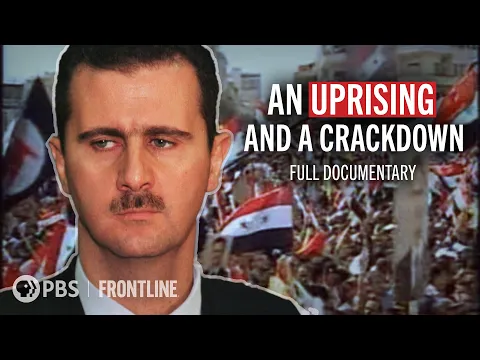
It’s been 15 years since the rebellion in Syria against Bashar al-Assad’s government began. “The Regime” examined how the uprising started and the brutal crackdown that followed. (Aired 2011) On March 6, 2011, young boys painted messages on the walls of a school 60 miles south of Syria’s capital, Damascus. “Freedom, freedom and freedom, only,” read one message. “Down with the corrupt Assad,” read another. Soon after, the boys were rounded up by the government’s secret police. Their fathers went to see the police chief, a cousin of Syria’s then-president, Bashar al-Assad, and begged him to release their children. Airing later that year, “The Regime” examined what happened to the boys, and how outrage over their fate helped to fuel the Syrian uprising. “That very instance of repression, of torture, seemed to galvanize the town itself,” the late reporter Anthony Shadid said in the documentary. “And almost from that moment, the uprising seemed to gain momentum.” As Syrians took to the streets to protest and to call for more freedoms, the swift and brutal response by Assad’s security forces followed
FRONTLINE PBS | Official