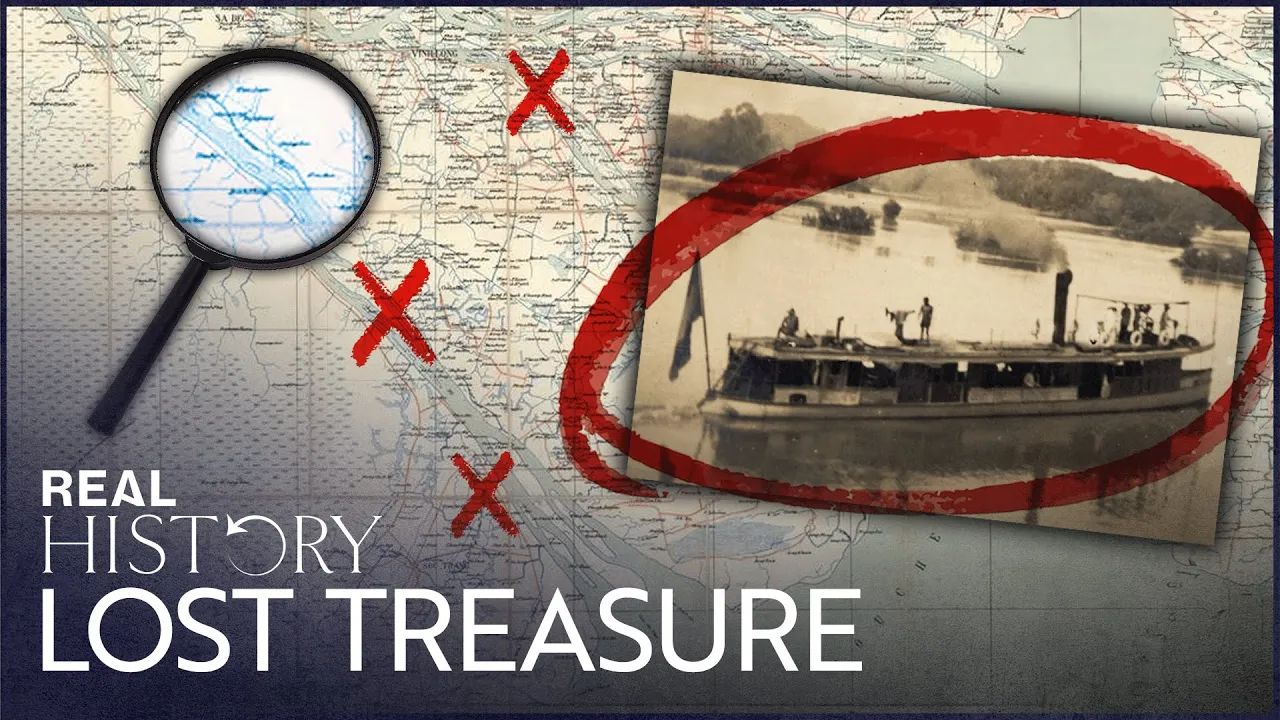
About The Hunt For A Sunken Treasure Ship In The Deadly Mekong River
In the early 1900s a ship loaded with valuable religious artefacts sunk on the Mekong River in Laos. In this episode, the Dive Detectives undertake the dangerous task of navigating this fast flowing river to find the stash of treasure left behind over 100 years ago.
The Hunt For A Sunken Treasure Ship In The Deadly Mekong River is presented by Real History. Its listed runtime is 47 minutes. The source link and publisher attribution are provided with the embedded film.
As a transport & logistics documentary, The Hunt For A Sunken Treasure Ship In The Deadly Mekong River uses sunken, treasure, deadly as its central frame. Transport films uncover systems that normally remain invisible until something fails. Look for the coordination between people, vehicles, control technology, maintenance and contingency planning.
What to consider before watching
- What evidence, testimony or observation does the film use to explain sunken, treasure, deadly?
- Which people, institutions or historical conditions most influence the story told in The Hunt For A Sunken Treasure Ship In The Deadly Mekong River?
- How does Real History's framing affect the documentary's emphasis, and which perspectives may deserve further research?
Topics covered in this documentary
Documentary details and original source
- Title
- The Hunt For A Sunken Treasure Ship In The Deadly Mekong River
- Category
- Transport & Logistics
- Runtime
- 47 minutes
- Language
- English
- Publisher
- Real History
Free Documentary Vault provides independent discovery, organization and editorial context. The film remains hosted by its original publisher, who controls availability and playback.
Related Transport & Logistics documentaries

The Dive Detectives investigate the strange backstory of a modern freighter located just off the coast of the Caribbean island Saba. The most unusual thing about the ship is that it never sent a mayday call and no sailors were reported missing.
Real HistoryThe Sunken Mystery Of A "Ghost Ship" Found In The Caribbean

This documentary film explores the marine mysteries of the Magdalen Islands, the Quebec archipelago in the Gulf of Saint Lawrence, North America's tempestuous inland saltwater sea. Over 700 sunken ships are documented by Leonard Clark and three generations of his family in the village of Old Harry
Real HistoryThe Mysterious Shipwreck Capital Of The World | Legends of Magdalen

Step inside the incredible story of the railway - from steam locomotives to the lightning-fast MAGLEV, discover how trains shaped our world and changed the meaning of distance forever. In this captivating documentary, we trace the evolution of the railway, exploring how it became the ultimate symbol of modernity and progress. Learn how early railroads shattered the barriers of distance, unlocking new opportunities for economic growth, migration, and connection across continents. From the invention of steam engines like the Tom Thumb and John Bull, to the groundbreaking construction of the Trans-Siberian Railway and the legendary Orient Express, you’ll see how trains transformed societies, fueled empires, and sparked both awe and controversy. Dive into remarkable stories such as the rise of the American locomotive industry, the challenges faced by workers building railways through rugged landscapes, and the fierce debates surrounding the impact of trains on nature and communities. Witness technological leaps with Japan’s iconic Shinkansen bullet train and the futuristic MAGLEV, capable of astonishing speeds. The video also revisits moments of tragedy and intrigue, from famous train accidents to the notorious
Real HistoryThe Incredible History of Trains - How Railways Changed the World

The Tudors were one of British history's most influential and famous dynasties. Join Professor Alice Roberts and a team of expert archaeologists as they uncover the timeless masterpieces left behind by the Tudors. 💚 Join the Absolute History club to get access to exclusive member benefits!
Absolute HistoryThe Lost Sunken Shipwrecks Of Tudor Britain

On 21 June 1919, Rear Admiral Ludwig von Reuter ordered 74 German warships scuttled at Scapa Flow. This film shows how and why the German High Seas Fleet sank itself. From Kaiser Wilhelm II's dreadnought obsession and the arms race with Britain to the blockade of the North Sea, we trace how a fleet built to dominate ended up interned off the Orkney Islands. Under British guard near Rossaith and then in Scapa Flow, crews endured months of boredom, bartered medals for soap, and clashed with soldiers' councils as Paris and Versailles dragged on. With the Naval Peace Terms Committee splitting the Allies and the deadline looming, von Reuter reduced his crews to 1,700 loyal men and raised the signal: prepare to scuttle. What followed on Midsummer's Day 1919 was extraordinary. As a British battle squadron steamed out for torpedo practice, German sailors opened sea cocks, destroyed valve threads with hammers or acid, and wedged doors, portholes and hatches so water cascaded through 74 ships. Some rolled and capsized as men scrambled to escape. Local trawlers and a handful of
Real HistoryScapa Flow: The Day 74 German Warships Sank Themselves

Explore the evolution of sea power - from hydrofoiling catamarans and record-breaking ships to nuclear icebreakers and solar sails shaping the future of exploration. Dive deep into the fascinating history and cutting-edge technology behind humanity’s ongoing quest to conquer the sea. This episode unpacks the incredible journey from the earliest waterborne craft to today’s marvels like the hydrofoiling catamarans that revolutionized the America’s Cup, experimental vessels inspired by nature such as the WAMB “spider boat,” and the rise of ultra-fast, efficient catamarans dominating commercial travel. Discover the innovations behind the mighty Maersk Triple E container ships, agile tugboats, and the titanic passenger liners that have defined ocean travel, including the legendary Titanic, Queen Mary, and Oasis of the Seas. But the story doesn’t stop at the surface. Learn how nuclear-powered icebreakers clear paths through the polar ice, how remote-operated and autonomous underwater vehicles are unlocking the secrets of the deep, and how engineering challenges have spurred breakthroughs that reach far beyond our oceans. Finally, witness the connection between marine technology and interstellar travel, as solar sails take inspiration from ancient
Real History