
About The Catastrophic Fall Of Julius Caesar | Tony Robinson's Romans
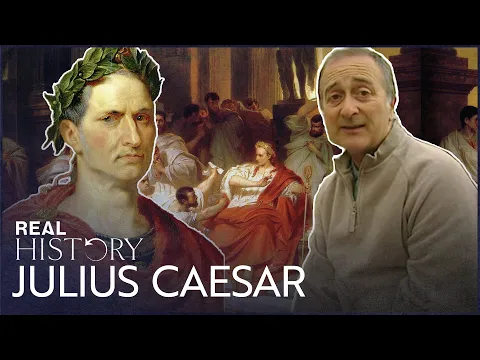
Tony Robinson explores how Julius Caesar's brutal reputation caught up with him. Famously assassinated on the Ides of March, how and why did such an important ruler of the ancient world end up being killed by his own people?
The Catastrophic Fall Of Julius Caesar | Tony Robinson's Romans is presented by Real History. Its listed runtime is 48 minutes. The source link and publisher attribution are provided with the embedded film.
As a society documentary, The Catastrophic Fall Of Julius Caesar | Tony Robinson's Romans uses catastrophic, julius, caesar as its central frame. Social documentaries work best as invitations to examine systems through lived experience. Distinguish individual testimony from wider claims, and consider which institutions, incentives and inequalities shape the choices shown.
What to consider before watching
- What evidence, testimony or observation does the film use to explain catastrophic, julius, caesar?
- Which people, institutions or historical conditions most influence the story told in The Catastrophic Fall Of Julius Caesar | Tony Robinson's Romans?
- How does Real History's framing affect the documentary's emphasis, and which perspectives may deserve further research?
Topics covered in this documentary
Documentary details and original source
- Title
- The Catastrophic Fall Of Julius Caesar | Tony Robinson's Romans
- Category
- Society
- Runtime
- 48 minutes
- Language
- English
- Publisher
- Real History
Free Documentary Vault provides independent discovery, organization and editorial context. The film remains hosted by its original publisher, who controls availability and playback.
Related Society documentaries
Tony Robinson explores how Julius Caesar strong armed his way to the top to become emperor of ancient Rome through bribery and corruption. He would go on to become one of the most infamous leaders of the ancient world and would shape world history for years to come.
Real HistoryThe Meteoric Rise Of Julius Caesar | Tony Robinson's Romans

Roman emperor Nero was an interesting character that lived a chaotic life not too dissimilar to a soap opera. This story has been told and retold so many times in the centuries since his death, but how much of it is actually true? Tony Robinson investigates the legend to Nero to find out where the truth ends and the lies begin.
Real HistoryFact Or Fiction? The Complicated Legacy Of Nero | Tony Robinson's Romans

From the omen of 1066's long-haired star to Hastings and the Harrowing of the North, this episode charts William the Conqueror's brutal rise. In History Makers, we trace the Norman story from Viking roots to the making of a king. We meet Rolf the Ganger and the birth of Normandy under Charles the Simple, then enter William's perilous childhood: assassination plots, the murder of his guardian Osborne Crepon, and years of anarchy. We see the young duke's iron resolve at Alençon, where taunts of "hides for the tanner" triggered a ruthless reprisal, and his strategic marriage to Matilda of Flanders. With Edward the Confessor's death, rival claims ignite. We examine Harold Godwinson's disputed oath in Normandy, William's papal-backed invasion force, and the contrasting battle doctrines of Norman combined arms of archers, spearmen and cavalry, as shown on the Bayeux Tapestry, versus the Anglo-Saxon shield wall and Dane axes. After Harold's dash north to defeat Harald Hardrada and Tostig at Stamford Bridge, the stage is set at Senlac Hill. At Hastings, arrows, infantry and cavalry grind at the Saxon line. When
Real History1066 Hastings: William's 'I Still Live' and the Harrowing of the North

Although they are blamed for the fall of Rome, the barbarians were more than just fearsome warriors. Converted to Christianity in the fourth century, the Vandals, Goths, and Huns went on to produce some of the greatest artistic and architectural achievements of the Dark Ages.
Real HistoryThe Huns: The Beautiful Art Made By So Called "Savages" | An Age of Light

Experience the harrowing reality of the Battle of Stalingrad through firsthand accounts of survival, sacrifice, and the brutal struggle that changed the course of World War II. This video immerses you in the memories of soldiers and medics who endured the siege of Stalingrad, one of history’s most pivotal and devastating battles. Hear vivid recollections of relentless bombings, desperate house-to-house fighting, and the unimaginable conditions faced by both the Soviet defenders and the invading German forces. Through raw and personal testimony, you’ll learn how the fate of the Soviet Union hung in the balance as the Germans pressed towards the Volga, aiming to capture vital oil fields and break the Soviet resistance. Discover how Stalingrad became a nightmare of burning ruins, constant shelling, and unimaginable loss. The video details the strategies of generals like Zhukov, the infamous "not one step back" order, and the psychological toll on young recruits thrown into a relentless meat grinder. As the city was encircled and the tide turned, listen to the stories of miraculous survival, heartbreak, and the bittersweet victory that ultimately marked a
Real HistorySurviving Stalingrad - Inside WWII's Deadliest Battle

From Apollo 11's tense 1202 alarm to SpaceX's early return attempts and ESA's Gaia, this episode traces how spaceflight evolved under pressure and ingenuity. Early on July 16, 1969, more than a million people gathered around Cape Kennedy to witness Apollo 11 lift off, the culmination of a decade aimed at meeting President Kennedy's lunar goal. At the launch center, tension was high as rocket pioneer Werner von Braun and NASA teams prepared the giant Saturn V. Michael Collins, Buzz Aldrin, and mission commander Neil Armstrong brought hard-earned Gemini experience, while unusual simulators and a Langley gantry helped them rehearse lunar gravity. Twelve minutes after liftoff they reached orbit. Trans lunar injection and docking proceeded smoothly as mission control refined navigation alongside the Apollo Guidance Computer. In lunar orbit, the command module became Columbia and the lunar module Eagle. The descent toward a long ellipse in the Sea of Tranquility unfolded in stages. Fuel sloshing muddied guidance, then the computer threw a 1202 alarm. A young software engineer recognized the overload as survivable, and Armstrong used the final phase to
Real History