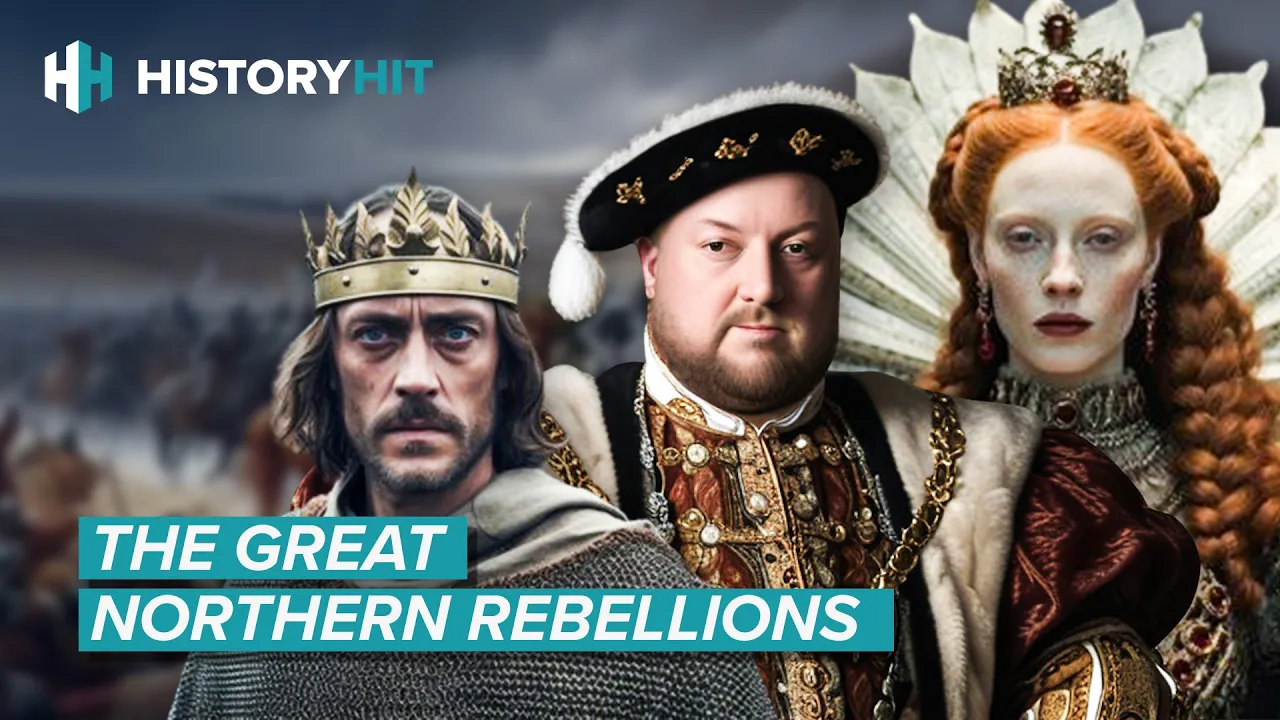
About The Bloodiest Medieval Revolts
Since the Roman occupation, England has mostly been dominated by a power-base ruling from the South of the country, principally centred on the great City of London. Yet the northern regions of England, remote and culturally disinct from the South, were, for much of recorded history, staunchly independent, wildly restless and prone to rebellion. Unhappy with regal rule from a distant southern capital, northerners did on more than a handful of occassions, rise up in a series of bloody attempts to challenge or replace their kings or queens in the South. This series, presented by Daniel Gray, takes a detailed look at the Great Northern Rebellions throughout the medieval and early modern period. Featuring historians Dr Claire Kennan, Sophie Ambler, Prof David Bates, Prof Julia Barrow, Prof Bill Sheils, Julian Humphrys and Gillian Waters.
The Bloodiest Medieval Revolts is presented by History Hit. Its listed runtime is 79 minutes. The source link and publisher attribution are provided with the embedded film.
As a history documentary, The Bloodiest Medieval Revolts uses bloodiest, medieval, revolts as its central frame. Historical documentaries interpret surviving evidence rather than simply replaying the past. Watch how archives, archaeology, expert interpretation and first-hand records are used, and note where uncertainty or competing explanations remain.
What to consider before watching
- What evidence, testimony or observation does the film use to explain bloodiest, medieval, revolts?
- Which people, institutions or historical conditions most influence the story told in The Bloodiest Medieval Revolts?
- How does History Hit's framing affect the documentary's emphasis, and which perspectives may deserve further research?
Topics covered in this documentary
Documentary details and original source
- Title
- The Bloodiest Medieval Revolts
- Category
- History
- Runtime
- 79 minutes
- Language
- English
- Publisher
- History Hit
Free Documentary Vault provides independent discovery, organization and editorial context. The film remains hosted by its original publisher, who controls availability and playback.
Related History documentaries
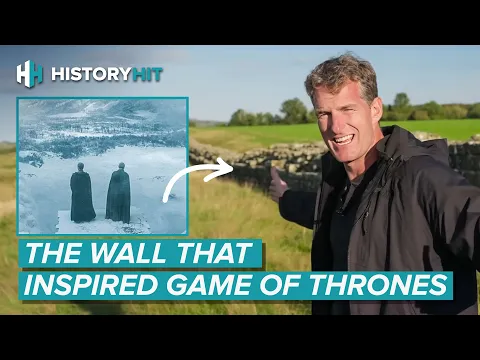
Dan Snow explores the physical remains of Hadrian’s vast project of 122AD - over 80 Roman miles of wall, turrets and forts, stretching from coast to coast across northern England. Mile after mile of stone marching over the horizon. But why did the Romans go to all this effort? We dig into the key questions: was the wall a barrier or a porous border; a hubristic vanity project or a vital line of defence; who lived on and around the wall; and why has it endured in popular culture for nearly two thousand years, right up to Game of Thrones? Dan meets leading experts along the Wall and visits some of the key sites - from Arbeia in the east (where tombstones reveal people here from as far away as Syria) to Birdoswald in the west (where a blatant carving of a phallic symbol shows the Wall was more than just a barrier). A Roman historian wrote that when the Emperor Hadrian came to Britain in AD 122 he ‘put many things to right and was the first to build
History HitHadrian's Wall: Ancient Rome's Great Northern Frontier

Present day China is the result of some 5,000 years of history. This enormous country has been shaped by ancient gods as well as feuding warlords since before records began. This documentary takes a look at this culturally rich country from its inception by the first Emperor.
Real HistoryThe Ancient Origins Of Modern Day China

England is a country stuffed full of history. From the Stone Age to the Nuclear Age there are thousands of inspirational sites that have helped to shape the past and present. Join Dan Snow on an epic road trip, from Stonehenge in Wiltshire to the Cold War Bunker in York. He’ll be racing across the country exploring some key places in the care of English Heritage, where you can feel the heartbeat of history! In episode one, Dan begins in the Stone Age at the enigmatic and inspiring Stonehenge. With curator Heather Sebire, Dan investigates who created this incredible structure and why. We then jump a few hundred years forward to the Iron Age stronghold of Old Sarum, a defensive and civic centre spanning two thousand years of history - right through to the Normans. The next stop is a big one, 1066. We can’t do a history of England without one of the most significant battles of the medieval period, the Battle of Hastings, where English and European history would change in a day, on a hillside in Sussex.
History HitA Complete History of England with Dan Snow | Full History Hit Series

What does a medieval historian think of these portrayals of Robin Hood in film and tv shows? Medieval historian, Matt Lewis delves into the history behind some of Hollywood's most iconic depictions of Robin Hood, sorting fact from A LOT of fiction... You can now become a History Hit member right here on the original video platform! Join for access to a new exclusive documentary every week, and access to over 160+ of our documentaries presented by world-renowned historians like Dan Snow, Eleanor Janega, Tristan Hughes, Mary Beard, Matt Lewis and more.
History HitMedieval Historian Reacts To Robin Hood On Screen

Journey inside Petra's ancient city in this brand NEW history documentary. History Hit’s Tristan Hughes travels to the magnificent ancient wonder of Petra - a once thriving city now abandoned in the middle of the desert. From advanced engineering to beautiful rock cut tombs, we uncover the reality of Petra and the fascinating civilisation that built it, the Nabataeans. You can now become a History Hit member right here on the original video platform! Join for access to a new exclusive documentary every week, and access to over 160+ of our documentaries presented by world-renowned historians like Dan Snow, Eleanor Janega, Tristan Hughes, Mary Beard, Matt Lewis and more.
History HitThe Archaeological Discovery of Petra: The Hidden City

How did an army of English peasant archers defeat some of France's greatest warriors? On October 25th 1415, Henry V of England took on the mighty French forces at the Battle of Agincourt. Despite being heavily outnumbered, his troops won. It would become one of the most legendary victories in English history - a tale of bravery and triumph against all the odds, inspiring everyone from Shakespeare to Churchill to Kenneth Branagh. But how much of the story we know today is true, and how much has been twisted to suit later politics? What really happened at Agincourt? You can now become a History Hit member right here on the original video platform! Join for access to a new exclusive documentary every week, and access to over 160+ of our documentaries presented by world-renowned historians like Dan Snow, Eleanor Janega, Tristan Hughes, Mary Beard, Matt Lewis and more.
History Hit