
About Scorched Earth: The Razing Of Carthage | The Roman Holocaust | Odyssey
Historian and archaeologist Dr Richard Miles explores why Rome's leaders were so intent on destroying the rival empire of Carthage. Miles visits key sites of the period to assess what made the exotic civilization such a threat, and reveals how the destruction of this largely forgotten culture has been called the Hiroshima of the classical world. Odyssey is your journey into the world of Ancient History; from the dawn of Mesopotamia to the fall of Rome. We'll be bringing you only the best documentaries that journey into the mysteries and ruins of worlds long lost. Subsribe so you don't miss out!
Scorched Earth: The Razing Of Carthage | The Roman Holocaust | Odyssey is presented by Odyssey - Ancient History Documentaries. Its listed runtime is 48 minutes. The source link and publisher attribution are provided with the embedded film.
As a nature & environment documentary, Scorched Earth: The Razing Of Carthage | The Roman Holocaust | Odyssey uses scorched, earth, razing as its central frame. Nature films connect close observation with larger environmental systems. Consider habitat, seasonal change, human activity and the limits of what a single location can demonstrate about a global ecological issue.
What to consider before watching
- What evidence, testimony or observation does the film use to explain scorched, earth, razing?
- Which people, institutions or historical conditions most influence the story told in Scorched Earth: The Razing Of Carthage | The Roman Holocaust | Odyssey?
- How does Odyssey - Ancient History Documentaries' framing affect the documentary's emphasis, and which perspectives may deserve further research?
Topics covered in this documentary
Documentary details and original source
- Title
- Scorched Earth: The Razing Of Carthage | The Roman Holocaust | Odyssey
- Category
- Nature & Environment
- Runtime
- 48 minutes
- Language
- English
Free Documentary Vault provides independent discovery, organization and editorial context. The film remains hosted by its original publisher, who controls availability and playback.
Related Nature & Environment documentaries
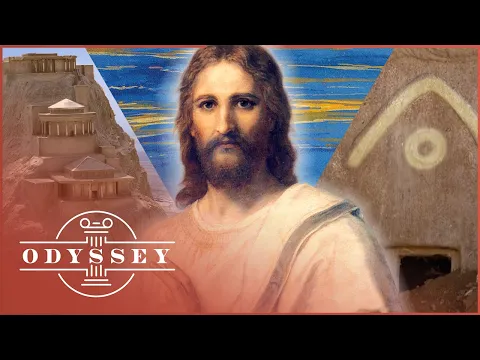
Israel's ground is full of buried treasures from the time of Christ and beyond. Join field experts as they investigate several exciting archaeological sites from when Jesus walked the earth. Odyssey is your journey into the world of Ancient History; from the dawn of Mesopotamia to the fall of Rome. We'll be bringing you only the best documentaries that journey into the mysteries and ruins of worlds long lost.
Odyssey - Ancient History DocumentariesThe Buried Biblical Mysteries Of The Holy Land | Unearthed | Full Series | Odyssey

The Battle of the Teutoburg Forest (9 AD) was a catastrophic ambush and defeat for the Roman Empire, where Germanic tribes led by Arminius annihilated three Roman legions. This disaster, also known as the Varus Disaster, halted Roman expansion east of the Rhine River and was a major turning point in the history of both the Roman Empire and Germanic Europe. Odyssey is your journey into the world of Ancient History; from the dawn of Mesopotamia to the fall of Rome. We'll be bringing you only the best documentaries that journey into the mysteries and ruins of worlds long lost. :european_castle
Odyssey - Ancient History DocumentariesTeutoburg Forest: Everything We Know About The Massacred Roman Legions

The team is invited by Dutch archaeologists to help rescue crucial evidence from a 35-metre-long barge that once sailed the Rhine. The team has one chance to investigate the boat before the bulldozers move in.They are joined by city archaeologists Erik Graafstal and Herre Wynia, Fleur Kemmers (coin specialist) and Jaap Morel (ship archaeologist). Together with wood specialists Damian Goodburn and Esther Jansma, Phil looks at a similar barge which has been preserved and exhibited. Odyssey is your journey into the world of Ancient History; from the dawn of Mesopotamia to the fall of Rome. We'll be bringing you only the best documentaries that journey into the mysteries and ruins of worlds long lost. Subsribe so you don't miss out!
Odyssey - Ancient History DocumentariesThe Intact 2,000 Year-Old Roman Boat Under The River Rhine | Time Team | Odyssey

Tony and the team get their feet wet as they examine a stretch of the River Tees where local divers have discovered more than 2,000 high-quality Roman finds. Odyssey is your journey into the world of Ancient History; from the dawn of Mesopotamia to the fall of Rome. We'll be bringing you only the best documentaries that journey into the mysteries and ruins of worlds long lost. Subsribe so you don't miss out!
Odyssey - Ancient History DocumentariesThe Submerged Secrets Hiding In The River Tees | Time Team | Odyssey

Discover more from Hungry Minds: / @hungrymindsart , , Pompeii has been frozen in time since the eruption of Mount Vesuvius in 79 AD. However, more secrets behind the ancient Roman city are now being revealed with the help of new technologies. Pompeii is a delicately conserved attraction that is under constant threat from the wear and tear of extensive tourism, the spectre of landslides and the possibility of another devastating eruption from Mount Vesuvius. Odyssey is your journey into the world of Ancient History; from the dawn of Mesopotamia to the fall of Rome. We'll be bringing you only the best documentaries that journey into the mysteries and ruins of worlds long lost.
Odyssey - Ancient History DocumentariesThe Last Hours Of Pompeii: New Discoveries Unearthed

At the western end of Loch Migdale, in the Scottish Highlands, sits a mysterious island. It could be a crannog, a man-made prehistoric island probably inhabited at some point in prehistory. On the shore nearby, there is an enigmatic circle cut into the ground. It might be a henge, or a cairn - no one is sure - but it also seems to have been left by the prehistoric people who lived in this part of Scotland. It is time for Tony and the Time Team to investigate. Odyssey is your journey into the world of Ancient History; from the dawn of Mesopotamia to the fall of Rome. We'll be bringing you only the best documentaries that journey into the mysteries and ruins of worlds long lost.
Odyssey - Ancient History Documentaries