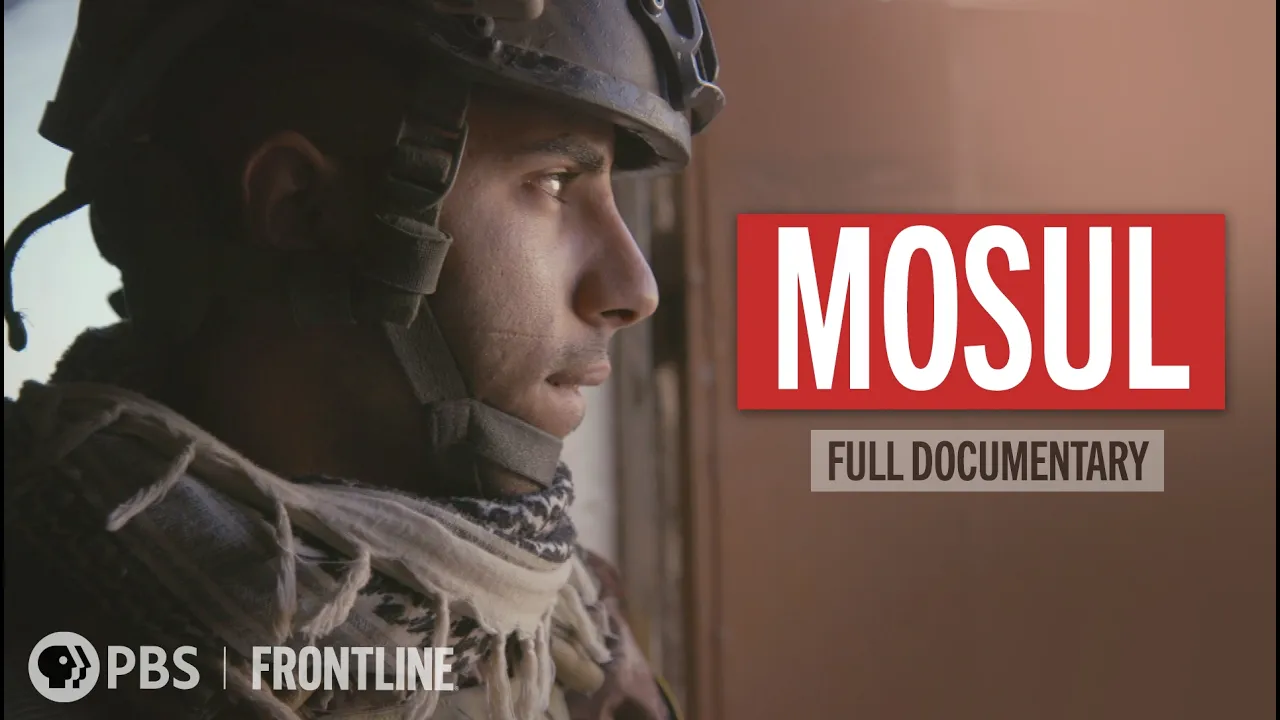
About Mosul (full documentary) | FRONTLINE
The harrowing, vivid story of four Iraqi soldiers’ fight against ISIS. (Aired 2017) In “Mosul,” FRONTLINE presented an extraordinary look at the brutal battle to drive ISIS out of Iraq’s second-largest city, which some military commanders described at the time as the deadliest urban combat since World War II. The people of Mosul had endured the repressive rule of ISIS for more than two years. This is the story of the men who fought back — and defeated the self-proclaimed Islamic State in their stronghold. Filmed on the ground by director Olivier Sarbil over the course of the nine-month battle, “Mosul” offers a stunning look at the high cost of the Iraqi Army’s liberation of Mosul from ISIS in July 2017. Explore additional reporting related to "Mosul" on our website: “Mosul” was a FRONTLINE Production with Mongoose Pictures in association with Channel 4. The producers were James Jones and Dan Edge. The writers were James Jones and Dan Edge. The director was Olivier Sarbil. The co-director was James Jones. The executive producer of FRONTLINE is Raney Aronson-Rath. FRONTLINE is produced
Mosul (full documentary) | FRONTLINE is presented by FRONTLINE PBS | Official. Its listed runtime is 39 minutes. The source link and publisher attribution are provided with the embedded film.
As a society documentary, Mosul (full documentary) | FRONTLINE uses mosul, frontline as its central frame. Social documentaries work best as invitations to examine systems through lived experience. Distinguish individual testimony from wider claims, and consider which institutions, incentives and inequalities shape the choices shown.
What to consider before watching
- What evidence, testimony or observation does the film use to explain mosul, frontline?
- Which people, institutions or historical conditions most influence the story told in Mosul (full documentary) | FRONTLINE?
- How does FRONTLINE PBS | Official's framing affect the documentary's emphasis, and which perspectives may deserve further research?
Topics covered in this documentary
Documentary details and original source
- Title
- Mosul (full documentary) | FRONTLINE
- Category
- Society
- Runtime
- 39 minutes
- Language
- English
- Publisher
- FRONTLINE PBS | Official
Free Documentary Vault provides independent discovery, organization and editorial context. The film remains hosted by its original publisher, who controls availability and playback.
Related Society documentaries

An investigation into the fight for justice after a deadly 1981 attack on the village of El Mozote and surrounding areas, and how the case against high-ranking military officials faltered. (Aired 2021) This short documentary from FRONTLINE, Retro Report and ProPublica examined the horrors of what happened when U.S.-trained and equipped Salvadoran soldiers killed some 1,000 civilians, many of them children, in an attack more than 40 years ago. In the documentary, Raymond Bonner — who was one of the first journalists to bear witness to the aftermath of the massacre — recounted the experience of reporting the story and spoke with survivors of the attack. This on-the-ground investigation detailed how, for decades following the tragedy, there was little movement towards holding anyone accountable, and how the case against high-ranking military officials faltered under Salvadoran President Nayib Bukele. “Massacre in El Salvador” laid bare the nation’s grisly past and the decades-long struggle for justice. “Massacre in El Salvador” is a FRONTLINE and Retro Report production with ProPublica. The producer and writer is Kit R. Roane. The senior producers are Frank
FRONTLINE PBS | OfficialMassacre in El Salvador (full documentary) | FRONTLINE + ProPublica + RetroReport (Aired 2021)
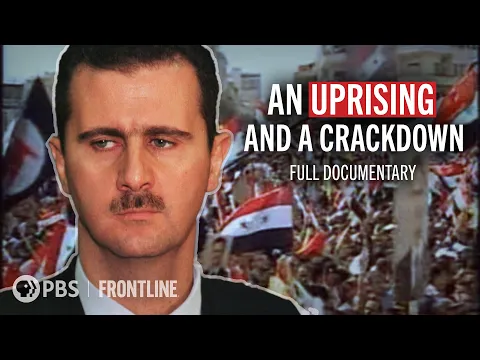
It’s been 15 years since the rebellion in Syria against Bashar al-Assad’s government began. “The Regime” examined how the uprising started and the brutal crackdown that followed. (Aired 2011) On March 6, 2011, young boys painted messages on the walls of a school 60 miles south of Syria’s capital, Damascus. “Freedom, freedom and freedom, only,” read one message. “Down with the corrupt Assad,” read another. Soon after, the boys were rounded up by the government’s secret police. Their fathers went to see the police chief, a cousin of Syria’s then-president, Bashar al-Assad, and begged him to release their children. Airing later that year, “The Regime” examined what happened to the boys, and how outrage over their fate helped to fuel the Syrian uprising. “That very instance of repression, of torture, seemed to galvanize the town itself,” the late reporter Anthony Shadid said in the documentary. “And almost from that moment, the uprising seemed to gain momentum.” As Syrians took to the streets to protest and to call for more freedoms, the swift and brutal response by Assad’s security forces followed
FRONTLINE PBS | OfficialHow Assad Moved to Crush Syria’s Uprising | The Regime (full documentary) | FRONTLINE (PBS)
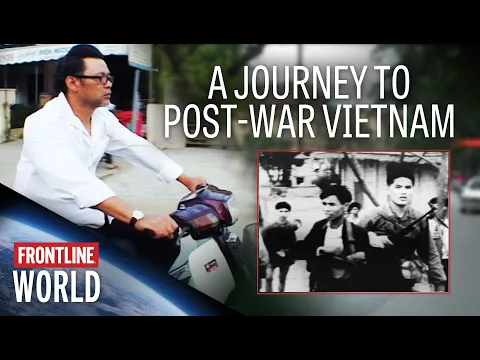
Decades after the Vietnam War shattered his childhood, journalist Nguyen Qui Duc traveled to his homeland and documented the changes he witnessed in the country. (Aired 2003) Decades ago, the Vietnam War shattered Nguyen Qui Duc’s childhood. Over the years, Nguyen, who came to the U.S. as a refugee, returned to his homeland as a journalist, reporting on the country’s culture and establishing connections with writers and artists living there. In 2003, he documented a journey through Vietnam for FRONTLINE/World, looking, he said, “for home, for a bit of myself, for a country that always exists in my memory.” As Nguyen traveled to different parts of the country in “Vietnam: Looking for Home,” he shared his reflections about the nation: “It’s easy to remember Vietnam has a habit of adopting and resisting changes. The culture, the people, will survive.” Several years after “Vietnam: Looking for Home” aired, Nguyen returned to Vietnam, this time for good. He filed occasional dispatches with FRONTLINE and FRONTLINE/World, and opened an influential arts and culture salon that pushed the boundaries of Vietnam’s communist government. Nguyen
FRONTLINE PBS | OfficialInside a Changing Nation | Vietnam: Looking for Home (full documentary) | FRONTLINE/World

A 2004 examination of India’s AIDS crisis through the eyes of girls and young women sold into sex work, originally aired as part of the FRONTLINE/World series. (Aired 2004) Starting with “India: The Sex Workers,” we are making episodes from FRONTLINE/World’s archive newly available here on the original video platform and on pbs.org as part of an effort to make our past reporting widely accessible. Originally developed by FRONTLINE producers in conjunction with public television stations KQED San Francisco and WGBH Boston, FRONTLINE/World launched in 2002 as a national public TV series that turned its lens on the global community, covering countries and cultures rarely seen on American television. The series completed its final broadcast season in 2010. At the time this FRONTLINE/World documentary was filmed, more than two million women and girls were working in India’s sex trade, and being forced to navigate their country’s AIDS crisis. With more than 4.5 million HIV infections across India at the time, often, the women and girls’ only defense against HIV was convincing men to wear condoms. But frequently, the documentary revealed
FRONTLINE PBS | OfficialCaught in India’s AIDS Crisis | India: The Sex Workers (full documentary) | FRONTLINE/World

Inside a counterterrorism police unit in Karachi, Pakistan, dedicated to tracking down suspected members of the Pakistani Taliban. (Aired 2015) In the nearly five years since the Taliban seized control of Afghanistan, there’s been a dramatic increase in attacks within neighboring Pakistan by the militant group Tehreek-e-Taliban Pakistan, commonly called the Pakistani Taliban or TTP. Pakistan has accused Taliban-controlled Afghanistan of harboring the group and enabling it to launch cross-border attacks, which the Afghan government denies — and in recent weeks, the fight between the two countries escalated into what Pakistan’s government called “open war.” Against this volatile backdrop, FRONTLINE’s 2015 documentary “Taliban Hunters” offers relevant history on TTP and Pakistani security forces’ fight against it. This short documentary went inside a Karachi-based counterterrorism police unit dedicated to tracking down Taliban suspects. As the documentary reported, TTP first emerged in 2007 and used to have only a small, underground presence in Karachi, Pakistan’s largest city. But by the time the documentary aired, the group had been gaining ground in the city of over 20 million people, and carrying out suicide
FRONTLINE PBS | OfficialTracking Suspected Members of the Pakistani Taliban | Taliban Hunters (full documentary) | FRONTLINE
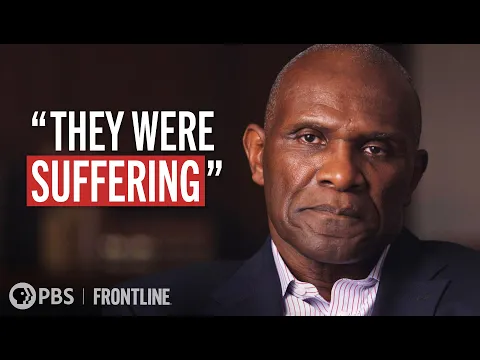
Former New York Giants linebacker Harry Carson, who was diagnosed with post-concussion syndrome and advocated for other players to join a lawsuit against the NFL over brain injuries, discusses why he regrets ever playing football. FRONTLINE is produced at GBH in Boston and airs nationwide on PBS. The editor-in-chief and executive producer of FRONTLINE is Raney Aronson-Rath. Funding for FRONTLINE is provided through the support of PBS viewers and by the Corporation for Public Broadcasting, with major support from Ford Foundation. Additional support for FRONTLINE is provided by the Abrams Foundation, Park Foundation, John D. and Catherine T. MacArthur Foundation, Heising-Simons Foundation, and the FRONTLINE Trust, with major support from Jon and Jo Ann Hagler on behalf of the Jon L. Hagler Foundation, and additional support from Koo and Patricia Yuen.
FRONTLINE PBS | Official