
About Micro Predators | Wild Ones | Episode 12 | Free Documentary Nature
Wild Ones - Episode 12: Micro Predators | Wildlife Documentary There are over a million ants to every person on the planet and these tiny creatures present the worlds greatest army. Slave maker ants take the larva of other ants and rear the off-spring to a life of servitude, meat eater ants make super-nests that stretch over half a kilometer while fire ants administer blister raising stings. Wild Ones finds inspiration in the rhythms of nature as shown through the wonders of the animal kingdom. It explores different aspects of animal behavior, including hunting techniques and feeding habits, family elationships and defense mechanisms, courtship and mating rituals. ▬▬▬▬▬▬▬▬▬ ▬▬▬▬▬▬▬▬▬ ▬▬▬▬▬▬▬▬▬ Free Documentary is dedicated to bring high-class documentaries to you on the original video platform for free. With the latest camera equipment used by well-known filmmakers working for famous production studios. You will see fascinating shots from the deep seas and up in the air, capturing great stories and pictures from everything our beautiful and interesting planet has to offer. Enjoy stories about nature, wildlife, culture, people, history and more
Micro Predators | Wild Ones | Episode 12 | Free Documentary Nature is presented by Free Documentary - Nature. Its listed runtime is 26 minutes. The source link and publisher attribution are provided with the embedded film.
As a nature & environment documentary, Micro Predators | Wild Ones | Episode 12 | Free Documentary Nature uses micro, predators, episode as its central frame. Nature films connect close observation with larger environmental systems. Consider habitat, seasonal change, human activity and the limits of what a single location can demonstrate about a global ecological issue.
What to consider before watching
- What evidence, testimony or observation does the film use to explain micro, predators, episode?
- Which people, institutions or historical conditions most influence the story told in Micro Predators | Wild Ones | Episode 12 | Free Documentary Nature?
- How does Free Documentary - Nature's framing affect the documentary's emphasis, and which perspectives may deserve further research?
Topics covered in this documentary
Documentary details and original source
- Title
- Micro Predators | Wild Ones | Episode 12 | Free Documentary Nature
- Category
- Nature & Environment
- Runtime
- 26 minutes
- Language
- English
- Publisher
- Free Documentary - Nature
Free Documentary Vault provides independent discovery, organization and editorial context. The film remains hosted by its original publisher, who controls availability and playback.
Related Nature & Environment documentaries

Race of Life - Episode 8: Reptiles | Wildlife Documentary Crocodiles, like all living reptiles, are descended from animals that roamed the Earth about 250 million years ago. There’s something so viscerally terrifying about these creatures that lay in wait for their prey, just under the waterline. The comparatively friendly seeming turtle is among the most ancient of the reptiles alive today and has a protective shell that encloses their body and provides protection and camouflage, just as it did millions of years back. They inhabit terrestrial, freshwater, and marine habitats and are found both in tropical and temperate regions. Poisonous or harmless, large or small, all snakes - from the desert rattlesnake to the dwarf pipe snake - have certain things in common: a long, thin shape; scaly, legless bodies; and unblinking, lidless eyes. Like all reptiles, snakes rely on the heat of the sun to control their body temperature. The venom of the king cobra, the world's largest poisonous snake, is strong enough to kill an elephant. Lizards have developed their own adaptations – some lose their tail
Free Documentary - NatureReptiles | Race of Life | Episode 8 | Free Documentary Nature

Wild Ones - Episode 12: Who is the King? | Wildlife Documentary The blue whale dwarfs anything that’s ever lived while the giraffe towers above any other living creature, the box jellyfish has thousands of tiny highly toxic stinging cells and is a real hazard to swimmers, the venom of the inland taipan is more powerful than any other known land snake yet it lives far from most human populations; termites work together to make air-conditioned homes while dolphins communicate to plan a group fishing strategy, lions work together to bring down a giraffe, polar bears can smash through ice while the crocodile has the most powerful bite force known with nature giving us such an incredible list of contenders in so many very different ways, can we really pick who is the king of all? Wild Ones finds inspiration in the rhythms of nature as shown through the wonders of the animal kingdom. It explores different aspects of animal behavior, including hunting techniques and feeding habits, family elationships and defense mechanisms, courtship and mating rituals. ▬▬▬▬▬▬▬▬▬ ▬▬▬▬▬▬▬▬▬ ▬▬▬▬▬▬▬▬▬ Free
Free Documentary - NatureWho is the King? | Wild Ones | Episode 13 | Free Documentary Nature
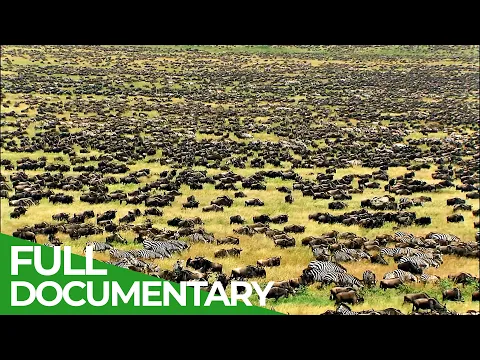
Wild Ones - Episode 11: Great Migration | Wildlife Documentary Wildebeest and Zebra - Africa’s most famous drifters. Hundreds of thousands of zebra live together in the Serengeti. Their distinctive eye-catching stripes are as unique as fingerprints and even within the largest of gatherings no two zebra will be found with exactly the same stripes. Wild Ones finds inspiration in the rhythms of nature as shown through the wonders of the animal kingdom. It explores different aspects of animal behavior, including hunting techniques and feeding habits, family elationships and defense mechanisms, courtship and mating rituals. ▬▬▬▬▬▬▬▬▬ ▬▬▬▬▬▬▬▬▬ ▬▬▬▬▬▬▬▬▬ Free Documentary is dedicated to bring high-class documentaries to you on the original video platform for free. With the latest camera equipment used by well-known filmmakers working for famous production studios. You will see fascinating shots from the deep seas and up in the air, capturing great stories and pictures from everything our beautiful and interesting planet has to offer. Enjoy stories about nature, wildlife, culture, people, history and more to come.
Free Documentary - NatureGreat Migration | Wild Ones | Episode 11 | Free Documentary Nature

Survive the Wild - Episode 3: Cunning Copulation | Wildlife Documentary From microscopic single celled organisms to the largest animals on the planet, one goal is shared by all living things: to reproduce. For many creatures, finding a suitable mate to pass on strong genes and rear young that will survive to adulthood is a challenge that is met with a variety of strategies. In this episode we will observe the creative tactics animals employ to find the best mates and to win them over. In the wild every creature has its own game plan. Attack and defence, communication and mating, hunting and claiming territory - for animals to succeed in the turmoil of nature they need strategy. With stunning archival footage and computer generated graphics, we observe the tactics animals use to survive and dominate in the wild. ▬▬▬▬▬▬▬▬▬ ▬▬▬▬▬▬▬▬▬ ▬▬▬▬▬▬▬▬▬ Free Documentary is dedicated to bring high-class documentaries to you on the original video platform for free. With the latest camera equipment used by well-known filmmakers working for famous production studios. You will see fascinating shots from the
Free Documentary - NatureSurvive the Wild | Episode 3: Cunning Copulation | Free Documentary Nature

Race of Life - Episode 11: Underwater Defenses | Wildlife Documentary The ocean can be an unforgiving place. Animals living in the sea constantly have to deal with finding food, and protecting themselves from predators. There are many ways of hiding, defending, and feeding, and every different technique has advantages for different animals. For example, some animals use camouflage to escape detection or to sneak up on their prey, while other animals have coloration which intentionally makes them stand out. Some creatures hide from predators, while others stay in groups, out in the open, relying on safety in numbers. Some animals have dangerous spines or venom for protection, but even the most venomous creatures must sometimes be wary of predators. Different animals have taken advantage of different food sources, some feeding at the top of the food chain, and others at the bottom. Protecting themselves underwater is also a matter of invention and reinvention, and aquatic animals deploy an array of strategies just to stay alive. They have quite the toolbox to dip into – Evolutionary strategies such as colour
Free Documentary - NatureUnderwater Defenses | Race of Life | Episode 11 | Free Documentary Nature

Race of Life - Episode 10: Underwater Predators | Wildlife Documentary Almost all animals living in the sea are predators - from small fish to great white sharks and starfish to giant squid. Their bodies have been designed and built to capture prey and avoid becoming prey themselves. Raiders of the Underwater Universe have evolved to become among the more efficient war machines of our planet. There are "predators lurking" as stone fish, cleverly disguising themselves to wait for unsuspecting prey which wander too close. In an episode that illustrates the Race of Life in an underwater world of dangerous predators with razor-sharp teeth, we will see sharks, barracuda and moray eels go about their grisly business. Underwater predators have adapted some fairly extreme measures to hunt and to survive. The fish of the reef need to be fast to escape the barracuda, with its lightning speed and pincushion teeth. And stay on the alert when they swim near the lairs of the moray eel, a large and lethal creature of perhaps surprising grace and beauty. They may be ambushed
Free Documentary - Nature