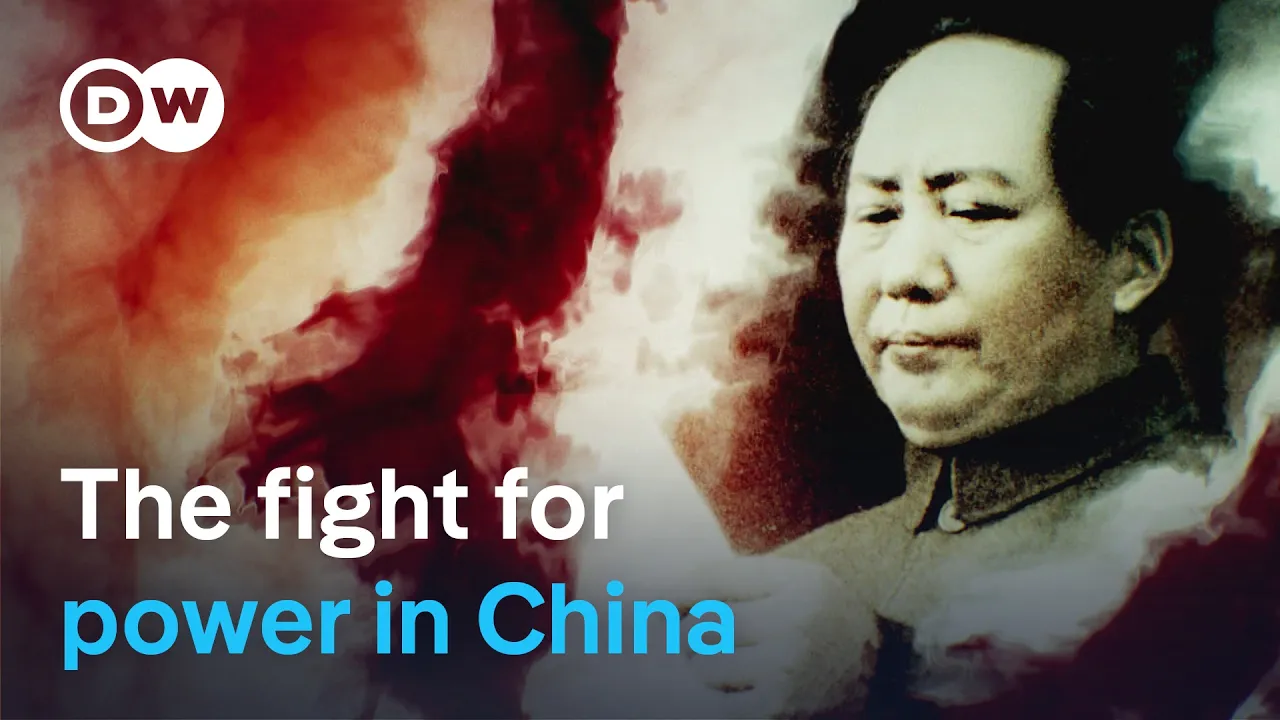
About Mao Zedong - From peasants' son to communist revolutionary (1/3)
From peasants' son to revolutionary leader — Mao Zedong laid the foundation for modern China. This three-part documentary offers an in-depth look at one of the most influential figures of the 20th century. *Part 2 & 3 coming soon!* Part 2: Available from 10 October 2026 Part 3: Available from 17 October 2026 The legacy of the "founding father" of the People's Republic of China remains deeply controversial. Revered in Europe as a revolutionary icon in the late 1960s, Mao led China to the brink of disaster and ultimately clung to power with a regime of terror. Yet today's leaders in Beijing continue to draw on the cult of Mao. China is now a global power, a transformation that would be difficult to imagine without Mao Zedong. When Mao Zedong was born in 1893, nothing hinted at his meteoric rise to power. The son of a farming family, he grew up during a period of political instability and profound social upheaval. The 1911 Revolution, which marked the beginning of the end of imperial rule, awakened his mind to politics. At
Mao Zedong - From peasants' son to communist revolutionary (1/3) is presented by DW Documentary. Its listed runtime is 52 minutes. The source link and publisher attribution are provided with the embedded film.
As a politics & war documentary, Mao Zedong - From peasants' son to communist revolutionary (1/3) uses zedong, peasants, communist as its central frame. Political documentaries frame contested decisions through selected evidence and voices. Identify the institutions involved, the historical timeline, whose interests are represented and which perspectives are absent or disputed.
What to consider before watching
- What evidence, testimony or observation does the film use to explain zedong, peasants, communist?
- Which people, institutions or historical conditions most influence the story told in Mao Zedong - From peasants' son to communist revolutionary (1/3)?
- How does DW Documentary's framing affect the documentary's emphasis, and which perspectives may deserve further research?
Topics covered in this documentary
Documentary details and original source
- Title
- Mao Zedong - From peasants' son to communist revolutionary (1/3)
- Category
- Politics & War
- Runtime
- 52 minutes
- Language
- English
- Publisher
- DW Documentary
Free Documentary Vault provides independent discovery, organization and editorial context. The film remains hosted by its original publisher, who controls availability and playback.
Related Politics & War documentaries

In June 1950, communist forces invaded South Korea, triggering a brutal three-year conflict that drew in the US, the Soviet Union, and China. Overshadowed by the victory of WW2 and the turmoil of Vietnam, this Cold War standoff claimed nearly 5 million lives. From MacArthur's daring Inchon landing to brutal trench warfare along the 38th parallel and near-nuclear escalation, discover why the bloody battle for Korea became known as the Forgotten War—and how its legacy continues to shape our world today. War Stories is your one-stop shop for all things military history. From Waterloo to Verdun, we'll be bringing you only the best documentaries and stories from history's most engaging and dramatic conflicts. You can now become a History Hit member right here on the original video platform! Join for access to a new exclusive documentary every week, and access to over 160+ of our documentaries presented by world renowned historians like Dan Snow, Eleanor Janega, Tristan Hughes, Mary Beard, Matt Lewis and more. You can find more from us on: This channel is part of the History Hit Network.
War Stories1950–1953: The Bloody Story Of The Korean War

What turns a ruler into a tyrant, and how do brutal leaders seize power and hold onto it? This documentary series examines some of the most notorious dictators and authoritarian figures in modern history, including Adolf Hitler, Joseph Stalin, Mao Zedong, Saddam Hussein, Muammar Gaddafi, Kim Jong-il, Benito Mussolini, Hideki Tojo, Papa Doc Duvalier and Osama bin Laden. Through dramatic reconstruction, archive footage, expert testimony and accounts from survivors and eyewitnesses, it investigates the personalities, propaganda, violence and political tactics behind their rise. From Stalin's reign of terror and Saddam Hussein's ruthless elimination of rivals to the personality cult surrounding North Korea's leadership, the series asks whether these men were shaped by circumstances or predisposed to brutality, and why millions followed, obeyed or feared them. -- Welcome to the official Get.factual the original video platform channel! 🌍 We are a documentary streaming channel covering history, science, technology, and nature. Explore worlds distant, forgotten, and unknown; from the depths of ocean trenches to the far reaches of the cosmos. New uploads of full-length documentaries and docu-series every week!
Get.factualDictators: Inside the Minds of History's Most Brutal Leaders | Extra Long Documentary

Fujifilm: Back From the Brink | How It Survived the Digital Revolution For decades, Fujifilm built its success around photographic film. Then digital photography arrived and the business that generated most of its profits began to disappear almost overnight. This Moconomy documentary explores how Fujifilm survived one of the biggest technological disruptions in modern business. Instead of protecting its old model, the company restructured, invested in new research and applied decades of chemical expertise to industries including healthcare, pharmaceuticals, cosmetics and advanced technology. How do you save a company when the technology that made it successful becomes obsolete? Explore more stories about technology, innovation and business transformation on Moconomy
MoconomyFujifilm: Back From the Brink | How It Survived the Digital Revolution

This is the story Saddam Hussein, a man thought to be more sadistic than Hitler, and how he rules Iraq with an utter contempt for humanity for 23 years. This historical documentary looks at how the extreme pleasure he derives from limitless cruelty plays a significant part in his transformation from a violent young street thug to one of the most notorious dictators in the Middle East. How with patience throughout the 1970s he skilfully manoeuvres himself into power and the horrifically violent acts he commits in order to keep his iron grip on the nation – including genocide. And how his megalomania reaches such epic heights he believes he can get away with anything, bringing him into direct conflict with almost the entire world. -- Welcome to the official Get.factual the original video platform channel! 🌍 We are a documentary streaming channel covering history, science, technology, and nature. Explore worlds distant, forgotten, and unknown; from the depths of ocean trenches to the far reaches of the cosmos. New uploads of full-length documentaries and docu-series every week! The following assets
Get.factualInside Saddam Hussein’s Iraq: Terror, War And The Cult Of The Dictator

Discover unpublished and rarely seen photographs from the Battle of Berlin in 1945, brought together in an exclusive collection for history enthusiasts. More than 200 historical photographs take you through the final days of the Third Reich and reveal scenes rarely shown in documentaries. More than eight decades after the end of World War II, the earth continues to reveal secrets that seemed destined to remain buried forever. From hidden tunnels and shelters to soldier remains, abandoned weapons, documents, and personal belongings, new finds continue to surface across former battlefields in Europe and other regions. Each discovery acts as a time capsule capable of showing us a side of the conflict that photographs and history books cannot always convey. Some of the most disturbing finds have emerged at former concentration camps, mass graves, and sites where mass executions took place. Archaeologists and researchers have uncovered victims' personal effects, vanished structures, and physical evidence that allow the reconstruction of episodes of persecution and murder perpetrated by the Nazi regime. Elsewhere, excavations carried out decades after the war continue to identify human
Der Kommandant EnglishThe 20 Most TERRIFYING Discoveries of World War II Found Recently!

Discover unpublished and rarely seen photographs from the Battle of Berlin in 1945, brought together in an exclusive collection for history enthusiasts. More than 200 historical photographs take you through the final days of the Third Reich and reveal scenes rarely shown in documentaries. The question of who did the most to defeat Germany in World War II does not have a completely simple answer, because victory was the result of the combined effort of numerous nations. However, from a strictly military perspective and considering the sheer scale of land combat, the Soviet Union played the primary role in the destruction of the Wehrmacht. The Eastern Front was the largest and bloodiest theater of the entire war: more combatants died there than in all other theaters of World War II combined. From the German invasion of the USSR in June 1941, millions of soldiers were locked in a titanic struggle that would ultimately consume the vast majority of Germany's manpower and material resources. The price paid by the Soviets was extraordinary. After suffering catastrophic defeats during the opening months of
Der Kommandant English