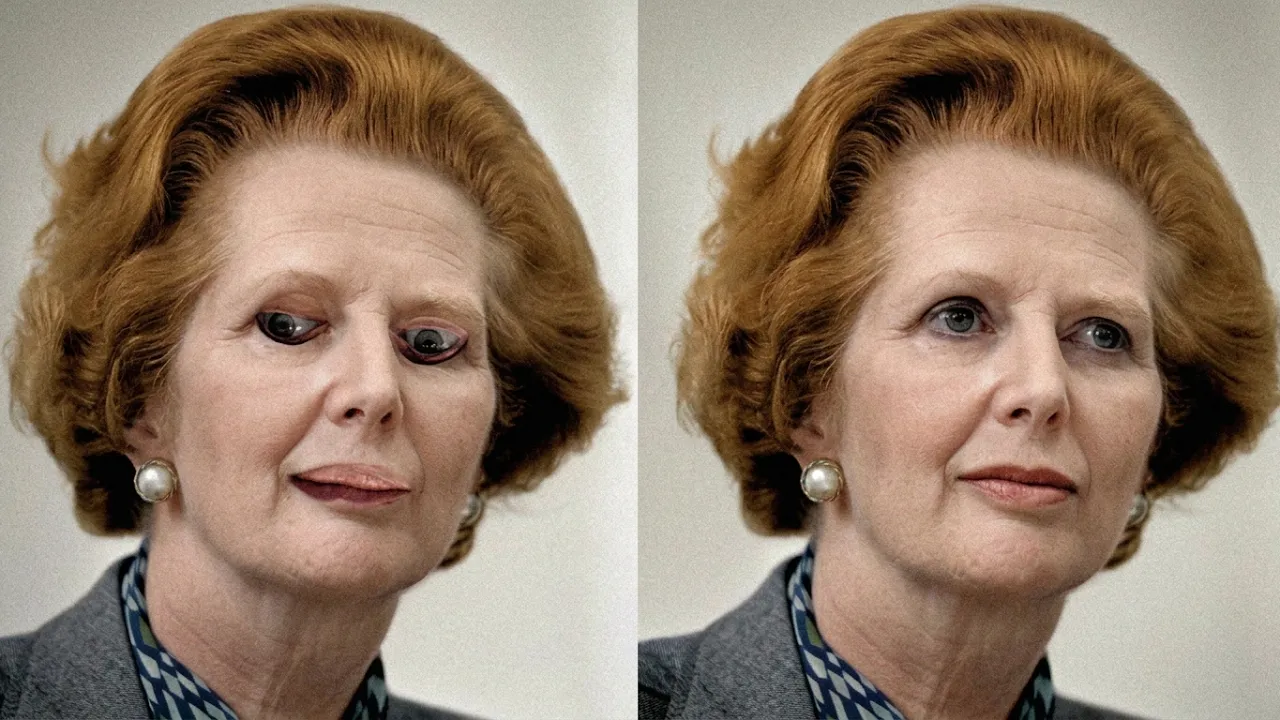
About Inside the Brain: How We Recognize Faces
Neuroscientists explain the remarkable biology of facial recognition while technology experts investigate the promise and risks of AI-powered biometric surveillance.
Inside the Brain: How We Recognize Faces is presented by Best Documentary. The source link and publisher attribution are provided with the embedded film.
As a science & technology documentary, Inside the Brain: How We Recognize Faces uses brain, recognize, faces as its central frame. Science documentaries translate evidence and uncertainty for a general audience. Separate established findings from hypotheses, notice how experiments are designed, and consider what additional evidence would strengthen a conclusion.
Extended overview
Facial recognition begins long before a person can speak, yet the brain processes identity through mechanisms that are surprisingly easy to disrupt. This documentary connects neuroscience experiments—including visual illusions that expose how strongly we depend on familiar facial patterns—with the rapid expansion of machine recognition. The biological story becomes a civic one as cameras, databases and AI systems move into public life. By placing human perception beside automated identification, the film offers a useful framework for asking not only how recognition works, but who controls the resulting data and what errors or surveillance may cost ordinary people.
What to consider before watching
- What evidence, testimony or observation does the film use to explain brain, recognize, faces?
- Which people, institutions or historical conditions most influence the story told in Inside the Brain: How We Recognize Faces?
- How does Best Documentary's framing affect the documentary's emphasis, and which perspectives may deserve further research?
Topics covered in this documentary
Documentary details and original source
- Title
- Inside the Brain: How We Recognize Faces
- Category
- Science & Technology
- Language
- English
- Publisher
- Best Documentary
Free Documentary Vault provides independent discovery, organization and editorial context. The film remains hosted by its original publisher, who controls availability and playback.
Related Science & Technology documentaries
Examine fast-moving artificial intelligence tools, their capacity to solve difficult problems and the risks created when powerful systems escape meaningful control.
NOVA PBS OfficialA.I. Revolution
Use sleepwalking, anesthesia, game theory and neuroscience to explore the subconscious forces influencing choices before conscious thought catches up.
NOVA PBS OfficialYour Brain: Who’s in Control?
Enter the subatomic realm where observation changes outcomes, particles occupy multiple states and entanglement challenges ordinary ideas of distance.
NOVA PBS OfficialDecoding the Universe: Quantum

Step inside the secret world of the Tudor dynasty and discover what life was really like behind the palace doors. From Henry VII’s rise after the Battle of Bosworth to the extraordinary reign of Henry VIII, this documentary explores the ambition, romance, betrayal, and royal intrigue that shaped one of the most fascinating periods in English history. Discover the private life of Henry VIII, his marriage to Catherine of Aragon, his passionate pursuit of Anne Boleyn, and his desperate desire for a male heir. Beyond politics and power, uncover the intimate realities of Tudor life—from royal marriages and childbirth to extravagant fashion, court traditions, medicine, and even the surprising secrets of the king’s private chambers. Enter the magnificent world of Tudor England, where love could change a kingdom and life at court could be both luxurious and deadly. Perfect for fans of British history, Henry VIII, Anne Boleyn, the Tudor monarchy, royal history, and historical documentaries, this journey reveals the human stories hidden behind the legendary Tudor crown.
Banijay History500-Year-Old Tudor Hat Linked to Henry VIII | The Private Lives | Season 1 Episode 1

In November 1944, two brand-new American A26 Invader bombers took off from Warton Air Base bound for France. Minutes later, both aircraft crashed into coastal marshland, killing all three crew members. For decades, official reports left the cause unknown. In this episode, archaeologists and aviation crash investigators excavate the buried wreckage, analyzing engine parts, damaged propellers, and fuselage structural breaks to piece together the tragic series of events. Through forensic archaeology, experts uncover the fatal design flaws, poor visibility conditions, and mid-air collision dynamics that led to this tragic WW2 disaster. You can now become a History Hit member right here on the original video platform! Join for access to a new exclusive documentary every week, and access to over 160+ of our documentaries presented by world renowned historians like Dan Snow, Eleanor Janega, Tristan Hughes, Mary Beard, Matt Lewis and more. This channel is part of the History Hit Network. Any queries, please contact owned-enquiries@littledotstudios.com
Timeline - World History DocumentariesArcheologists Unearth A Crashed WW2 Bomber

Disabled Woman Abandoned And Forced to Pee in Bottles | Hoarders follows the specific people, circumstances and claims presented in this full-length documentary. 1 in 20 people have a problem with hoarding - this extreme compulsion to stockpile items or not throw things away can have a severe impact on your wellbeing. Our dedicated team are here to dig people out from being trapped in their own homes. Playlists
Hoarders