
About How People Impossibly Survive The Worst Disasters | Surviving Disaster
Why do we freeze in the middle of a fire? Why do our senses of sight and hearing change in an emergency? Why do things seem to move more slowly? And most importantly, how do we override these instincts to help us survive and thrive? With first-hand accounts of survivors of 9/11, the Oklahoma City bombing, the Indian Ocean tsunami, a house fire and more, this programme considers the neuro-scientific information that helps explain how we act during crises. WONDER is packed with binge worthy reality documentaries for hours of entertainment. Check out our hub of diverse and empowering stories which explore the extreme side of life!
How People Impossibly Survive The Worst Disasters | Surviving Disaster is presented by Wonder. Its listed runtime is 50 minutes. The source link and publisher attribution are provided with the embedded film.
As a culture & people documentary, How People Impossibly Survive The Worst Disasters | Surviving Disaster uses people, impossibly, survive as its central frame. Cultural documentaries are most useful when traditions are understood as living practices rather than decorative customs. Pay attention to who carries knowledge, how it is passed on, and which economic or social pressures are changing it.
What to consider before watching
- What evidence, testimony or observation does the film use to explain people, impossibly, survive?
- Which people, institutions or historical conditions most influence the story told in How People Impossibly Survive The Worst Disasters | Surviving Disaster?
- How does Wonder's framing affect the documentary's emphasis, and which perspectives may deserve further research?
Topics covered in this documentary
Documentary details and original source
- Title
- How People Impossibly Survive The Worst Disasters | Surviving Disaster
- Category
- Culture & People
- Runtime
- 50 minutes
- Language
- English
- Publisher
- Wonder
Free Documentary Vault provides independent discovery, organization and editorial context. The film remains hosted by its original publisher, who controls availability and playback.
Related Culture & People documentaries

On Saturday, October 19, 1991 the temperature was very hot and extremely dry, Oakland was in its fifth year of a drought when then the fires began. The final toll of this disaster: over a hundred people were injured, 25 died including 11 on Charing Cross Road WONDER is packed with binge worthy reality documentaries for hours of entertainment. Check out our hub of diverse and empowering stories which explore the extreme side of life! Content licensed from New Dominion Pictures to Little Dot Studios.
WonderDangerous Fire Leaves Hundereds Of People Injured | Critical Rescue S1 EP14

Mongolia's nomadic herders face unique challenges—from bitter winters to predator threats and an economic shift pulling young people to cities. In this episode, I explore how these families balance ancient traditions with modern demands in one of the most remote places on Earth. WONDER is packed with binge worthy reality documentaries for hours of entertainment. Check out our hub of diverse and empowering stories which explore the extreme side of life!
WonderSurviving Amongst Wolves In The Mongolian Nomadic Mountains

A Mountain Rescue team must rescue a badly injured climber hanging off a cliff. In Wales, a drone is used to find a young boy's missing pet dog. A small plane has to emergency land on a populated beach. Documentary series telling the stories of acts of bravery that have been captured on mobile phone, CCTV and dashboard camera footage. Both the saved and the saviours tell their story. WONDER is packed with binge worthy reality documentaries for hours of entertainment. Check out our hub of diverse and empowering stories which explore the extreme side of life!
WonderFaulty Plane Crash Lands On A Beach Filled With People | Saved On Camera

In 2001, hundreds of people pour into the Lonz Winery on Middle Bass Island in Ohio for a Fourth of July celebration. Leon Wyszynski and his wife Mary Jane dine with friends on the terrace. Suddenly, the terrace gives way beneath them. One hundred people plummet 20 feet into the winery’s cellar. When disaster strikes and tragedy seems certain, there is only one hope – Critical Rescue – highly trained teams of paramedics, rescuers and doctors. Their jobs are dangerous, their rescues dramatic. But for the victims of a disaster, these courageous men and women are all that stand between life and death. WONDER is packed with binge worthy reality documentaries for hours of entertainment. Check out our hub of diverse and empowering stories which explore the extreme side of life! Content licensed from New Dominion Pictures to Little Dot Studios.
WonderBuilding Collapse Leaves Hundreds Of People Critically Injured

In this final episode of Man Hunt, Hayden is in the arid desert, learning the ways of the desert people. These people not only survive in extreme heat, but they also hunt their own food by using handcrafted weapons and crawling into the burrows of the animals they're after. Join Hayden Turner as he experiences how the people who live in the far corners of the world survive. Experiencing their way of life and learning how they hunt and forage for food, Hayden learns first hand exactly what it means to hunt. WONDER is packed with binge worthy reality documentaries for hours of entertainment. Check out our hub of diverse and empowering stories which explore the extreme side of life! Content licensed from Blue Ant International to Little Dot Studios.
WonderHow This Remote Tribe Tracks And Hunts Desert Predators | Man Hunt S1 E4
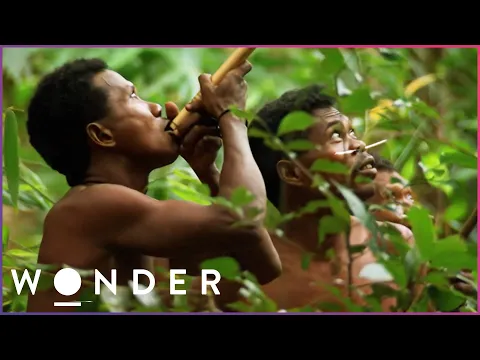
Hayden is back in the deep jungle, ingratiating himself amongst a tribe in the depths of the wilderness. He'll learn to hunt, cook and survive in this hostile jungle environment with the people who do so day-to-day. Join Hayden Turner as he experiences how the people who live in the far corners of the world survive. Experiencing their way of life and learning how they hunt and forage for food, Hayden learns first hand exactly what it means to hunt. WONDER is packed with binge worthy reality documentaries for hours of entertainment. Check out our hub of diverse and empowering stories which explore the extreme side of life! Content licensed from Blue Ant International to Little Dot Studios.
Wonder