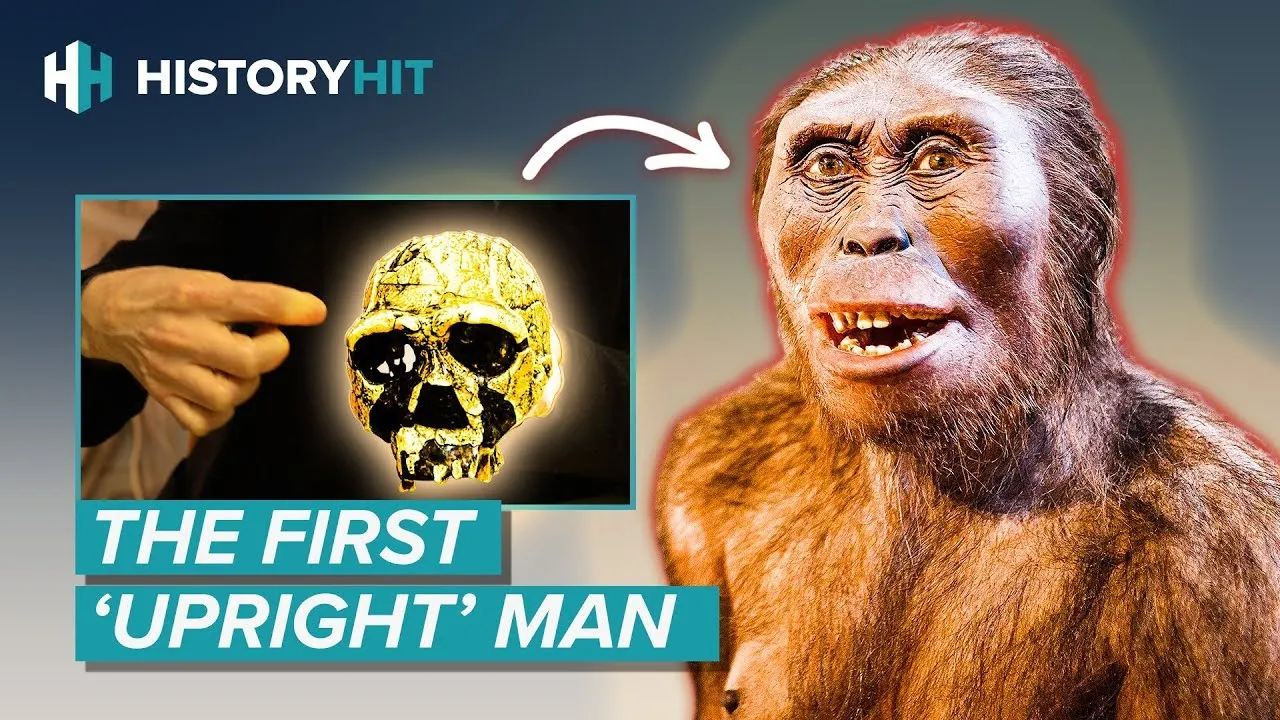
About Homo erectus | Why Did the Most Successful Early Human Go Extinct?
Homo erectus | Why Did the Most Successful Early Human Go Extinct? The Ancients host Tristan Hughes sits down with Professor John Mcnabb at the University of Southampton to discuss the extinct species of archaic human, Homo Erectus (aka the 'Upright Man') that existed about 2 million years ago. Were these ancient ancestors the first to make stone tools? Were they the first to create fires? How did they hunt? How similar were they to Neanderthals and Homo Sapiens? Why did they go extinct? Tristan and John cover all of this ground as well as touching upon another species of human that lived on the remote islands of Indonesia, Homo Floresiensis, otherwise known as 'The Hobbit' due to its small structure and features.
Homo erectus | Why Did the Most Successful Early Human Go Extinct? is presented by History Hit. Its listed runtime is 33 minutes. The source link and publisher attribution are provided with the embedded film.
As a society documentary, Homo erectus | Why Did the Most Successful Early Human Go Extinct? uses erectus, successful, early as its central frame. Social documentaries work best as invitations to examine systems through lived experience. Distinguish individual testimony from wider claims, and consider which institutions, incentives and inequalities shape the choices shown.
What to consider before watching
- What evidence, testimony or observation does the film use to explain erectus, successful, early?
- Which people, institutions or historical conditions most influence the story told in Homo erectus | Why Did the Most Successful Early Human Go Extinct??
- How does History Hit's framing affect the documentary's emphasis, and which perspectives may deserve further research?
Topics covered in this documentary
Documentary details and original source
- Title
- Homo erectus | Why Did the Most Successful Early Human Go Extinct?
- Category
- Society
- Runtime
- 33 minutes
- Language
- English
- Publisher
- History Hit
Free Documentary Vault provides independent discovery, organization and editorial context. The film remains hosted by its original publisher, who controls availability and playback.
Related Society documentaries

Dan Snow interviews Chris Stringer about human evolution, neanderthals, new science and migration patterns. Humans are everywhere. How did we get from the savannahs of Africa across to the most northern reaches of Alaska and Greenland, to the outbacks of Australia and the islands of the Pacific millennia ago? How did we master fire, figure out how to craft tools and survive the Ice Ages? In this episode, Dan is joined by Professor Chris Stringer, Research Leader in Human Evolution at London's Natural History Museum, to talk about how Homo Sapiens managed to outlive other human cousins like Neanderthals and Denisovans, cross oceans, shape landscapes and one day, build cities and space shuttles. You can now become a History Hit member right here on the original video platform! Join for access to a new exclusive documentary every week, and access to over 160+ of our documentaries presented by world-renowned historians like Dan Snow, Eleanor Janega, Tristan Hughes, Mary Beard, Matt Lewis and more.
History HitExpert Explains How Humans Outlasted The Neanderthals

Professor Williams studies the reign of Charles I, who succeeded James I in 1625. Hear how religious upheaval and authoritarian rule led to civil war and a beheading. The Stuart dynasty lived through arguably the most eventful, bloodthirsty and trying period in British history, and this series reassesses the royal house's history and legacy in a new and unique way.
Real HistoryHow Charles I Met His Gruesome Fate | Game of Kings: Stuarts, A Bloody Reign

The Pacific Coast's various species of seals and sea lions spend most of their lives roaming the ocean, coming ashore only to give birth and breed. To best utilize their time gathered on land, both events occur together. January to July is the season when enormous elephant seals clash and baby harbor seals learn to dare the waves.
Real WildThe Most Popular Marine Mammal Habitat In The World | Wild America

Join woodsman and survival expert Ray Mears as he embarks on a unique journey to uncover the truth behind one of Britain’s most enduring legends: Robin Hood. Blending his totally unique knowledge of wilderness skills with a passion for history, Ray explores the landscapes, forests, and historical records that have shaped the myth of the heroic outlaw. From Sherwood’s ancient oak to a document hidden in a medieval castle library, he examines the evidence for the man behind the legend, asking whether Robin was a real figure, a combination of a number of people, or a timeless symbol of justice. To help him on his quest Ray has enlisted the help of a team of experts and some close friends who can help bring to life the harsh realities of medieval life and highlight the real history that is contained within the tale of Robin Hood. You can now become a History Hit member right here on the original video platform! Join for access to a new exclusive documentary every week, and access to over 160+ of our documentaries presented
History HitRobin Hood, Fact or Fiction?

Dan is joined by author, broadcaster and historian Professor Alice Roberts to examine how Christianity out-organised and outlasted the Roman Empire. Around 50 CE, a small group of travellers began to preach that a Jewish man, crucified by the Romans, had risen from the dead. Teaching love, forgiveness and eternal life, this new faith quickly gained followers. By the early fourth century, it was thriving, and over the next hundred years, it exploded, spreading across the entire Roman Empire before becoming its official religion. What enabled it to take such a strong hold so quickly and so steadfastly? Produced by James Hickmann and Mariana Des Forges, and edited by Matthew Wilson and Dougal Patmore. You can now become a History Hit member right here on the original video platform! Join for access to a new exclusive documentary every week, and access to over 160+ of our documentaries presented by world-renowned historians like Dan Snow, Eleanor Janega, Tristan Hughes, Mary Beard, Matt Lewis and more.
History HitAlice Roberts On The Origins of Christianity

Hero in war. Villain in peace? Historian Kevin Ruane answers your questions about Winston Churchill, the two-time Prime Minister celebrated for leading Britain through the Second World War, yet still one of the most controversial figures in modern British history. You can now become a History Hit member right here on the original video platform! Join for access to a new exclusive documentary every week, and access to over 160+ of our documentaries presented by world-renowned historians like Dan Snow, Eleanor Janega, Tristan Hughes, Mary Beard, Matt Lewis and more.
History Hit