
About Hitler's Bluff: How The Munich Accords Signalled The Start Of WW2 | Impossible Peace | Real History
In 1938 upon returning to England after singing a peace agreement with Hitler, Neville Chamberlin famously said that this was "peace for our time". Just one year later, England would be declaring war on Germany after their invasion of Poland. How did this agreement with Hitler that he had no more plans for territorial gain end up in the biggest and bloodiest conflict in human history?
Hitler's Bluff: How The Munich Accords Signalled The Start Of WW2 | Impossible Peace | Real History is presented by Real History. Its listed runtime is 50 minutes. The source link and publisher attribution are provided with the embedded film.
As a politics & war documentary, Hitler's Bluff: How The Munich Accords Signalled The Start Of WW2 | Impossible Peace | Real History uses hitler, bluff, munich as its central frame. Political documentaries frame contested decisions through selected evidence and voices. Identify the institutions involved, the historical timeline, whose interests are represented and which perspectives are absent or disputed.
What to consider before watching
- What evidence, testimony or observation does the film use to explain hitler, bluff, munich?
- Which people, institutions or historical conditions most influence the story told in Hitler's Bluff: How The Munich Accords Signalled The Start Of WW2 | Impossible Peace | Real History?
- How does Real History's framing affect the documentary's emphasis, and which perspectives may deserve further research?
Topics covered in this documentary
Documentary details and original source
- Title
- Hitler's Bluff: How The Munich Accords Signalled The Start Of WW2 | Impossible Peace | Real History
- Category
- Politics & War
- Runtime
- 50 minutes
- Language
- English
- Publisher
- Real History
Free Documentary Vault provides independent discovery, organization and editorial context. The film remains hosted by its original publisher, who controls availability and playback.
Related Politics & War documentaries
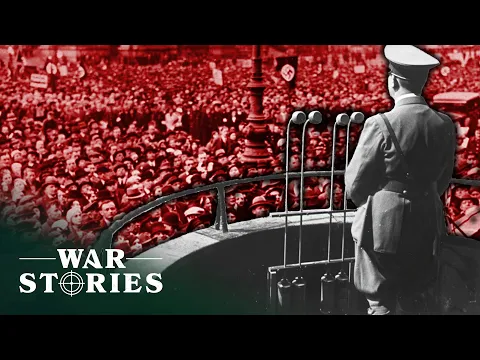
In the fallout of WW1, Germany was a nation broke, divided and defeated. 20 years later Adolf Hitler would be leading a rejuvenated and united Germany on a brutal conquest of the world that would leave millions dead. This is the story of how The Fuhrer conquered Germany by forceand poisoned an entire nation with his racist beliefs. War Stories is your one stop shop for all things military history. From Waterloo to Verdun, we'll be bringing you only the best documentaries and stories from history's most engaging and dramatic conflicts. You can find more from us on
War StoriesHow Hitler Built His Third Reich | Rise Of The Nazi Party

As Hitler's Blitzkrieg marked the start of WW2 in Europe, it also signalled the start of a new type of warfare. This would be a war where the significance of machines, not manpower would be the deciding factor between win and loss. This new type of warfare also brought a new issue into the fold, the supply chain of oil. War Stories is your one stop shop for all things military history. From Waterloo to Verdun, we'll be bringing you only the best documentaries and stories from history's most engaging and dramatic conflicts. You can find more from us on
War StoriesThe Role Of Oil In The Real Downfall Of Nazi Germany | Battlefield

Uncover the hidden chapters of history in this episode of Hitler's Countdown to War. Witness the pivotal moments of the Munich Agreement and Hitler's secret plans for the invasion of Czechoslovakia. Explore the shocking events of Crystal Night, exposing Hitler's violent anti-Semitism. As the world teeters on the brink of war, delve into the complex mind of Adolf Hitler and the decisions that shaped the course of history. Discover the untold stories and political manoeuvres that led to the edge of destruction. 🚨 Delve into the brink of conflict with Hitler's Countdown To War on Banijay History! Uncover the pivotal moments that led to WWII. Explore the pivotal 18 months leading to World War II in Hitler's Countdown to War. Commencing on March 12, 1938, when Hitler's forces entered Austria, and concluding on September 3, 1939, with Britain and France declaring war on Germany after the invasion of Poland. This history series delves into Adolf Hitler's decisions and actions during this crucial period, unravelling the story day by day. Witness the rise of a bully, gambler, and manipulator whose choices
Banijay HistoryCountdown to Czech Invasion - Hitler's Countdown To War - S01 EP02 - History Documentary

Explore the dramatic events leading to World War II in this episode of Hitler's Countdown to War. Witness Hitler's invasion of Austria in 1938, setting off a chain of decisions that would shape history. From the euphoria of victory parades to behind-the-scenes political manoeuvring, delve into Hitler's mind as he orchestrates a series of events, manipulating nations on the brink of destruction. Uncover the complexities of Hitler's ambitions and the dark undercurrents of anti-Semitism. Join us in this radical narrative, revealing the 18 months that brought the world to the edge of devastation. 🚨 Delve into the brink of conflict with Hitler's Countdown To War on Banijay History! Uncover the pivotal moments that led to WWII. Explore the pivotal 18 months leading to World War II in Hitler's Countdown to War. Commencing on March 12, 1938, when Hitler's forces entered Austria, and concluding on September 3, 1939, with Britain and France declaring war on Germany after the invasion of Poland. This history series delves into Adolf Hitler's decisions and actions during this crucial period, unravelling the story day by day.
Banijay HistoryPrelude to War - Hitler's Countdown To War - S01 EP01 - History Documentary

How did Greece and Yugoslavia force Hitler's detour that delayed Operation Barbarossa? This Battlefield episode traces the chain of decisions that pulled Germany into the Balkans, exposed Ploesti’s vital oil, and reshaped the war in the East. After the 1939 pact with Stalin and victory in the West, Mussolini’s failed invasion of Greece in October 1940 drew British forces to the Aegean and threatened Romania’s refineries. Hitler answered with a lightning assault on Yugoslavia and Greece on 6 April 1941, taking Athens by 27 April. The diversion cost precious weeks; the invasion of the Soviet Union began on 21 June, reaching Moscow’s edge as winter closed in. As Churchill observed, Hitler had failed to notice that Russia had a winter. Air power then targeted fuel. Early raids on Romania were ineffective, but on 1 August 1943 B-24 Liberators from North Africa attacked Ploesti at low level, confronting flak, ME-109s, and chaos over the target. Fifty-seven bombers were shot down and 11 turned back, with little lasting damage. In 1944 the American 15th Air Force returned with long-range P-51 escorts. After
Real HistoryHitler's Balkan Blunder: Greece and Yugoslavia Delay Operation Barbarossa

Most records state that WW2 began in 1939 with the German invasion of Poland. This however is not true. It began in 1937 with the Japanese invasion of China known as The Second Sino-Japanese War. China would be torn apart by the ruthlessness of Imperial Japan and would not receive any help fighting for their country until several years later Sino-Japanese War.
Real History