About The Ghosts of Fukushima
Years after the 2011 earthquake, tsunami and nuclear disaster, travel through Fukushima’s scarred communities and examine why the region’s population remains dramatically reduced.
The Ghosts of Fukushima is presented by Best Documentary. The source link and publisher attribution are provided with the embedded film.
As a nature & environment documentary, The Ghosts of Fukushima uses ghosts, fukushima as its central frame. Nature films connect close observation with larger environmental systems. Consider habitat, seasonal change, human activity and the limits of what a single location can demonstrate about a global ecological issue.
Extended overview
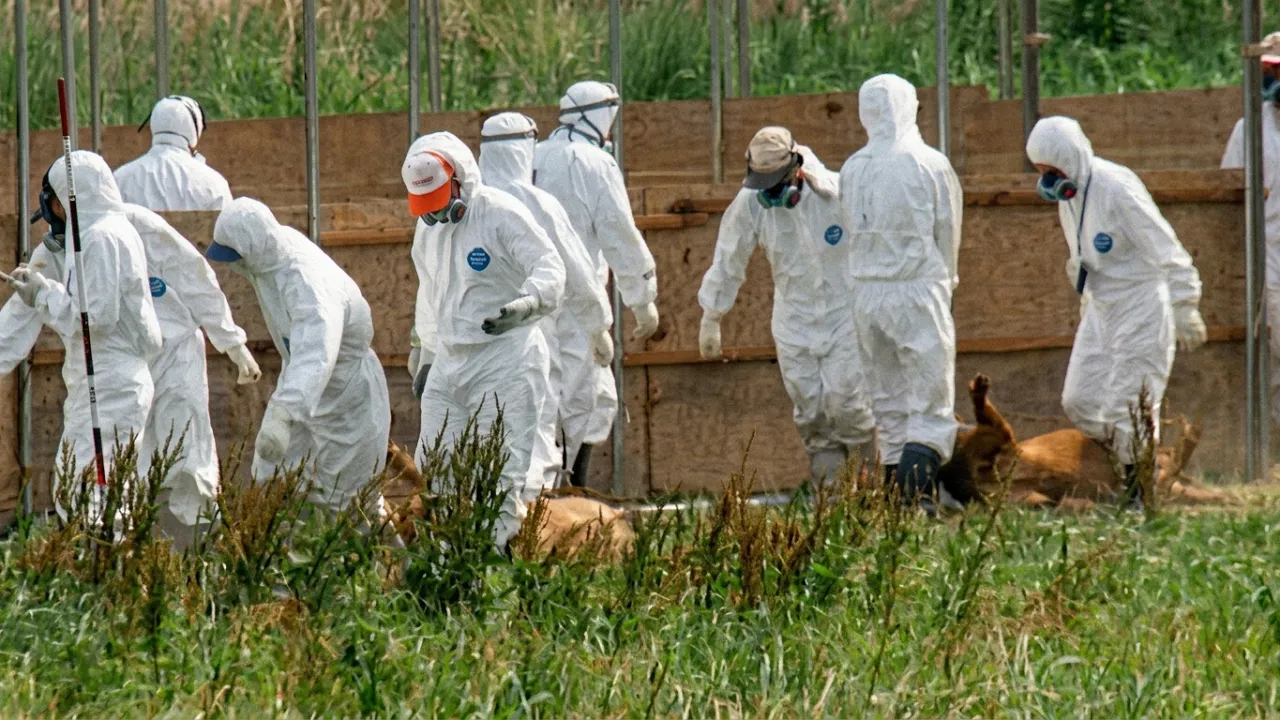
A decade after the earthquake, tsunami and nuclear emergency, Fukushima remains a landscape of unresolved loss. Farmers remember livestock left behind during evacuation, including cattle that later developed unexplained white markings. Former teachers return to a school whose pupils escaped a two-story wave, while residents debate radiation monitoring and whether home can ever feel safe again. The captions also expose the social stigma carried by evacuees far beyond the prefecture. Rather than declaring the disaster finished, the film listens to people living with decommissioned reactors, disrupted towns and the fear that recovery can never restore what existed before.
What to consider before watching
- What evidence, testimony or observation does the film use to explain ghosts, fukushima?
- Which people, institutions or historical conditions most influence the story told in The Ghosts of Fukushima?
- How does Best Documentary's framing affect the documentary's emphasis, and which perspectives may deserve further research?
Topics covered in this documentary
Documentary details and original source
- Title
- The Ghosts of Fukushima
- Category
- Nature & Environment
- Language
- English
- Publisher
- Best Documentary
Free Documentary Vault provides independent discovery, organization and editorial context. The film remains hosted by its original publisher, who controls availability and playback.
Related Nature & Environment documentaries

Travel deep into the Brooks Range of Alaska to spend a week with Heimo and Edna Korth, the last permanent residents permitted to live in the Arctic National Wildlife Refuge. From hunting caribou and catching Arctic grayling to defending their camp against grizzly bears, discover what everyday survival looks like on America's last frontier.
Best DocumentaryAmerica’s Most Remote Home: Living 30 Years Beyond the Arctic Circle

It seemed like the perfect concealment. The remains were subjected to extreme heat, fragmented, and lost to the river. Yet, forensic experts managed to make the compromised evidence speak. Finding clues in explosions. A Hollywood cold case file was solved by computerized fingerprint ID (AFIS)
Best DocumentaryAshes in the River: The Perfect Concealment?

Four dangerous, heady years in the space race. CHASING THE MOON, a film by Robert Stone, reimagines the race to the moon for a new generation, upending much of the conventional mythology surrounding the effort. The series recasts the Space Age as a fascinating stew of scientific innovation, political calculation, media spectacle, visionary impulses and personal drama. Utilizing a visual feast of previously overlooked and lost archival material — much of which has never before been seen by the public — the film features a diverse cast of characters who played key roles in these historic events. Among those included are astronauts Buzz Aldrin, Frank Borman and Bill Anders; Sergei Khrushchev, son of the former Soviet premier and a leading Soviet rocket engineer; Poppy Northcutt, a 25-year old “mathematics whiz” who gained worldwide attention as the first woman to serve in the all-male bastion of NASA’s Mission Control; and Ed Dwight, the Air Force pilot selected by the Kennedy administration to train as America’s first black astronaut. PART TWO: EARTHRISE covers 1964-1968, four heady, dangerous years in the history of
American Experience | PBSThe Mission that Redefined our View of Earth (1964-1968) | Full Film | American Experience | PBS

A hidden paradise sits right on the border between Switzerland and Italy, where massive glacial forces carved dramatic fjords into towering peaks. Millions of years before picturesque villages clung to these cliffs, this peaceful Alpine region was a tropical ocean lagoon filled with prehistoric monsters and coral reefs. Spring brought a dramatic transformation to the steep shorelines, awakening rare wildlife from deep winter sleep. Tucked away in the shadow of the mountains, local fishermen keep ancient traditions alive along the water while winemakers look to the past for inspiration. High above the water, herds of wild horses run free across high mountain pastures once winter snows clear away. Below the surface, secret missions take place in the freezing depths where local families age their vintage wines under intense natural pressure. From the emergence of ancient dragonflies to hidden nature reserves bursting with life, this changing landscape bridges the gap between wild Mediterranean nature and rugged Alpine tradition.
Real WildLake Lugano: Nature's Hidden Alpine Paradise

Lake Constance is one of Central Europe's largest bodies of water, but its picturesque beauty masks a silent crisis. Over the last seventy years, intensive farming has systematically squeezed out local wildlife, causing bird populations to plummet by a staggering sixty-five percent. In this documentary, we follow pioneering ornithologist Peter Berthold and dedicated conservation teams who refuse to let these ecosystems quiet down forever. We also see what it takes to save specific species on the brink, including raising giant storks that must play dead to survive, clearing waterways for migrating brown trout, and taking to the skies in ultralight gliders to teach hand-reared, endangered ibises how to migrate over the Alps. This is a story of hope, showing that when humans step up to repair the damage we have caused, nature responds with astonishing resilience.
Real WildInside Europe’s Most Ambitious Wildlife Reintroduction Project

In the vast dark, a planet spinning through space for billions of years is doing something it has never done before, at least never all at once. Earth's rotation is speeding up, then slowing down, in ways scientists did not predict. A hole in our planet's magnetic shield has grown to half the size of Europe. An ocean current that keeps an entire hemisphere from freezing has been weakening for twenty years straight. The ground is opening up in cities that never worried about it. Volcanoes buried under Antarctic ice may be waking. And the sun, at the peak of its own violent cycle, might be nudging fault lines that were already close to breaking. If you enjoy uncovering what is really happening to our planet, hit like and subscribe before we go further. Every fact ahead is real, checked, and stranger than fiction. Get ready. Earth is changing right in front of us. Sources: ESA on the South Atlantic Anomaly, University of Miami on the Atlantic conveyor slowdown, CNN on Atlantic circulation collapse risk, ZME Science on the 2026
Late Science