
About For Migrant Women Farmworkers, Abuse Often Comes with the Job (full documentary) | FRONTLINE
FRONTLINE and Univision News uncovered the hidden price that many migrant women working in America’s fields and packing plants pay to keep their jobs and provide for their families. (Aired 2013) For the women who pick and package the food we eat every day, sexual assault often comes with the job. “Rape in the Fields/Violación de un Sueño” investigated why female farmworkers, especially those who are undocumented, fall prey to field bosses and co-workers — and run the very real risk that they’ll lose their jobs or be deported if they dare to denounce their attackers. Explore additional reporting on "Rape in the Fields" on our website: FRONTLINE is produced at GBH in Boston and is broadcast nationwide on PBS. Funding for FRONTLINE is provided through the support of PBS viewers and by the Corporation for Public Broadcasting. Additional funding is provided by the Abrams Foundation; the John D. and Catherine T. MacArthur Foundation; Park Foundation; and the FRONTLINE Journalism Fund with major support from Jon and Jo Ann Hagler on behalf of the Jon L. Hagler Foundation, and additional
For Migrant Women Farmworkers, Abuse Often Comes with the Job (full documentary) | FRONTLINE is presented by FRONTLINE PBS | Official. Its listed runtime is 53 minutes. The source link and publisher attribution are provided with the embedded film.
As a society documentary, For Migrant Women Farmworkers, Abuse Often Comes with the Job (full documentary) | FRONTLINE uses migrant, women, farmworkers as its central frame. Social documentaries work best as invitations to examine systems through lived experience. Distinguish individual testimony from wider claims, and consider which institutions, incentives and inequalities shape the choices shown.
What to consider before watching
- What evidence, testimony or observation does the film use to explain migrant, women, farmworkers?
- Which people, institutions or historical conditions most influence the story told in For Migrant Women Farmworkers, Abuse Often Comes with the Job (full documentary) | FRONTLINE?
- How does FRONTLINE PBS | Official's framing affect the documentary's emphasis, and which perspectives may deserve further research?
Topics covered in this documentary
Documentary details and original source
- Title
- For Migrant Women Farmworkers, Abuse Often Comes with the Job (full documentary) | FRONTLINE
- Category
- Society
- Runtime
- 53 minutes
- Language
- English
- Publisher
- FRONTLINE PBS | Official
Free Documentary Vault provides independent discovery, organization and editorial context. The film remains hosted by its original publisher, who controls availability and playback.
Related Society documentaries

Enter the world of an undertaker whose family for three generations has cared for both the living and the dead in a small Michigan town, as families navigate loss, grief and mortality. (Aired 2007) Thomas Lynch is a writer and a poet. He's also a funeral director in a small town in central Michigan where he and his family have cared for the dead -- and the living -- for three generations. Moving and powerful, the 2007 documentary “The Undertaking” chronicles the intimate stories of families confronting loss, and the role of funeral rituals in helping them come to terms with their loved ones’ deaths. "Funerals are the way we close the gap between the death that happens and the death that matters," Lynch says in the documentary. "A good funeral gets the dead where they need to go and the living where they need to be." Explore additional reporting in connection with "The Undertaking" on our website: FRONTLINE is produced at GBH in Boston and is broadcast nationwide on PBS. Funding for FRONTLINE is provided through the support of
FRONTLINE PBS | OfficialThe Undertaking (full documentary) | FRONTLINE

A 2004 examination of India’s AIDS crisis through the eyes of girls and young women sold into sex work, originally aired as part of the FRONTLINE/World series. (Aired 2004) Starting with “India: The Sex Workers,” we are making episodes from FRONTLINE/World’s archive newly available here on the original video platform and on pbs.org as part of an effort to make our past reporting widely accessible. Originally developed by FRONTLINE producers in conjunction with public television stations KQED San Francisco and WGBH Boston, FRONTLINE/World launched in 2002 as a national public TV series that turned its lens on the global community, covering countries and cultures rarely seen on American television. The series completed its final broadcast season in 2010. At the time this FRONTLINE/World documentary was filmed, more than two million women and girls were working in India’s sex trade, and being forced to navigate their country’s AIDS crisis. With more than 4.5 million HIV infections across India at the time, often, the women and girls’ only defense against HIV was convincing men to wear condoms. But frequently, the documentary revealed
FRONTLINE PBS | OfficialCaught in India’s AIDS Crisis | India: The Sex Workers (full documentary) | FRONTLINE/World
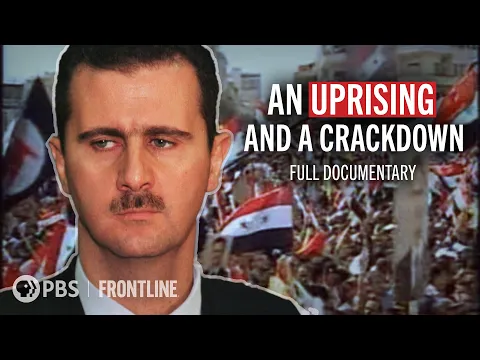
It’s been 15 years since the rebellion in Syria against Bashar al-Assad’s government began. “The Regime” examined how the uprising started and the brutal crackdown that followed. (Aired 2011) On March 6, 2011, young boys painted messages on the walls of a school 60 miles south of Syria’s capital, Damascus. “Freedom, freedom and freedom, only,” read one message. “Down with the corrupt Assad,” read another. Soon after, the boys were rounded up by the government’s secret police. Their fathers went to see the police chief, a cousin of Syria’s then-president, Bashar al-Assad, and begged him to release their children. Airing later that year, “The Regime” examined what happened to the boys, and how outrage over their fate helped to fuel the Syrian uprising. “That very instance of repression, of torture, seemed to galvanize the town itself,” the late reporter Anthony Shadid said in the documentary. “And almost from that moment, the uprising seemed to gain momentum.” As Syrians took to the streets to protest and to call for more freedoms, the swift and brutal response by Assad’s security forces followed
FRONTLINE PBS | OfficialHow Assad Moved to Crush Syria’s Uprising | The Regime (full documentary) | FRONTLINE (PBS)

As new questions arise about Boeing’s troubled 737 Max jet, FRONTLINE and The New York Times update an award-winning investigation into the design, oversight and production of a plane that was involved in two crashes that killed 346 people. In October 2018, a Boeing 737 Max passenger jet crashed shortly after takeoff off the coast of Indonesia. Five months later, following an eerily similar flight pattern, another 737 Max 8 went down in Ethiopia. Everyone on board the flights died. "Boeing's Fatal Flaw" tells the inside story of what led up to the crashes — revealing how intense market pressure and failed oversight contributed to tragic deaths and a catastrophic crisis for one of the world’s most iconic industrial names. This updated documentary also examines what’s happened since the original film first aired in 2021, including the January 2024 Alaska Airlines incident where a panel blew off a Boeing 737 Max jet’s body midair, and how Boeing has responded. Explore additional reporting related to "Boeing’s Fatal Flaw" on our website: FRONTLINE is produced at GBH in Boston and is broadcast
FRONTLINE PBS | OfficialBoeing's Troubled 737 Max Plane | “Boeing’s Fatal Flaw" Update (full documentary) | FRONTLINE

The baby boomer generation will be long on life expectancy but short on income. Amid vanishing pensions and faltering 401(k) plans, FRONTLINE investigates how middle-class Americans might fare in their retirement years. (Aired 2006) Two main strategies for funding retirement are lifetime pensions and 401(k)-style savings plans, but both are in trouble. Buffeted by pension cuts, corporate bankruptcies, and stock market crashes, most boomers can now expect to be working into their retirement years. In the 2006 documentary, Can Your Afford to Retire?, FRONTLINE correspondent Hedrick Smith investigates the financial crisis and what middle class Americans face in retirement. FRONTLINE is produced at GBH in Boston and is broadcast nationwide on PBS. Funding for FRONTLINE is provided through the support of PBS viewers and by the Corporation for Public Broadcasting. Additional funding is provided by the Abrams Foundation; the John D. and Catherine T. MacArthur Foundation; Park Foundation; and the FRONTLINE Journalism Fund with major support from Jon and Jo Ann Hagler on behalf of the Jon L. Hagler Foundation, and additional support from Koo and Patricia Yuen. CHAPTERS: Prologue
FRONTLINE PBS | OfficialCan You Afford to Retire? (full documentary) | FRONTLINE
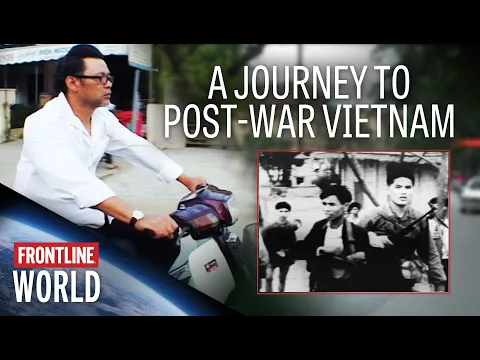
Decades after the Vietnam War shattered his childhood, journalist Nguyen Qui Duc traveled to his homeland and documented the changes he witnessed in the country. (Aired 2003) Decades ago, the Vietnam War shattered Nguyen Qui Duc’s childhood. Over the years, Nguyen, who came to the U.S. as a refugee, returned to his homeland as a journalist, reporting on the country’s culture and establishing connections with writers and artists living there. In 2003, he documented a journey through Vietnam for FRONTLINE/World, looking, he said, “for home, for a bit of myself, for a country that always exists in my memory.” As Nguyen traveled to different parts of the country in “Vietnam: Looking for Home,” he shared his reflections about the nation: “It’s easy to remember Vietnam has a habit of adopting and resisting changes. The culture, the people, will survive.” Several years after “Vietnam: Looking for Home” aired, Nguyen returned to Vietnam, this time for good. He filed occasional dispatches with FRONTLINE and FRONTLINE/World, and opened an influential arts and culture salon that pushed the boundaries of Vietnam’s communist government. Nguyen
FRONTLINE PBS | Official