
About Creating the Hunting Tools Used in the Stone Age
12,000 years ago, Britain entered a new chapter in its long history. By this point, hunting tools had evolved, from hefty spears to the slick and stealthy bow and arrow. This revolution in technology would change the way humans hunted forever. In a period in which Britain was also thawing and exiting from an Ice Age, the warm and moist forest environments became home to the last of the hunter gatherers in Britain. They ate a diverse range of food, including wild meat, fish and fresh fruit from plants. This would nonetheless change as the Britain entered the New Stone Age in circa 4000 BC and an agricultural revolution swathed the British Isles. Join bushcraft and survival expert Ray Mears in Episode 2 of our Ancient Britain series, as he exits the Palaeolithic era and enters the Mesolithic and Neolithic era in Britain. On his journey, Ray will explore the evolution of hunting methods and equipment, and the eventual transformation of the hunter-gatherer culture and the adoption of agriculture and sedentary living.
Creating the Hunting Tools Used in the Stone Age is presented by History Hit. Its listed runtime is 26 minutes. The source link and publisher attribution are provided with the embedded film.
As a society documentary, Creating the Hunting Tools Used in the Stone Age uses creating, hunting, tools as its central frame. Social documentaries work best as invitations to examine systems through lived experience. Distinguish individual testimony from wider claims, and consider which institutions, incentives and inequalities shape the choices shown.
What to consider before watching
- What evidence, testimony or observation does the film use to explain creating, hunting, tools?
- Which people, institutions or historical conditions most influence the story told in Creating the Hunting Tools Used in the Stone Age?
- How does History Hit's framing affect the documentary's emphasis, and which perspectives may deserve further research?
Topics covered in this documentary
Documentary details and original source
- Title
- Creating the Hunting Tools Used in the Stone Age
- Category
- Society
- Runtime
- 26 minutes
- Language
- English
- Publisher
- History Hit
Free Documentary Vault provides independent discovery, organization and editorial context. The film remains hosted by its original publisher, who controls availability and playback.
Related Society documentaries

Around 800 BC, Britain entered the Iron Age. This era saw the gradual introduction of iron working technology, although the general adoption of iron artefacts did not become widespread until after 500-400 BC. As the Iron Age progressed through the first millennium BC, strong regional groupings emerged, reflected in styles of pottery, metal objects and settlement types. Technological innovation increased and the population of Britain grew substantially, probably exceeding one million. This population growth was partly made possible by the introduction of new crops, including improved varieties of barley and wheat, and increased farming of peas, beans, flax and other crops. Join bushcraft and survival expert Ray Mears in the third and final episode of our Ancient Britain series, as he explores the relics of Iron Age Britain. On his journey, Ray visits the magnificent forts at Malvern Hills and a recreation of an Iron Age village at Butser Ancient Farm in Chalton.
History HitWhat Was Life Like in Iron Age Britain?

Dan Snow interviews Chris Stringer about human evolution, neanderthals, new science and migration patterns. Humans are everywhere. How did we get from the savannahs of Africa across to the most northern reaches of Alaska and Greenland, to the outbacks of Australia and the islands of the Pacific millennia ago? How did we master fire, figure out how to craft tools and survive the Ice Ages? In this episode, Dan is joined by Professor Chris Stringer, Research Leader in Human Evolution at London's Natural History Museum, to talk about how Homo Sapiens managed to outlive other human cousins like Neanderthals and Denisovans, cross oceans, shape landscapes and one day, build cities and space shuttles. You can now become a History Hit member right here on the original video platform! Join for access to a new exclusive documentary every week, and access to over 160+ of our documentaries presented by world-renowned historians like Dan Snow, Eleanor Janega, Tristan Hughes, Mary Beard, Matt Lewis and more.
History HitExpert Explains How Humans Outlasted The Neanderthals

On the 5th November 1605, The infamous plot to blow up parliament was botched after Guy Fawkes was caught red handed. But why does this event still hold soo much weight to it over 400 years later? How would things have been different if he had succeeded?
Real HistoryHow Close Was Guy Fawkes To Blowing Up Parliament? | Gunpowder Treason Plot

What is it about the Viking Age that drives so much interest? A common view is that it was a violent period across Europe, beset by raiding, conquest and plunder, led by people from Scandinavia. But is this really an accurate take on some 300 years of history? In this video James Carson talks through the Viking Age, bringing in expert opinion from a range of History Hit podcasts and documentaries to explain the more complex reality. What actually is the definition of a Viking? Did they really wear horned helmets? What was the legacy of the Norse on Europe, both in terms of colonisation and trade? You can find out more about the Vikings in the following links
History HitThe Viking Age Explained
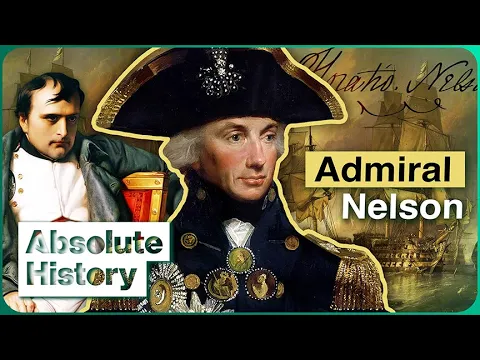
Admiral Nelson's heroic death at the Battle of Trafalgar is immortalized in bronze and stone on the great column in Trafalgar Square. Nelson, a brave and brilliant war leader, was also known for being vain, ruthless, and impetuous. In 1805, the Royal Navy was on blockade duty, preparing for a possible invasion of England by Napoleon's forces. Nelson's personal life included a complex relationship with Lady Emma Hamilton, and his career was marked by significant victories and controversies. Nelson's daring and unconventional tactics in the Battle of Trafalgar led to a decisive victory for the British fleet, although he was mortally wounded during the battle, ultimately securing his place as a national hero.
Absolute HistoryAdmiral Nelson: The Man Who Saved Britain From Napoleon | Nelson's Trafalgar

This is the history of bare-knuckle fighting in Victorian Britain, a brutal sport that seeks to decide the undisputed champion of the world. The rise of fighters like Tom Spring, who came from humble working-class origins to become sporting superstars, paved the way for Tyson Fury, Mohammed Ali, and Mike Tyson. Bare-knuckle fighting was a sport with few rules, no gloves, and often resulted in death. The fight between Tom Sayers and Jack Heenan marked the end of the era of bare-knuckle prizefighting and was a turning point in the history of combat sports.
Absolute History