documentaries

Absolute History

Page 12 / 13

Victoria: The Diary Queen | Diaries Of Queen Victoria documentary thumbnailEN59 min
Victoria: The Diary Queen | Diaries Of Queen Victoria

Victoria: The Diary Queen | Diaries Of Queen Victoria examines the specific people, events and evidence presented in this documentary. Biographer A.N. Wilson uncovers the intriguing personal life of Queen Victoria through her journals and letters in this psychological portrait of Britain's longest reigning monarch. With Queen Victoria's writings read by Anna Chancellor.

Absolute History

Victoria: The Diary Queen | Diaries Of Queen Victoria

59 minSociety
The Controversial Legacy Of King Charles III | The Madness Of Prince Charles documentary thumbnailEN48 min
The Controversial Legacy Of King Charles III | The Madness Of Prince Charles

For 56 years Prince Charles was the King in waiting - a wait that has surely been hard on him. Against the background of his wedding to Camilla, the film examines his controversial ideas on architecture (nothing too modern, please), medicine (coffee enemas and a diet of liquidized fruit), and religion (flirting with Islam, Sikhism, and regularly visiting the Greek Orthodox monasteries on Mount Athos). Looking at the heir to the throne's difficult relationships with women, family, and the public, we find out what makes Charles tick.

Absolute History

The Controversial Legacy Of King Charles III | The Madness Of Prince Charles

48 minSociety
Iran: People Of The Flame with David Adams documentary thumbnailEN50 min
Iran: People Of The Flame with David Adams

Iran is one of the earth's final frontiers. It's a country little visited by western travellers in recent years, yet it has been at the centre of world affairs for millennia. I wanted to take a peek "behind the veil" of modern-day Iran. What I discovered was a complex, incredibly hospitable people living in a much-misunderstood country at the heart of a troubled region. My journey takes me from the bustle of Tehran, via the Valley of the Assassins to ancient cities unchanged since Marco Polo first entered them eight centuries ago. But this isn't just a journey through an ancient landscape. It's a journey in search of one of the world's least known religious sects ... the ancient Fire Worshippers Of Yazd.

Absolute History

Iran: People Of The Flame with David Adams

50 minCulture & People
Niger: The Land Of Fear With David Adams documentary thumbnailEN51 min
Niger: The Land Of Fear With David Adams

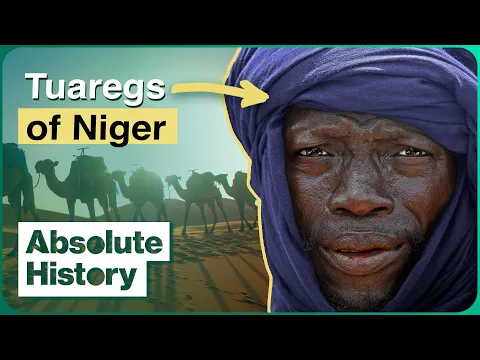
The Sahara is the biggest desert on earth ... it takes its name from the Arab word for "emptiness". In the dead heart of that emptiness there's a place called the Tenere. The Tenere takes its name from the Tuareg word for "nothing". A nothing the size of France in the middle of an emptiness the size of the United States. It's no wonder the locals call this place "The Land Of Fear". David Adams retraces the trade routes of the people who call this stove-hot corner of the planet home.

Absolute History

Niger: The Land Of Fear With David Adams

51 minSociety
The Sherlock Holmes Influence documentary thumbnailEN58 min
The Sherlock Holmes Influence

With continuing releases of major films and TV series on Sherlock Holmes, the fictional character has never been more popular. But what about his creator, the author Sir Arthur Conan Doyle, whose own life was at times as dark and as mysterious as the man he created? How was this extraordinary character formed and did he, as so many believe, really exist? The story behind the creation of this Victorian phenomenon is both disturbing and mystifying. It takes the viewer on a journey through the Edinburgh of the young Conan Doyle and the darker influences in his life, and onto the streets of London. What was it about Sherlock Holmes that captured the imagination of society as it entered the exciting, yet frightening world of the 20th century? With dramatic visualisations, contributions from leading Holmesian experts, figures from the world of literature and research, and evidence from the medical community, the Sherlock Holmes enigma is dissected and the truth begins to emerge. This brand new documentary explores the intriguing world of Conan Doyle and discovers the truth behind his decision

Absolute History

The Sherlock Holmes Influence

58 minSociety
The Mega Tombs Of The Ancient Han Dynasty documentary thumbnailEN50 min
The Mega Tombs Of The Ancient Han Dynasty

In China, there exists an astonishing place. A burial ground to rival Egypt's Valley of the Kings, where pyramid tombs of stupendous size are full of astonishing riches. In 221 BC, China's first Emperor united warring kingdoms into a nation that still exists today. To memorialize this achievement, he bankrupted the national treasury and oppressed thousands of workers to build one of the world's biggest mortuary complexes. China's second dynasty, the Han, inherited the daunting challenge of building larger tombs to command respect and establish their right to rule without running the nation into the ground. Although no Han emperor's tomb has been opened, the tombs of lesser Han aristocrats have revealed astonishing things: complete underground palaces (including kitchens and toilets) and at least one corpse so amazingly well-preserved some believe Han tomb-builders knew how to "engineer immortality". But most tombs were robbed, leaving another dynasty hundreds of years later - the brilliant Tang - to lead a revolution in tomb design, tunnelling simple shaft-tombs into natural mountains and filling them with small, inexpensive grave goods that symbolized more than

Absolute History

The Mega Tombs Of The Ancient Han Dynasty

50 minHistory
The Roman Conquest: The Occupation Of King Arthur's Britain documentary thumbnailEN49 min
The Roman Conquest: The Occupation Of King Arthur's Britain

Francis Pryor examines the history of Britain near the end of the Roman occupation. The first instalment focuses on Britain under Roman rule, revealing a much greater degree of collaboration with the natives than was previously recognised. Sheep-farming archaeologist, Francis Pryor, presents a historical series which explores Britain A.D, the British national character and the ultimate British icon King Arthur. Finding new and previously unexplained evidence, Francis Pryor overturns the idea that Britain reverted to a state of anarchy and disorder after the Romans left in 410 AD. Instead of doom and gloom Francis discovers a continuous culture that assimilated influences from as far a field as the Middle East and Constantinople. Through scrutinising the myth of King Arthur to find out what was really going on when the Romans left, Francis is confronted by evidence that confounds traditional views of the 'Dark Ages'. There was also no invasion of bloodthirsty Anglo Saxons, rampaging across the countryside. With new archaeological evidence Francis discovers a far more interesting story.

Absolute History

The Roman Conquest: The Occupation Of King Arthur's Britain

49 minSociety
The Real Reason Ancient Egyptians Built Pyramids | Egypt Detectives documentary thumbnailEN24 min
The Real Reason Ancient Egyptians Built Pyramids | Egypt Detectives

Intrigue and mystery have always surrounded the pyramids. Mysteries abound about how and why they were built, but questions still remain unanswered about where they were constructed. With Miriam investigating the geology of the Nile Valley and Dominic the Egyptian religion and myth, the Egypt Detectives try and piece together some logic behind the geography of the royal tombs.

Absolute History

The Real Reason Ancient Egyptians Built Pyramids | Egypt Detectives

24 minHistory
How The Bubonic Plague Killed 100,000 Londoners | The Great Plague documentary thumbnailEN77 min
How The Bubonic Plague Killed 100,000 Londoners | The Great Plague

The Great Plague of 1665 killed 100,000 Londoners - one in three of the people living in the city. While kept diaries have provided terrifying testaments to the horrors of that summer, other stories have been hidden in the archives of London churches for centuries. Rare documents unearthed in some of the cities oldest places of worship now tell the story of what it was like for an ordinary person, more often than not living in poverty, as the plague swept through London. This factual drama follows the lives of those living in Cock and Key Alley, one of the dank and dismal yards squeezed between Fleet Street and the Thames - and brings to life 17th Century London at one of its most frightening moments. Want to watch more full-length Documentaries?

Absolute History

How The Bubonic Plague Killed 100,000 Londoners | The Great Plague

77 minSociety
Egypt's Most Controversial Pharaoh documentary thumbnailEN23 min
Egypt's Most Controversial Pharaoh

Akhenaten is ancient Egypt's most mysterious and puzzling pharaoh - for no apparent reason he destroyed the established religion of Egypt and moved 50,000 people to a lonely bay on the edge of the Nile, where he built a magnificent city from scratch. Why Akhenaten unleashed this astounding revolution has never been fully explained. Now the Egypt Detectives set about uncovering the real portrait of the rebel pharaoh.

Absolute History

Egypt's Most Controversial Pharaoh

23 minSociety
The Science Behind A Renaissance Feast documentary thumbnailEN48 min
The Science Behind A Renaissance Feast

During the fourteenth century the Renaissance started in Italy, and slowly spread throughout Europe. As shown in this episode, the refreshing Renaissance era indicates an intellectual, philosophical, artistic and religious revolution and is mainly influenced by humanism. The objective of this movement to improve humanity also had its effect on the kitchen and dinner table. Strict table manners and consumption of imported vegetables are examples of the many culinary changes discussed in the episode.

Absolute History

The Science Behind A Renaissance Feast

48 minSociety
How The French Revolution Changed French Cuisine | Let's Cook History documentary thumbnailEN51 min
How The French Revolution Changed French Cuisine | Let's Cook History

The French Revolution in 1789 had a major impact on French society, as it meant the end of an era of absolute monarchy. Old ideas of hierarchy and power were replaced by new ones, including the emergence of the bourgeoisie. Of course, these social changed left its trails in the culinary world. As is shown in this episode, Paris was the birthplace of the first restaurants where the Nouveaux Riches wined and dined. Lets Cook History is an entertaining and informative five part series exploring the origins of European cooking and eating habits. Each episode reconstructs a famous meal on from a different period in history, depicting the evolution of tastes, customs and world trades that have shaped the contemporary cuisine.

Absolute History

How The French Revolution Changed French Cuisine | Let's Cook History

51 minPolitics & War
The First Pyramid Of Ancient Egypt | Immortal Egypt documentary thumbnailEN59 min
The First Pyramid Of Ancient Egypt | Immortal Egypt

Joann sees how people here changed, in just a few centuries, from primitive farmers to pyramid builders and finds the early evidence for Egypt's amazing gods and obsession with death and the afterlife. On her search, Joann travels almost 20,000 years back in time to discover north Africa's earliest rock art, she discovers how the first writing was used to calculate taxes and explores one of the first stone structures on earth - Egypt's first pyramid. Joann ends her journey in the largest monument of them all - the Great Pyramid. Here, she explains how Egypt had now reached a pinnacle - the ultimate society, creating one of the wonders of the ancient world.

Absolute History
The First Pyramid Of Ancient Egypt | Immortal Egypt

59 minHistory
The Fascinating Life Of Philip's Mother, Princess Alice | Queen's Mother-In-Law documentary thumbnailEN48 min
The Fascinating Life Of Philip's Mother, Princess Alice | Queen's Mother-In-Law

We all know about the late Queen Mum - one of Britain's most instantly recognisable figures. But few have even heard of the Queen's mother-in-law, Princess Alice. And yet, the life story of Prince Philip's mother almost defies belief. A great granddaughter of Queen Victoria, Prince Philip's mother married into the Greek royal family - only to see the Greek monarchy overthrown by revolution. Fleeing into exile, she suffered a severe nervous breakdown. She was locked away in mental hospitals and subjected to experimental treatments by psychiatrists - including Sigmund Freud himself. The trauma had a shattering effect on Princess Alice's marriage and led to a fractured childhood for her only son Prince Philip. Philip's mother eventually fought her way back from mental illness, and became an unlikely hero of World War Two - risking her life to hide a Jewish family from the Nazis. When her son married the future Queen Elizabeth in 1948, Alice turned down the option of a cosy royal life. Instead she chose to dedicate herself to working with the poor in Greece, gave away

Absolute History

The Fascinating Life Of Philip's Mother, Princess Alice | Queen's Mother-In-Law

48 minBiography
What Was In A Real Medieval Feast? | Let's Cook History documentary thumbnailEN53 min
What Was In A Real Medieval Feast? | Let's Cook History

In contrast with the common representation of the middle ages as a gloomy era haunted with famine, this episode provides a more positive view on medieval cuisine. Throughout Europe, medieval kitchens were often filled with innovative, healthy and savory dishes. Enjoy the elaborate information on the preparation of bread, meat, wine and herbs consumed in castles, monasteries and the growing cities.

Absolute History

What Was In A Real Medieval Feast? | Let's Cook History

53 minHistory
The Original Fast Food: Culinary Legacies Left By The Ancient Romans documentary thumbnailEN49 min
The Original Fast Food: Culinary Legacies Left By The Ancient Romans

The Roman empire was a time of power and brutality, fuelled by violent games and bloodbaths. However, it was also abundent in refinement and extreme sensuality. Food and cooking was an key indicator of success, with quality and abundance of dishes the primary measure. As the first and largest european civilisation, Rome was at the epicentre of culinary innovation, with an acute emphasis on vegatables, meat and spices. From eating lying down, to watering down fine wines, Rome had unique practices when it came to dining. Techniques are examined, and strange staples, such as a fish intestine sauce that was the Roman equivalent of ketchup, are revealed. We explore the taste laboratories of Epicius, the master behind Rome's cooking prowess, and source of inspiration for the best chefs today.

Absolute History

The Original Fast Food: Culinary Legacies Left By The Ancient Romans

49 minHistory
How A Medieval Steeplechase Risked His Life Everyday | Worst Jobs documentary thumbnailEN48 min
How A Medieval Steeplechase Risked His Life Everyday | Worst Jobs

This week we take a close look at the worst rural jobs and remember those who risked their necks to maintain the heart of rural life, shifted excrement to produce enduring images of the countryside and saved souls in the villages by eating bread. Tony experiences life as a shepherd boy, nettle harvester, reddle man, thresher, chaff-box boy, sedge cutter, sin eater, pole man, lead-white maker and featherier. Then he tackles the most arduous job of all, that of the steeplejack when he climbs the highest spire in Oxfordshire.

Absolute History

How A Medieval Steeplechase Risked His Life Everyday | Worst Jobs

48 minHistory
How New Electricals Made The Edwardian Home A Deathtrap | Hidden Killers documentary thumbnailEN59 min
How New Electricals Made The Edwardian Home A Deathtrap | Hidden Killers

The dawn of the 20th century and the reign of a new king ushered in an era of fresh inventions and innovations that transformed the way we lived. Electricity, refrigeration and a whole host of different materials promised to make life at home brighter, easier and more convenient. But a lack of understanding of the potential hazards meant that they frequently led to terrible accidents, horrendous injuries and even death. Dr Suzannah Lipscomb takes us back to an age when asbestos socks and radioactive toothpaste were welcomed into British homes. She reveals how their lethal qualities were discovered and why some of us are still living with the consequences of our Edwardian forebears' enthusiasm for untried and untested products.

Absolute History

How New Electricals Made The Edwardian Home A Deathtrap | Hidden Killers

59 minCrime & Justice
The 7-Year-Olds Who Would Tame Wild Hawks As Their First Job | Worst Royal Jobs documentary thumbnailEN47 min
The 7-Year-Olds Who Would Tame Wild Hawks As Their First Job | Worst Royal Jobs

Tony Robinson continues his look at The Worst Jobs in History with a rundown on the worst royal jobs. As Tony takes on the work traditionally done at court we learn of the miserable lot of food tasters, whipping boys, falconers, and laundry women who beat Elizabethan laundry with paddles similar to cricket bats. Tony has a go at knitting chain mail; marvelling at the intricacies and tedium of fashioning one link, let alone a suit which used 200,000. Then there was the lance-makers' task of carving hundreds of lances for jousting tournaments or the shining of shoes for Edwardian hunting parties. Armourers, fire-workers, grooms of the chamber, hall boys and royal messengers all had their moments of misery. But the most unpleasant job of all fell to the unfortunate lackeys who were responsible for the rich purple dye for the monarch's coronation robes. The purple maker created the royal colour by stomping up and down on rotting shellfish which had been soaking in human urine.

Absolute History

The 7-Year-Olds Who Would Tame Wild Hawks As Their First Job | Worst Royal Jobs

47 minSociety
Why Did These Strange 1950s Inventions Kill So Many People?| Hidden Killers documentary thumbnailEN59 min
Why Did These Strange 1950s Inventions Kill So Many People?| Hidden Killers

Dr Suzannah Lipscomb looks at the hidden dangers of the British post-war home. In the 1950s, people embraced modern design for the first time after years of austerity and self-denial. The modern home featured moulded plywood furniture, fibreglass, plastics and polyester - materials and technologies that were developed during World War II.

Absolute History

Why Did These Strange 1950s Inventions Kill So Many People?| Hidden Killers

59 minCrime & Justice